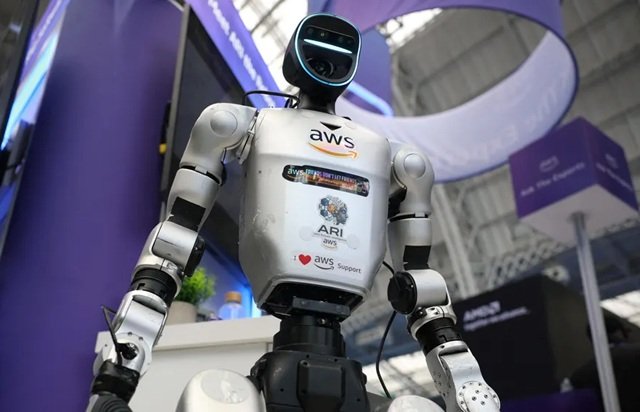
The United States has introduced a ban on the import of new humanoid and four-legged robots, citing national security concerns linked to artificial intelligence, cybersecurity and supply chain resilience. The measure, announced by the US Federal Communications Commission (FCC), took effect immediately upon publication and applies to models that have not yet entered the market.
According to the FCC, the restrictions are intended to protect the country’s artificial intelligence infrastructure from risks including data theft and cyberattacks. The agency also said the policy is designed to encourage the production of key technologies within the United States, reducing reliance on overseas manufacturing.
Observers say the measure is aimed primarily at Chinese manufacturers, although exemptions are expected for many suppliers from other countries. In addition to humanoid and quadruped robots, the FCC has also prohibited the import of network-connected inverters, which are essential for connecting renewable energy systems and data centres to the electricity grid. China is currently the world’s largest producer of these devices.
The FCC said the affected technologies could create vulnerabilities within supply chains that pose risks to both the economic and national security of the United States. The agency argued that connected devices could become points of weakness capable of exposing critical infrastructure to malicious activity.
The Chinese Embassy in Washington did not immediately respond to a request for comment following the announcement.
Industry experts expect AI-powered humanoid robots to play an increasingly important role in manufacturing and domestic settings in the years ahead. The new restrictions are therefore expected to have a significant impact on Chinese robotics manufacturer Unitree, which, according to market research firm Counterpoint Research, holds nearly one-fifth of the global market.
Unitree recently entered into a partnership with US semiconductor company Nvidia. However, the company was also recently placed by the US Department of Defense on a list of firms alleged to have links to the Chinese military. According to Reuters, Unitree was not immediately available for comment following the announcement.
US authorities said the latest measures are intended to prevent dependence on foreign suppliers in sectors considered strategically important. The move reflects concerns about avoiding a level of reliance similar to that associated with rare earth minerals, which the government in Beijing has previously used as a geopolitical instrument.
The FCC also warned that advanced robots could present broader security risks if exploited for espionage or sabotage. According to the agency, such machines could collect data to monitor Americans or potentially be taken over remotely, creating risks extending beyond conventional cybersecurity threats.
The restrictions on connected inverters are likewise driven by concerns over attacks on critical infrastructure. US authorities cited fears of cyber intrusions similar to the campaign attributed to the hacker group Volt Typhoon, which was uncovered in 2023 and is alleged to have targeted telecommunications networks and transport hubs across the United States.
By extending import restrictions to emerging AI-enabled technologies and essential energy infrastructure, the United States has signalled a broader effort to strengthen domestic technological resilience while addressing what it describes as growing national security risks associated with connected devices and strategic supply chains.