


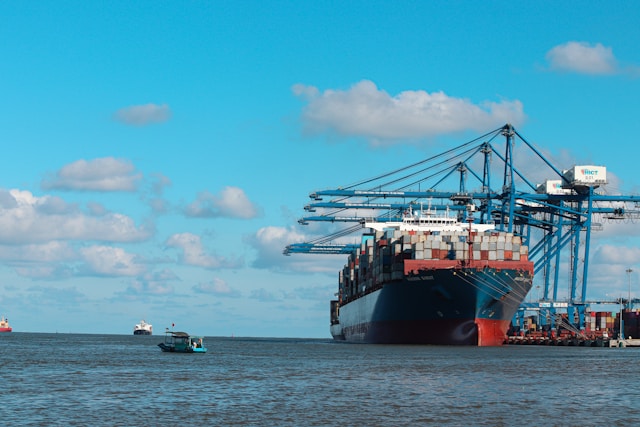
Leading American corporations, including Apple, Intel, and Nike, are pressuring the US government to lower tariffs on Vietnamese goods, warning that steep duties threaten a critical supply chain partner in Asia and risk undermining the United States’ strategic economic interests. Their appeal comes as the Trump administration continues to weigh whether to reinstate a 46% tariff on Vietnamese imports—one of the highest imposed after China—originally implemented during Donald Trump’s presidency and now paused pending negotiations.
The push, reported by the Financial Times, centers on Vietnam’s integral role in the “China plus one” manufacturing strategy adopted by many US firms seeking to diversify away from Chinese supply chains. Since the onset of the US-China trade war in Trump’s first term, Vietnam has become a production hub for a growing number of American brands. This shift contributed to Vietnam’s trade surplus with the US soaring to over $125 billion last year—making it the third-largest behind China and Mexico.
The American Chamber of Commerce in Hanoi (AmCham), whose members include major US firms operating in Vietnam, voiced strong concerns in a letter to US and Vietnamese officials. “Vietnam has emerged as a valued partner of the United States in the context of diversifying supply chains,” AmCham wrote. While not directly referencing China, the chamber said the US should view Vietnam’s rising exports as a natural result of the success of its own policy goals to reduce dependence on Chinese manufacturing.
The chamber also warned that imposing retaliatory or sectoral tariffs could damage US businesses, their customers, and bilateral relations. “The tariffs are a critical issue for our members,” the letter stated.
Vietnam has become particularly important for tech and consumer goods firms. Analysts expect Apple to source two-thirds of its AirPods from Vietnam by the end of 2025, and Nike already produces half of its global footwear there. Higher tariffs are expected to drive up prices for US consumers and could stifle further investment in Vietnam.
The tariff pause expires on July 9, and time is running out for both governments to reach a compromise. A third round of negotiations is scheduled for mid-June in Hanoi.
Vietnam has responded by pledging to purchase more American goods—including Boeing aircraft and liquefied natural gas—and by easing non-tariff barriers for US companies. In a symbolic gesture, the Vietnamese government approved a new Trump Organization golf resort and held talks with Eric Trump on a potential Trump Tower in Ho Chi Minh City—moves seen as efforts to curry favor with Washington.
However, one major sticking point remains: the US accuses Vietnam of being a conduit for Chinese goods rerouted to avoid tariffs. Commerce Secretary Howard Lutnick told a Senate hearing this week that even if Vietnam eliminated all trade barriers on US goods, tariffs would remain unless the country addressed concerns over so-called “trans-shipment.”
“They buy $90 billion from China, then they mark it up and send it to us,” Lutnick said. “They are just a pathway of China to us.”
Vietnamese officials have responded with what they described as “determination and goodwill,” and they have vowed to intensify efforts to prevent illegal re-exporting of Chinese goods. According to sources cited by the Financial Times, both countries are exploring enhanced cooperation between their customs authorities to combat trans-shipment.
AmCham has also urged Vietnam to accelerate the purchase of US goods and pursue market reforms, particularly in the power sector. The chamber recommended full liberalization to attract US investment in turbines, LNG, wind energy, and related infrastructure—a move that could help reduce the trade imbalance.













This article incorrectly refers to “the Biden administration” as currently weighing the decision on the 46% Vietnam tariff. As of June 2025, Donald Trump is president (his second term began in January), and it is the Trump administration — not Biden’s — managing trade negotiations and tariff policy. The 46% tariff was imposed by President Trump in April 2025, and any decision to reinstate or drop it lies with his administration. Please correct the reference for accuracy.
Thank you!