


The United States has seized a Russian-flagged oil tanker in international waters of the North Atlantic after a dramatic, weeks-long pursuit that stretched from the Caribbean to waters northwest of Scotland, escalating already fraught tensions between Washington and Moscow. The vessel, now known as the Marinera and formerly registered as Bella 1, was taken into US custody on Wednesday following an operation involving the US military, the Coast Guard, and federal law enforcement agencies.
According to US European Command, the tanker was seized pursuant to a warrant issued by a US federal court for alleged violations of American sanctions targeting illicit Venezuelan oil exports. The operation was conducted in coordination with the Departments of Justice and Homeland Security after the ship was tracked across the Atlantic by the Coast Guard cutter Munro. US Secretary of War Pete Hegseth confirmed the seizure was linked to what he described as the continued enforcement of a global blockade on sanctioned Venezuelan oil shipments.
The Marinera had drawn international attention after evading an earlier attempt by the US Coast Guard to board it in the Caribbean late last year. At that time, the crew refused access and altered course toward Europe. During the pursuit, the tanker was re-registered under the Russian flag and renamed, a move US officials say was intended to evade sanctions. The vessel was not carrying oil at the time of its seizure.
Russia condemned the operation, accusing Washington of violating international maritime law. Moscow said the ship was sailing legally in international waters under the Russian flag and argued that no state has the right to use force against a properly registered foreign vessel on the high seas. Russian officials also confirmed that naval assets, including a submarine, had been dispatched to escort the tanker amid fears of an imminent US action.
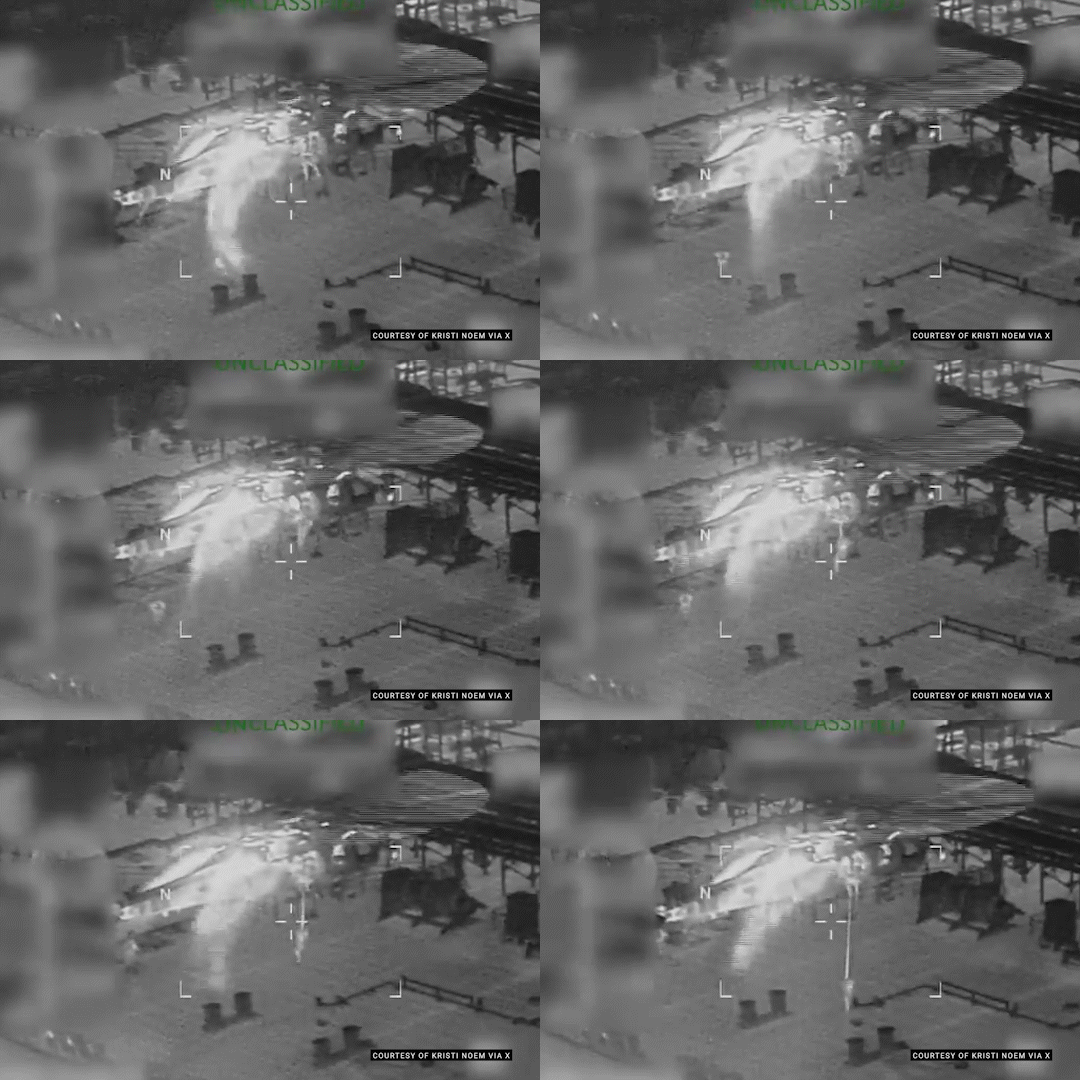
Images released earlier by Russian state media showed a US special operations helicopter approaching the deck of the Marinera during the boarding. Open-source flight tracking data also indicated heightened US and NATO aviation activity in the region in the hours leading up to the seizure. In Britain, American forces were observed conducting extraction and fast-rope training exercises after a significant buildup of US military aircraft at several RAF bases, fuelling speculation that the United Kingdom served as a key staging ground for the operation.
US officials have not confirmed whether aircraft based in Britain were directly involved, though the UK Ministry of Defence said its own fighter jet launches during the same period were unrelated to maritime surveillance. Reports indicate that US special operations aviation units, known for deploying from naval platforms, likely launched helicopters from a ship operating closer to the tanker.
The seizure of the Marinera was not an isolated action. As the Atlantic operation unfolded, US Southern Command announced that another sanctioned tanker, the M/T Sophia, had been boarded without incident in the Caribbean. That vessel, described as stateless and part of a “dark fleet” engaged in illicit activities, is now being escorted to the United States for final disposition.
Where the Marinera will ultimately be taken and what legal consequences may follow remain unclear. US officials insist the operation underscores Washington’s determination to enforce sanctions globally, while Russia maintains the boarding was unlawful and politically motivated. As both sides harden their positions, the incident adds a volatile new chapter to the growing confrontation over sanctions, freedom of navigation, and military power on the world’s oceans.









