The two-week ceasefire between the United States, Iran and Israel, announced by Donald Trump just hours before a self-imposed escalation deadline, has paused a 39-day conflict that had moved with unusual speed toward wider regional escalation. Yet it is less a resolution than a tactical pause. It has halted a rapidly intensifying war, but it has not addressed the structural tensions driving it revealing instead the fragility of deterrence and the limits of coercive diplomacy.
At its core, the ceasefire is transactional. Iran has agreed to reopen the Strait of Hormuz-through which roughly one-fifth of global oil flows-while Washington has stepped back from threats that included strikes on civilian infrastructure. Markets reacted immediately: oil prices eased after an initial spike, and the risk premium tied to regional escalation briefly receded. But the underlying dynamics remain unsettled.
A Pause Built on Maximalist Positions
Tehran’s reported 10-point proposal is not a compromise framework; it is a negotiating anchor. Its demands-comprehensive sanctions relief, recognition of domestic uranium enrichment, US military withdrawal from the region, and continued Iranian influence over Hormuz-reflect positions Washington has historically resisted.
That is precisely the point. By setting maximalist conditions, Iran has shifted the diplomatic baseline. The ceasefire should therefore be understood not as convergence, but as the opening phase of positional bargaining. It creates space for talks while locking both sides into publicly articulated red lines that will be politically costly to dilute.
For the United States, accepting even partial Iranian authority over Hormuz would signal a departure from long-standing maritime security doctrine. For Iran, stepping back from enrichment would weaken both domestic legitimacy and its deterrence posture. The divide is not simply technical-it is rooted in competing strategic worldviews.
Washington’s Divided Response
The reaction in Washington reflects this ambiguity. Republican figures such as Lindsey Graham have cautiously welcomed diplomacy while warning against rewarding Iran’s actions. Others within Trump’s political circle have framed the ceasefire as a tactical concession rather than a strategic gain.
Democrats, meanwhile, have taken a dual-track approach. While supporting the cessation of hostilities, they have renewed calls for accountability. Figures such as Alexandria Ocasio-Cortez and Ed Markey have argued that the war itself lacked constitutional basis, pointing to the absence of congressional authorization and raising concerns over threats to civilian infrastructure.
This internal divide is not peripheral-it directly shapes the credibility of US commitments. Any agreement reached without a degree of bipartisan grounding risks becoming politically reversible, a factor Tehran will weigh carefully.
The Strait as Leverage, Not Just Geography
Control over the Strait of Hormuz has become the central strategic variable in this confrontation. For Iran, it is both leverage and insurance. For the United States and its partners, it remains a critical artery of global commerce.
The ceasefire has reopened the strait, but under conditions that remain deliberately ambiguous. Iranian officials have suggested a role in coordinating transit, even raising the prospect of transit fees-an idea that would, if formalised, challenge established norms of freedom of navigation.
This is where the arrangement becomes inherently unstable. If negotiations falter, Iran retains the ability to reassert control, reintroducing immediate economic disruption. In effect, global energy flows have been drawn into the bargaining framework itself.
Mediation Beyond the Usual Channels
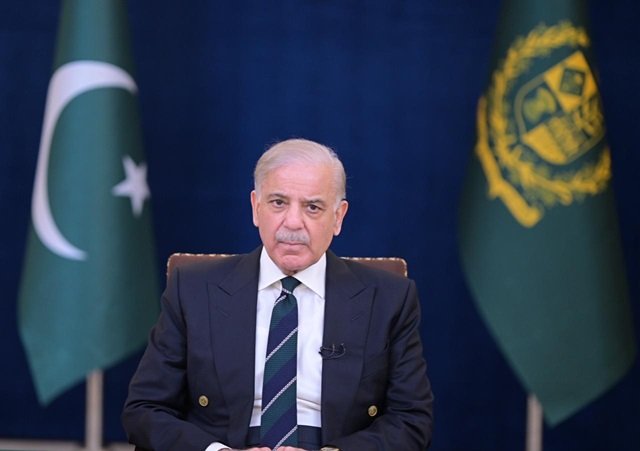
One of the more consequential aspects of this episode is the role played by intermediary actors. Prime Minister Shehbaz Sharif helped facilitate the two-week framework and provided a diplomatic venue for follow-on talks in Islamabad, reflecting Pakistan’s re-emergence as a pragmatic crisis interlocutor. This diplomatic effort was complemented by the institutional backing of Field Marshal Asim Munir, whose leadership has reinforced Pakistan’s position as a stabilising security actor in a volatile regional environment.
Pakistan’s role was not to resolve the conflict, but to create the space in which escalation could be paused-an increasingly valuable function in high-velocity crises where diplomatic timelines struggle to keep pace with military developments.
Amid these developments, a parallel narrative has surfaced questioning the strength of Pakistan’s regional relationships, particularly with the United Arab Emirates, including claims that the UAE did not recognise Pakistan’s mediation role or that recent financial transactions signal strain. These assertions do not withstand scrutiny. The return of matured UAE deposits in April 2026 is a routine financial operation under existing bilateral arrangements, not an indicator of weakened ties. More broadly, Pakistan–UAE relations rest on a far deeper foundation-spanning defence cooperation, economic interdependence, and extensive people-to-people linkages supported by a Pakistani diaspora of over 1.6 million. Such claims reflect selective interpretation, and in some cases disinformation, rather than an accurate reading of a long-standing strategic partnership.
Alongside this, Wang Yi signalled Beijing’s support for de-escalation, while Trump himself acknowledged that China may have played a role in encouraging Tehran to engage. Chinese officials similarly stated that Beijing had been working since the outset of the conflict to promote a ceasefire, urging all parties to seize the opportunity for dialogue.
China’s involvement was measured rather than overt, but strategically significant. As Iran’s largest trading partner, Beijing brings economic leverage that quietly reinforces diplomatic efforts. Its earlier role in facilitating rapprochement between Tehran and Riyadh underscores a broader ambition: positioning itself as a credible mediator in regional crises.
Taken together, these interventions point to a wider shift. Crisis management is no longer confined to traditional power centres. Middle powers and economically influential states are increasingly shaping outcomes-not by imposing settlements, but by preventing escalation.
Ceasefire Without Closure
The more difficult question is whether this ceasefire was ever intended to produce a durable settlement. For many actors in both Washington and Tehran, it is seen less as a pathway to peace and more as a temporary suspension of hostilities.
That perception is reinforced by the absence of a shared end-state. The United States seeks to constrain Iran’s nuclear trajectory and regional influence. Iran seeks sanctions relief, strategic autonomy, and recognition of its role in the region. These objectives do not easily align.
At the same time, the conflict has already altered the strategic landscape. The targeting of senior leadership and critical infrastructure has raised the stakes beyond conventional deterrence. Trust-limited to begin with-has been further eroded.
What this episode illustrates more broadly is a shift in the tempo of conflict. Escalation cycles are compressing. Decisions that once unfolded over weeks now take shape within hours. Diplomacy is increasingly reactive, intervening after thresholds have already been approached.
This is not conflict resolution-it is conflict management under pressure.
The ceasefire reflects that reality. It demonstrates both how quickly crises can approach systemic risk and how fragile the mechanisms for containing them have become.
For now, the immediate pressures have eased. Shipping lanes are open, markets have stabilised, and preparations are underway for talks-potentially in Islamabad. But these developments should not be mistaken for structural progress.
The ceasefire has created time, but not clarity.
Its durability will depend less on diplomatic intent than on whether both sides can adjust their red lines without appearing to concede them-an inherently difficult task in a politically constrained environment.
If negotiations move toward a workable equilibrium, this pause may yet serve as a foundation. If they do not, it will be seen for what it is: an intermission in a conflict that has not been resolved, only deferred. In that sense, the real story is not that the war has ended. It is that it has been postponed.