The United States military has overseen a large-scale, secretive operation to move Gulf oil through ship-to-ship transfers using tactics similar to those long employed by Iran to bypass sanctions, according to an investigation by Reuters. The operation has involved dozens of vessels, surveillance systems and coordinated movements near the Strait of Hormuz as Washington attempts to maintain global energy supplies during a major regional crisis.
According to Reuters, the US-led operation began in early May and has involved at least 92 ships. The transfers take place at two locations identified by people familiar with the activity: off the coast of Fujairah in the United Arab Emirates and near Oman’s port of Sohar. Satellite imagery and shipping data reviewed by Reuters showed multiple tankers conducting simultaneous transfers at the sites.
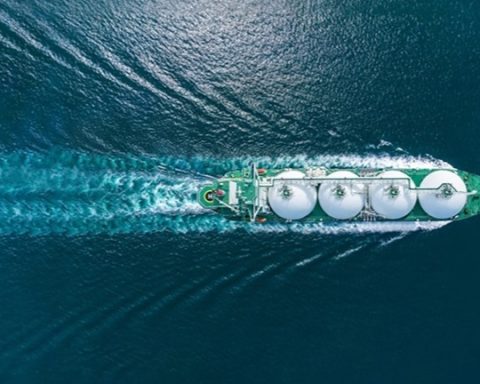
The operation relies on a technique known as ship-to-ship transfers, where oil is moved between vessels at sea before being transported onward. The method has historically been used by Iran to avoid sanctions by hiding the origin of oil shipments. The US operation has adopted a similar approach to help Gulf producers continue exporting crude, condensate and petroleum products despite heightened risks in the region.
Reuters reported that an Apache helicopter shot down by Iran on June 9 was involved in the mission, according to four sources, including a former US official familiar with the incident. Satellite images reviewed by Reuters showed six pairs of tanker ships gathered near Sohar on the day the helicopter was downed. However, Reuters could not confirm the specific role of the Apache in the operation.
A US defence official told Reuters that no US Central Command forces were participating in offshore ship-to-ship oil transfers. US officials said both crew members from the Apache were rescued by a drone boat. The White House referred questions about the operation to Central Command, while the Iranian government did not respond to requests for comment.
The transfers are taking place near the exit of the Strait of Hormuz, an area where Iran has increased its influence through the establishment of a new authority responsible for managing the waterway. Ships that fail to follow Iranian directives risk attacks involving drones and missiles from Iran’s Islamic Revolutionary Guard Corps, according to the Reuters report.
The operation has continued despite security incidents in the region. The port of Fujairah has come under repeated Iranian fire during the period when the US-led transfers have been underway. Reuters also reported that a tanker off the coast of Oman was struck by an unidentified projectile, according to British maritime risk management group Vanguard. The crew was unharmed, but some cargo leakage occurred.
The urgency behind the operation followed Iran’s effective closure of the Strait of Hormuz during the conflict with the United States and Israel. The waterway normally handles around one-fifth of global oil consumption, and the disruption contributed to a major shock in global energy markets.
US President Donald Trump said the Strait of Hormuz would reopen under a recently announced peace framework with Iran, although details of the agreement remain unclear. Reuters could not determine whether the agreement had changed the oil transfer operations.
The US-controlled system requires participating tankers to follow strict procedures. According to sources cited by Reuters, vessels gather before entering the strait, stagger their departures by around 3,000 to 4,000 metres and disable their tracking transponders. Ships also reduce lighting while travelling through sensitive areas.
The vessels are monitored through a series of designated waypoints, with US forces tracking their movement. Once beyond the area Iran claims to control, tankers pull alongside Very Large Crude Carriers, or VLCCs, where oil transfers can take between 24 and 40 hours.
Reuters reviewed more than a dozen satellite images between May 2 and June 11 showing transfers involving Gulf state-owned tanker fleets and international shipping companies. Based on vessel capacities, Reuters estimated that around 90 million barrels of crude oil and petroleum products may have moved through the offshore network since early May.
The volumes remain significantly below normal levels. Before the conflict, approximately 20 million barrels passed through the Strait of Hormuz each day.
The operation has drawn attention because of its similarities to sanctions-evasion methods used by countries including Iran. Michael Froman, president of the Council on Foreign Relations, said the United States was now using techniques associated with so-called “dark fleets” that have traditionally been used to avoid international restrictions.
Reuters found no evidence that US military personnel were directly conducting the oil transfers themselves. Instead, sources said Washington has provided aerial surveillance, compliance checks and monitoring support for participating vessels.
Shipping companies involved in the system are required to undergo reviews before receiving permission to transit. Documents reviewed by Reuters showed operators must provide ownership information, cargo records, tracking histories and approval for cargo inspections.
Emirati exports account for a significant portion of the operation, according to shipping records reviewed by Reuters. Sources said the United Arab Emirates’ state-owned oil company ADNOC has been among the most active participants, while the Kuwait Oil Tanker Company has also taken part.
Maritime experts warned that the arrangement remains risky. Noam Raydan, a senior fellow at the Washington Institute specialising in maritime security, told Reuters that the system was a temporary measure rather than a permanent solution.
The US-led operation has helped maintain oil movements during an unstable period, but the reliance on covert maritime methods highlights the continuing risks surrounding one of the world’s most important energy corridors.