
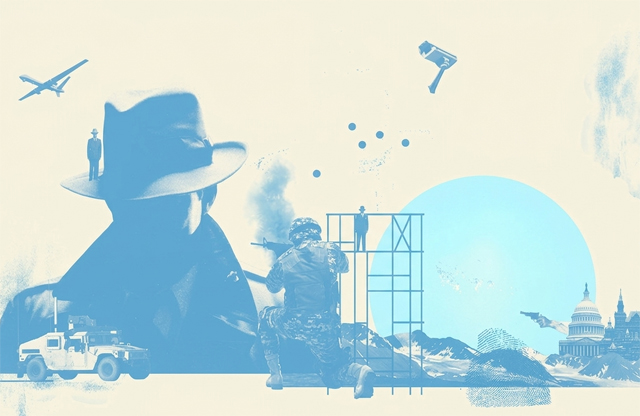
“Modern conflicts are increasingly shaped not by firepower alone but by intelligence superiority, where information, timing, and surprise determine strategic outcomes.”
Modern wars rarely begin with the sound of gunfire. They start quietly, through intercepted signals, satellite imagery, financial trails, and fragments of information patiently assembled by intelligence professionals. Long before the first missile is launched or the first troop movement occurs, a different battle has already taken place: the contest to understand the adversary more clearly, anticipate their intentions, and determine the precise moment when action will have the greatest effect. In the increasingly complex conflicts of the twenty-first century, victory is often shaped not on the battlefield itself but in the intelligence rooms where information is transformed into strategic insight.
Recent tensions and confrontations in the Gulf region illustrate a fundamental strategic truth: military capability alone does not determine outcomes. Success increasingly depends on the ability to collect, interpret, and act upon intelligence with precision and speed. Modern warfare begins with information dominance. Satellite imagery, signals interception, cyber monitoring, financial intelligence, and open-source information drawn from digital platforms all contribute to a vast pool of data. The challenge today is no longer simply gathering information; it is the ability to transform enormous volumes of raw data into reliable intelligence that decision-makers can trust. This transformation from information to intelligence forms the foundation of modern strategy.
However, intelligence alone is not sufficient. Its real value lies in guiding action. Operations conducted without accurate intelligence resemble blind force, while operations supported by well-verified intelligence become precise instruments capable of achieving strategic objectives with minimal exposure. Behind every successful operation lies extensive intelligence preparation: identifying targets, mapping adversary capabilities, and anticipating responses. Even the best intelligence and the strongest capabilities can fail if the timing is wrong. Strategic timing requires a deep understanding of an adversary’s vulnerabilities, operational rhythms, and moments of distraction. Intelligence helps planners identify when the opponent is least prepared, when defenses are misaligned, or attention is diverted. Acting at the right moment can transform a limited operation into a decisive strategic success.
When intelligence, execution, and timing converge effectively, they create one of the most powerful principles in strategy: surprise. Surprise is rarely accidental. It is carefully constructed through secrecy, deception, operational security, and misdirection. Modern tools such as cyber operations, electronic deception, and information warfare now complement traditional methods of concealment. The result is strategic shock, placing the adversary off guard and limiting their ability to respond. Modern intelligence tradecraft is not only about gaining offensive advantage. It is equally about identifying vulnerabilities and strengthening national defenses. Threats today may emerge through cyber attacks, financial networks, information manipulation, or extremist mobilization within societies. Intelligence services therefore play a vital role in detecting early warning signals and enhancing resilience. Defense systems must continuously adapt to evolving threats.
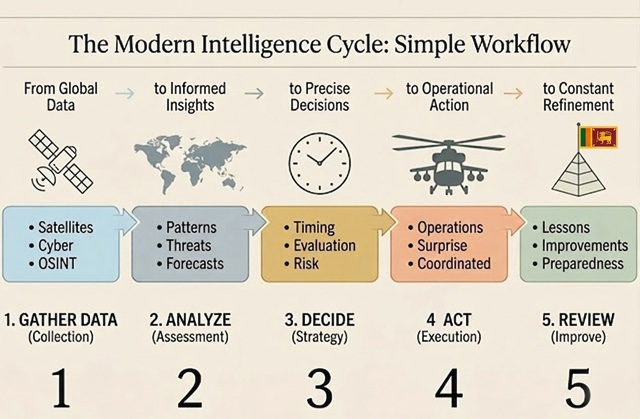
Effective intelligence goes beyond counting weapons or measuring military strength. It seeks to understand the adversary’s mindset. Leadership behavior, ideological motivations, strategic culture, and internal pressures all shape how actors behave during crises. Intelligence analysis therefore combines operational knowledge with psychological insight. Understanding intent is often more important than understanding capability. My own experience in counter-terrorism intelligence repeatedly reinforced this lesson. During years of engagement with individuals involved in extremist violence, including interviews with more than one hundred suicide cadres linked to terrorist organizations, it became clear that violent operations rarely appear suddenly. They are preceded by long processes of recruitment, indoctrination, planning, and logistical preparation. Each of these stages leaves signals and indicators that skilled intelligence work can detect. Recognizing those signals early is often the difference between prevention and tragedy.
Emerging technologies are rapidly transforming intelligence work. Artificial intelligence, big-data analytics, satellite surveillance, and biometric identification now allow vast quantities of information to be processed with unprecedented speed. However, technology cannot replace human judgment. The future intelligence officer must combine advanced technological tools with traditional analytical skills and human insight. For smaller states in particular, intelligence capability can serve as a powerful equalizer. Nations that may lack overwhelming military strength can still safeguard their interests through strong intelligence systems, professional analysis, and effective coordination. Ultimately, intelligence is about knowledge and the disciplined effort to understand complex realities before acting.
Modern conflicts continue to remind us of a simple but enduring strategic truth: wars are rarely decided solely by weapons, numbers, or displays of power. They are often determined by who understands the battlefield first and most clearly. Intelligence provides that clarity. It reveals vulnerabilities, anticipates intentions, and identifies the precise moment when action will have the greatest effect. When information is transformed into reliable intelligence, when intelligence guides disciplined execution, and when timing creates the element of surprise, the outcome of many confrontations is effectively decided long before the first shot is fired. In the complex security environment of the twenty-first century, the quiet work of intelligence may therefore remain the most decisive instrument of national power. Those who master intelligence will continue to shape the outcome of events.