Iran’s top security official said progress is being made toward negotiations with the United States, offering a cautious diplomatic signal amid a surge in military pressure and stark warnings of war. The remarks came as U.S. President Donald Trump confirmed that Washington and Tehran were in contact, while simultaneously keeping the threat of military action firmly on the table.
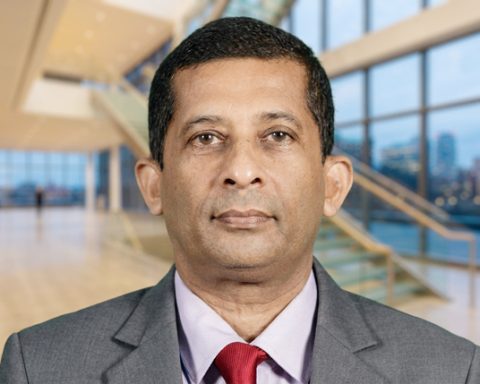
Ali Larijani, head of Iran’s Supreme National Security Council, said that despite what he described as a “contrived media war,” structural arrangements for negotiations were advancing. His comments followed talks in Moscow with Russian President Vladimir Putin, underscoring the broader international dimension of the standoff. Russia has positioned itself as a key interlocutor as tensions between Washington and Tehran escalate.
Trump, speaking to Fox News, confirmed that dialogue was underway but emphasized the deployment of U.S. naval forces led by the aircraft carrier USS Abraham Lincoln near Iran’s shores. The show of force followed his threat to intervene after Tehran’s deadly crackdown on anti-government protests, raising fears that diplomacy and confrontation are unfolding in parallel.
Iranian President Masoud Pezeshkian sought to strike a conciliatory tone, warning that a broader conflict would harm both sides. In a call with Egyptian President Abdel-Fattah el-Sissi, he said Iran has never sought war and remains convinced that armed conflict would serve neither Iran, the United States, nor the wider region. His comments appeared aimed at reassuring regional partners alarmed by the rising risk of escalation.
Qatar has also stepped in as a mediator, with its prime minister and foreign minister, Sheikh Mohammed bin Abdulrahman Al Thani, holding talks in Tehran with Larijani to try to de-escalate tensions. The diplomatic activity comes as the arrival of the U.S. flotilla heightens anxiety across the Middle East, where Iran has warned it would retaliate against U.S. bases, ships, and allies, including Israel, if attacked.
Trump has said he believes Iran will ultimately choose to make a deal on its nuclear and missile programs rather than face American military action. Tehran, however, has drawn firm lines, saying it is open to nuclear talks only if its missile and defense capabilities are excluded from negotiations. Iranian officials insist these systems are non-negotiable pillars of national security.
Iran’s army chief, Amir Hatami, delivered a stark warning to the United States and Israel, saying Iranian forces were at full defensive and military readiness. He said any attack would endanger not only the aggressor but the entire region, adding that Iran’s nuclear knowledge and technological expertise cannot be eliminated by force.
With tensions running high, Iranian authorities moved quickly to deny that several incidents on Saturday were linked to sabotage or attack. These included an explosion in the southern port city of Bandar Abbas, which local firefighters said was caused by a gas leak. At the same time, the U.S. military said Iran’s Revolutionary Guard Corps would conduct live-fire naval exercises in the Strait of Hormuz, a critical artery for global energy supplies.
The exercises drew warnings from U.S. Central Command about unsafe behavior near American forces, prompting a sharp response from Iranian Foreign Minister Abbas Araghchi, who accused Washington of trying to dictate how Iran conducts military activities in its own territory. The exchange followed the U.S. designation of the IRGC as a terrorist organization in 2019, a step the European Union mirrored this week, fueling further anger in Tehran.
The crisis unfolds against the backdrop of deep domestic unrest in Iran. Protests that began over rising living costs in late December evolved into a broader anti-government movement that authorities have blamed on foreign enemies. The government’s official death toll stands at 3,117, while human rights groups report far higher numbers, including thousands of protesters and more than a hundred children.
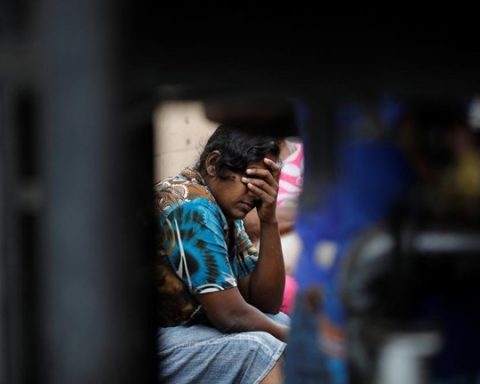
As some Iranians flee across borders, voices from inside the country describe fear and loss. At the Kapikoy crossing into Turkey, travelers spoke of shootings and loved ones killed during the unrest. Pezeshkian has urged his government to heed public grievances and serve the people, even as Iran navigates a perilous moment where fragile diplomatic openings coexist with the looming possibility of war.