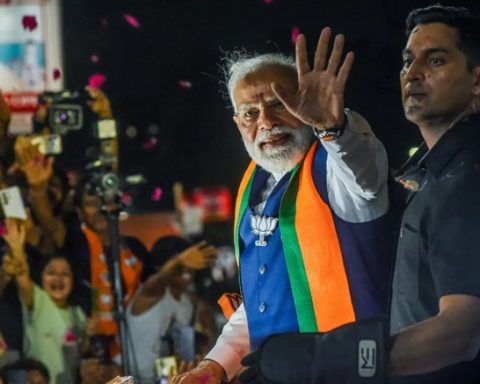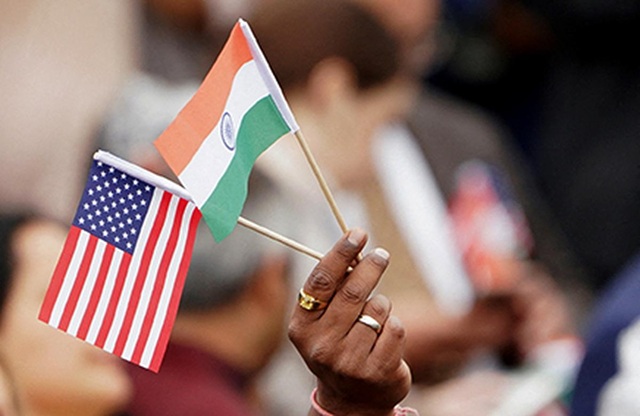
In recent times, India has entered into trade agreements with several countries, with the latest being the agreements between the European Union and India, and between the US and India.
Everyone in India appears to be fully satisfied with the India–EU trade agreement, considering that it is mutually beneficial and fair. However, the trade agreement with the US has not proved to be so popular in India as the one that India entered into with the EU, in spite of the fact that the agreement with the US has been commercially beneficial to India from several viewpoints, particularly with the agreed tariff being 18% for exports to the USA. This 18% tariff is much better than what the US has offered to other countries such as China, Bangladesh, Pakistan, and so on.
While entering into a trade agreement, it is well understood that there has to be a give-and-take attitude, with mutual and healthy understanding of the priorities and compulsions of both countries entering into the agreement.
In India, as far as the agreement terms with the USA are concerned, there has been some apprehension about the impact on the Indian agriculture sector due to the possible liberal import of a few agricultural products such as soya from the USA. Some sections of the farming community appear to be concerned, and a few sworn critics and opposition political parties of the Modi government have painted an alarming picture of the impact on the agricultural front. However, discerning observers and well-experienced analysts have said that such apprehensions are unfounded. In any case, taking an overall and holistic view, the US–India trade agreement has been technically welcomed in India.
Then, what is the issue, and why has the India–US trade agreement become controversial to some extent?
The US President has said that the trade agreement with India has been signed based on India’s assurance that imports of Russian oil by India would be completely stopped. He has further warned that if India were to continue buying Russian oil, the agreed tariff would be reconsidered and revised. Many Indians think that, by insisting that India should stop buying Russian oil, the US President has created a perception in India that he is insulting the country and its independent decision-making process. People in India, wedded to the concept of freedom and free speech and cherishing independence, resent this dictate from the US President.
In any case, India has not so far reacted strongly to this statement of the US President and has only said that it would buy oil from anywhere based on market price and purchase benefits for India. However, it is to be noted that India has not straightaway rejected the US President’s stance but has responded only in general terms.
Many discerning observers in India think that India should not submit to the US President’s insistence on stopping the purchase of Russian oil. Such submission by India would not only amount to humiliation of the country but would also be politically and commercially disadvantageous.
Everyone in India agrees that Russia has maintained a consistently cordial long-term relationship with India and has helped India at several critical times in geopolitics. However, relations with the USA over the years have not always been smooth and have often followed a “blow hot and cold” pattern. While the people-to-people relationship between Indians and Americans is cordial, this has not always been the case between the governments of the two countries.
Russia is now under huge pressure from the USA and NATO countries, and India stopping the purchase of crude oil from Russia would make matters difficult for Russia’s economy. No one in India desires this.
Further, Russia has been offering crude oil to India at the lowest price of 469 USD per tonne in December 2025, as against the price of 506.7 USD per tonne in December 2025 from the USA. The price of crude oil from the UAE was 529.4 USD per tonne, and from Saudi Arabia it was 503.2 USD per tonne. In the case of countries like Venezuela, the crude oil supply is of a very heavy grade, requiring significant processing cost for Indian refineries.
Stopping crude oil purchases from Russia entirely and sourcing from other countries would mean that India’s import bill for crude oil would rise to an uncomfortable level.
To sum up, stopping the purchase of crude oil from Russia at the behest of pressure from the US President would not only hurt India’s pride and sense of independence but also adversely impact India in economic terms. The overwhelming view in India is that India should not accede to the demand of the US President to stop buying Russian oil, whatever may be the cost of this decision.
It remains to be seen how the Modi government will tackle this issue. At this time, it is difficult to guess what the US President, known to be very unpredictable, would decide if India does not stop purchasing oil from Russia. Today, in geopolitics as well as in trade terms, India needs the USA, particularly due to the fact that India has emerged as the fourth-largest economy in the world and its contribution to global GDP growth is significant. Further, in geopolitics, the USA cannot afford to displease India beyond a point. Certainly, the US administration would weigh such factors carefully in taking decisions with regard to any revision of the trade agreement.
The question is: who would blink first?