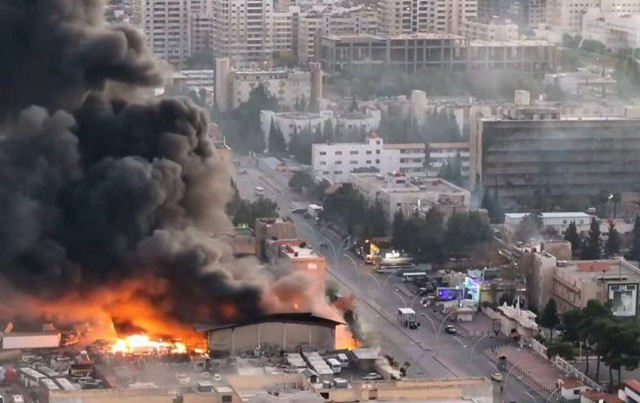
By end of November, the situation in Syria was dire. Government forces were on the brink of exhaustion, stretched thin by an economic crisis that spiraled out of control. Soldiers earned a paltry $7 a month, with even high-ranking officers receiving only $40. This was in sharp contrast to militia fighters funded by external powers, who earned up to $2,000 monthly. This glaring disparity revealed not just economic fault lines but the extent of foreign intervention sustaining these militias. Meanwhile, protests erupted across Suwayda province, historically a stronghold of Assad support, highlighting widespread famine, collapsing services, and the devaluation of the Syrian pound. Discontent was palpable, threatening to upend the regime’s fragile grasp on power.
Iran, Syria’s long-time ally, reportedly pressured Assad to address these challenges. Tehran’s warnings underscored the erosion of public trust and a crumbling economy, urging decisive action. Yet Assad seemed increasingly aloof, allegedly seeking new alliances with Gulf nations, hoping these relationships would secure his future. By December, reports emerged that the United States and the United Arab Emirates were considering lifting sanctions on Assad—but only if he severed ties with Iran and halted arms transfers to Hezbollah. This diplomatic maneuver was a calculated strategy to weaken Assad’s regime further. Relief from Caesar sanctions (sanctions designed to punish Assad and associates for atrocities) was an unlikely prospect given Washington’s decade-long effort to dismantle the Assad family rule. The outcome was preordained: Assad was isolated, and the geopolitical chessboard advanced.
The trajectory of Assad’s downfall mirrors a broader pattern in Western foreign policy. Leaders once celebrated as reformers—from Saddam Hussein to Muammar Gaddafi—are vilified when their geopolitical utility wanes. Assad, who was once lauded for fostering coexistence among Syria’s religious and ethnic groups, became the West’s pariah. In 2010, Syria was a stable nation, ranked seventh on The New York Times’ “31 best places to visit.” Assad met with Queen Elizabeth, hosted Nancy Pelosi, and welcomed Pope John Paul II. Yet the West’s affection was short-lived. As geopolitical calculations shifted, Assad’s regime was recast as the antithesis of democracy, paving the way for intervention.
The Syrian conflict was never just a civil war. It was a proxy war fueled by external actors. Over 100,000 jihadists were funneled into Syria, backed by a coalition of nations. The United States, Israel, Saudi Arabia, and Qatar allegedly provided financial and logistical support. Turkey and Jordan facilitated arms shipments and fighter transport. Western media amplified anti-Assad narratives, while the UK-backed White Helmets shaped public perceptions. Each player pursued its own agenda, yet all converged on a singular goal: regime change.
The motivations driving this coalition were diverse. The United States and Israel sought regional hegemony, neutralizing perceived threats while advancing the Greater Israel project. Qatar’s pipeline ambitions clashed with Assad’s preference for an Iranian alternative, further entrenching divisions. These dynamics turned Syria into a battleground for competing interests, with devastating consequences for its people.
By late 2013, the influx of foreign fighters intensified. Western nations grappled with their citizens joining extremist groups in Syria. The UK reported approximately 600 fighters, while France contributed around 1,200. Belgium, the Netherlands, and Sweden also faced significant outflows. However, the greatest contributions came from West Asia and North Africa, with Tunisia leading at 3,000 fighters, followed by Saudi Arabia at 2,500. Russia’s involvement, particularly from regions like Chechnya, underscored the conflict’s global reach.
The arms supply chain further exacerbated the war. Gulf states like Qatar and Saudi Arabia allegedly supplied weapons, supported by over 160 military cargo flights. These arms, transported through Turkey and Jordan, sustained rebel factions. European nations, such as Croatia, indirectly contributed by routing surplus weapons through Jordan. This complex web of arms smuggling empowered extremist groups, further destabilizing Syria.
Western hypocrisy was stark. While denouncing Assad’s regime, the United States supported “moderate rebels” aligned with Al Qaeda and ISIS. Declassified documents revealed this duplicity. In 2012, General Michael Flynn’s memo to the Pentagon warned that the opposition included jihadist factions. Similarly, Hillary Clinton’s advisor, Jake Sullivan, acknowledged in an email that “Al Qaeda is on our side in Syria.” The West’s support for these groups undercut its claims of promoting democracy, revealing a strategy rooted in destabilization.
Atrocity propaganda became a central tool in the anti-Assad narrative. Staged chemical attacks, amplified by the White Helmets, justified military intervention. Western media perpetuated these fabrications, obscuring the reality on the ground. Idlib province, under “rebel” control, became a dystopian preview of Syria’s potential future: public executions, forced veiling of women, and sectarian slogans. This grim reality highlighted the consequences of regime change.
Operation Timber Sycamore, the CIA’s covert program, exemplified Western duplicity. Billions of dollars in weapons were funneled to extremist factions, prolonging the war. The irony was stark: the West, claiming to combat terrorism, empowered the very groups destabilizing the region. Syria’s devastation became a witness to the destructive nature of interventionist policies.
Syria’s collapse parallels other Western interventions. Iraq’s 2003 invasion, justified by the false pretext of weapons of mass destruction, left the nation in tatters. Libya, once Africa’s wealthiest country, descended into anarchy following Gaddafi’s overthrow. These interventions, framed as humanitarian missions, unleashed chaos, empowering extremist factions and creating power vacuums.
The broader motivations behind these actions lie in geopolitics. Syria’s strategic location, its role as a buffer between Iran and Israel, and its proximity to oil-rich regions made it a prime target. The West’s desire to reshape the region’s political structure has driven decades of intervention, often with catastrophic consequences. Meanwhile, allies like Saudi Arabia and Turkey, despite their human rights abuses, remain central to Western strategy, exposing the moral bankruptcy of interventionist policies.
Syria’s tragedy is a miniature of a global pattern. The collapse of nations like Iraq, Libya, and Syria reflects a broader system where sovereignty is sacrificed for strategic interests. Foreign interventions, far from promoting democracy or stability, have left legacies of destruction, displacement, and despair. The narrative of “humanitarian intervention” serves as a veneer, masking the true motives of power and greed.
As the 50th anniversary of Iran’s 1979 revolution approaches in 2029, the stakes are higher than ever. Iran’s defiance of Western hegemony remains a critical factor in the region’s future. The forces shaping West Asia—Israel, Turkey, and Western powers—are poised to challenge Iran’s resilience. Syria’s collapse serves as both a warning and a call to scrutinize the ethics of intervention. The legacy of these actions is clear: a world shaped by greed, ambition, and the devastating cost of unchecked power.
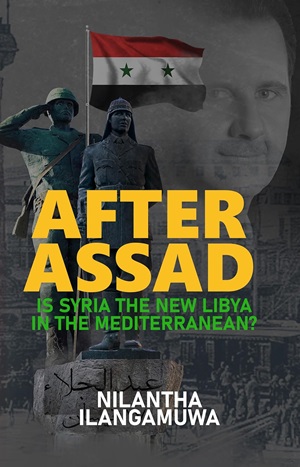
Click here to order your copy of After Assad: Is Syria The New Libya In The Mediterranean?
The article was originally published in Sunday Island and Daily Pioneer.