Editorial
What exactly did India leave out of the statement issued after Foreign Secretary Vikram Misri’s visit to Colombo? More importantly, why are the questions that matter most to Sri Lanka missing from a communiqué otherwise overflowing with language about partnership, development and mutual cooperation? And as India prepares to host the BRICS summit in New Delhi, will President Anura Kumara Dissanayake be invited? These are not diplomatic side issues. They go directly to the uncomfortable question of whether Sri Lanka is actually exercising an independent foreign policy or merely learning how to balance the demands of larger powers without offending any of them.
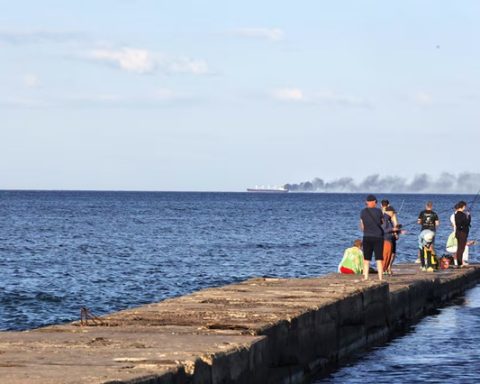
The Indian statement speaks proudly of credit lines, reconstruction, energy, housing, trade, digital projects and development cooperation. All of that deserves recognition. Yet when it reaches the fishermen dispute, the language becomes remarkably selective. Fishermen are mentioned. Detentions are mentioned. Livelihoods and humanitarian considerations are mentioned. But the issue at the heart of Sri Lanka’s northern fisheries crisis is conspicuously absent. Bottom trawling is not mentioned. Sri Lanka prohibits this destructive method of fishing, and northern fishing communities have for years complained about Indian mechanised trawlers entering Sri Lankan waters. Nobody should defend the mistreatment of fishermen, and nobody should deny struggling families their livelihoods. But humanitarian language cannot become a diplomatic shortcut around another country’s fisheries law. If vessels are detained because they allegedly enter Sri Lankan waters and use a prohibited fishing method, this is not simply a story about innocent fishermen being arrested. It is about maritime jurisdiction, environmental destruction and the survival of Sri Lankan fishing communities. If India wants the early release of detained fishermen and their boats, the obvious question is whether New Delhi is equally prepared to confront the bottom-trawling practices that repeatedly produce these confrontations.
Then comes the Provincial Council issue. India has again called upon Colombo to hold Provincial Council elections and fully implement constitutional provisions relating to the aspirations of the Tamil people. India is entitled to raise concerns about Tamil political rights. But Sri Lanka is equally entitled to ask where diplomatic persuasion ends and political pressure begins. Constitutional arrangements are ultimately matters for Sri Lanka’s democratic institutions. Sovereignty cannot be treated as sacred when India wants assurances on security but negotiable when India wants political outcomes in Colombo. If New Delhi expects Sri Lanka to listen to its concerns, Colombo should be able to raise its own concerns just as bluntly, including the continuing destruction of northern fishing grounds through bottom trawling.
Then there is the issue that could determine Sri Lanka’s economic future far more than diplomatic communiqués do. Foreign investment. A Colombo newspaper editor, quoting a senior minister, has reported that geopolitics is playing “dirty cards” in Sri Lanka’s efforts to attract FDI, while the same minister reportedly complained that the government has become too slow and indecisive to satisfy investors. If accurately reported, this should embarrass Colombo. Sri Lanka desperately needs investment, yet the country appears increasingly caught between competing geopolitical interests. India wants strategic influence. China wants strategic influence. The United States has its own calculations. Everyone talks about helping Sri Lanka, but every major power also wants Colombo to remain within an orbit favourable to its own interests.
China cannot escape scrutiny. Beijing has spent years building economic, diplomatic and media influence in Sri Lanka. Chinese infrastructure investment has created enormous economic links, while Chinese diplomatic and communication efforts have cultivated favourable narratives. But India should not imagine that it stands outside the same criticism. New Delhi has immense political, economic, security and cultural influence in Sri Lanka and has every reason to shape perceptions of its role. Allegations that foreign powers finance, cultivate or manipulate media narratives deserve serious investigation rather than partisan dismissal. If Chinese money, access or diplomatic influence can shape the Sri Lankan narrative, Indian influence must face the same scrutiny. Sri Lankan journalists should not become unofficial representatives of Beijing or New Delhi. The public deserves journalism that asks uncomfortable questions of both.
The BRICS issue makes the contradiction even sharper. Sri Lanka has sought closer engagement with BRICS and the New Development Bank as part of its attempt to diversify its international relationships. President Dissanayake has expressed Sri Lanka’s interest in BRICS, while President Vladimir Putin reportedly invited him to attend the BRICS summit held in Russia last year. Yet Dissanayake did not attend. If reports that geopolitical considerations influenced that decision are correct, Colombo owes its citizens an explanation. For a government claiming to seek economic diversification, turning away from an invitation connected to one of the world’s most important emerging-power groupings would have been an extraordinarily immature foreign-policy decision. Allegations that India or the United States directly pressured Colombo into rejecting the invitation require hard evidence and should not be presented as proven fact. But the decision itself, and the reasons behind it, deserve scrutiny. A government cannot preach strategic independence while behaving as though engagement with one major power must first be measured against the sensitivities of another.
Now India holds the 2026 BRICS chairship and will host the summit in New Delhi. Will Dissanayake be invited? If he is, India can demonstrate that its partnership with Sri Lanka is mature enough to tolerate Colombo’s engagement with other powers. If he is not, questions will inevitably arise about the limits of that partnership. Yet Colombo must also avoid another trap. Moving closer to BRICS does not magically free Sri Lanka from geopolitical influence when India and China are themselves central players in that organisation. The answer cannot be to escape one dependency by crawling into the embrace of another.
Sri Lanka does not need to choose India over China, nor China over India. It needs the confidence to deal with both on its own terms. India has provided substantial assistance and valuable development cooperation. China has provided major investment and infrastructure. Both have legitimate interests in Sri Lanka. Neither, however, has the right to define Sri Lanka’s national interest. Nor should either be permitted to purchase political goodwill through money, media influence, diplomatic pressure or strategic fear.
The real question is not which power wins Sri Lanka. The real question is whether Sri Lanka has the political maturity and courage to refuse to be won.