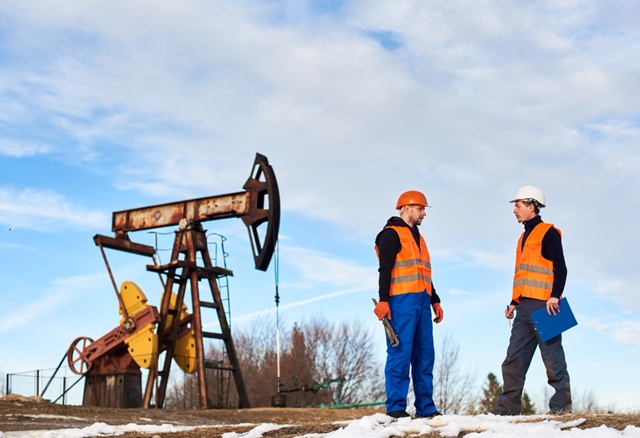
The slogan “Drill, baby, drill!” became iconic during the 2016 presidential election in the U.S. as part of a campaign to increase domestic fossil-fuel production. With Donald Trump’s push for expanded oil and gas extraction, it’s clear that fossil fuel development is set to continue, especially with the support of key figures in the Department of Energy, the Department of the Interior, and the Environmental Protection Agency. While some level of oil and gas extraction was always going to be part of the future energy mix, the challenge now is how to balance this with the urgent need to curb environmental degradation and move toward decarbonization.
In a new report published in Nature, it is argued that the expansion of oil and gas drilling doesn’t necessarily equate to more harm to the environment—provided it is done thoughtfully. The key to reconciling energy production with environmental protection lies in a holistic approach that considers the entire energy system from resource extraction to end-use, rather than isolating individual components of energy infrastructure. The report suggests that focusing on the broader energy “ecosystem” can help policymakers, regulators, and industry stakeholders find sustainable solutions.
The federal government’s control over oil and gas production is primarily restricted to federal lands and waters, which make up a small portion of U.S. oil and gas production—just 11% of oil and 9% of natural gas. Despite the current administration’s desire to open up more lands, such as the Arctic National Wildlife Refuge, to oil and gas drilling, any significant expansion is likely to face legal hurdles, and rolling back environmental protections would be politically difficult. Laws such as the Clean Air Act (1963), Safe Drinking Water Act (1974), and Endangered Species Act (1973) are deeply entrenched, and modifying or repealing them would require acts of Congress, which would be challenging to pass given the mixed support for such measures in Congress.
Moreover, drilling on federal lands may not be the most economically viable option, as these regions are often remote and harder to access compared to other, more accessible oil and gas reserves. Even if President Trump’s executive orders encourage exploration, the feasibility of such projects could be compromised by the difficult legal, environmental, and logistical realities they face.
As an energy geographer, the author of the Nature report notes that while energy policy often appears to be heavily influenced by the oil and gas industry through lobbying groups, states can play a vital role in regulating energy production. For example, regulations around fracking have largely been shaped by state-level decisions, with each state borrowing from the experiences and regulations of others to find a balance between economic growth and environmental protection. Agencies like the Interstate Oil and Gas Compact Commission, formed in 1935, help facilitate communication between regulators and promote collaborative regulatory approaches to ensure that energy extraction is conducted responsibly.
Yet, as the report highlights, there is a need for a broader and more comprehensive approach to regulation that goes beyond managing individual oil and gas facilities in isolation. Current state-level regulations often treat each infrastructure project—whether it’s a fracking well, pipeline, or processing facility—as a stand-alone entity. However, as the report argues, these facilities are interconnected, forming an “industrial ecosystem” that spans across regions. A case study conducted by the author in Pennsylvania, which involved mapping more than 20,000 pieces of energy infrastructure connected to a petrochemical facility, revealed that the true environmental impact of these facilities cannot be fully understood without considering how they interact with other energy projects, from extraction sites to processing plants and end-users.
The report points out that many regions, particularly in the Marcellus Shale region, have little access to data about the full range of energy infrastructures that might affect their communities. In the example of Pennsylvania, the analysis exposed the widespread connections between this state’s petrochemical industries and other hubs along the U.S. Gulf Coast, Canada, and Europe. These interconnected systems often fall outside the scope of regulatory frameworks, leaving many communities without essential environmental protections such as air-pollution controls.
To better understand and mitigate the effects of energy extraction and consumption, the report calls for a more holistic, political-industrial ecology approach. By looking at energy projects as interconnected systems, from extraction to final use, it becomes possible to evaluate the full spectrum of economic and environmental trade-offs. This broader perspective helps ensure that the costs and benefits of drilling are more fairly distributed and that regions most affected by energy production are given the protections they need.
This approach is not limited to fossil fuels. Other resources, such as water, also require careful management and regulation across entire watershed basins to account for the complex socio-economic, political, and environmental dynamics involved. The report urges that energy projects, in particular, should be governed by similar frameworks that integrate the various interconnected factors involved in energy production, distribution, and consumption.
As the push for increased fossil-fuel production continues, it is crucial that policymakers and industry stakeholders recognize the importance of balancing economic needs with environmental protection. While drilling more oil and gas may seem like a straightforward solution to growing energy demands, it is clear that this cannot come at the cost of further environmental degradation. By taking a broader, more inclusive view of energy systems, it is possible to promote industrial growth while preventing an environmental catastrophe—an approach that is essential to the sustainability of energy systems in the future.
By broadening the scope of regulation and focusing on the entire “industrial ecosystem” around energy production, we may be able to ensure a sustainable balance between energy demands and environmental protection, ultimately making the slogan “Drill, baby, drill” less synonymous with environmental harm and more with responsible, sustainable energy development.