


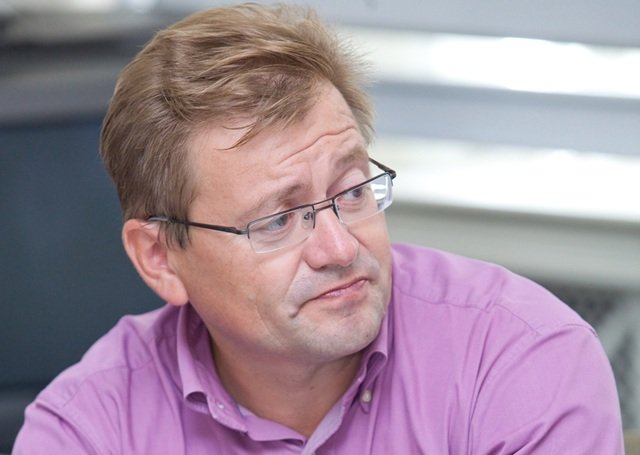
As Ukrainian drones continue striking oil depots, refineries and infrastructure inside Russia, the attacks have renewed debate over Moscow’s resilience and military capacity. Fuel shortages have emerged in some areas, while President Vladimir Putin has acknowledged what he described as “unprecedented pressure” on the country. Yet historian Vladislav Zubok argues that such developments should not lead to simplistic conclusions about Russia’s overall strength.
In an interview with Die Zeit, Zubok, a professor of international history at the London School of Economics and Political Science, said the West has repeatedly struggled to assess Russia accurately. Throughout modern history, he argues, European governments and policymakers have alternated between viewing Russia as an overwhelming military power and dismissing it as a declining state, creating strategic miscalculations that have influenced the continent’s security for generations.
To illustrate the problem, Zubok points to a saying commonly attributed to statesmen including Klemens von Metternich, Otto von Bismarck and Winston Churchill: Russia is never as strong as feared and never as weak as hoped. Although its precise origin remains uncertain, he says the phrase captures a recurring dilemma that has shaped European thinking since the nineteenth century.
The latest phase of that debate has unfolded alongside the war in Ukraine. Russia’s failure to achieve a swift victory following its full-scale invasion in 2022 prompted many observers to question the effectiveness of its military. More recently, Ukrainian drone attacks reaching targets in cities such as Moscow and St. Petersburg, along with strikes on oil facilities, have reinforced perceptions that Russia is increasingly vulnerable.
At the same time, Zubok argues that military technology alone cannot determine the outcome of modern wars. Political determination, social resilience and economic resources remain equally important. Measuring Russia solely through battlefield successes or setbacks therefore risks repeating historical mistakes that have shaped Western perceptions for centuries.
According to Zubok, those perceptions often fluctuate dramatically. He compares the West’s view of Russia to Schrödinger’s famous thought experiment, in which a cat is considered simultaneously alive and dead until observed. Russia, he says, is frequently portrayed as both collapsing and dangerously powerful at the same time, with public debate swinging rapidly between those opposing conclusions.
The historian traces these contradictions through earlier periods of European history. Imperial Germany often regarded Russia as culturally backward while simultaneously fearing its vast territory and population. After the Second World War, many Western governments initially viewed the Soviet Union as economically and technologically inferior, only to be confronted by its rapid development of nuclear weapons and intercontinental ballistic missiles, which transformed strategic calculations during the Cold War.
For Zubok, the consequences of such misjudgments have extended far beyond political rhetoric. Peace settlements, in particular, have repeatedly reflected inaccurate assessments of Russia’s relative strength. Following Napoleon’s defeat in 1814, Russia emerged from the Congress of Vienna as a dominant force within Europe, contributing to an imbalance that later culminated in the Crimean War. Conversely, revolutionary Russia was excluded from the Versailles settlement after the First World War because it was regarded as too weak, undermining efforts to establish a lasting European security order.
He argues that another turning point came after the Second World War, when agreements reached at Yalta left the Soviet Union with expanded influence across Eastern and Central Europe. Looking back across these settlements, Zubok says Europe has repeatedly struggled to position Russia within a stable balance of power, alternately granting it excessive influence or marginalizing it altogether.
Historical memory, he argues, continues to shape contemporary perceptions. During the Second World War, Adolf Hitler believed Joseph Stalin’s purges had fatally weakened the Red Army. Germany’s early military successes appeared to confirm that assessment, but the Soviet Union ultimately recovered and advanced to Berlin in 1945. That transformation from apparent weakness to decisive military victory became deeply embedded in Russia’s international reputation and continues to influence perceptions of Russian power today.
The historian also points to more recent political developments. After Russia annexed Crimea in 2014, then-US President Barack Obama described Russia as a regional power acting out of weakness rather than strength. According to Zubok, the remark was viewed by the Russian leadership as dismissive and encouraged Putin to demonstrate Russia’s global relevance through actions such as military intervention in Syria.
Zubok argues that Putin has long understood the political importance of projecting strength. Throughout Russian history, leaders have alternated between presenting the country as an unconquerable power and warning that hostile forces threaten its survival. Those two narratives, he says, are not contradictory but often reinforce one another in official messaging directed at domestic audiences.
The Wagner mutiny in June 2023 offered another illustration of this dynamic. Although the mercenary force led by Yevgeny Prigozhin had little realistic prospect of defeating the Russian military, the episode briefly exposed apparent vulnerabilities within the Russian state. According to Zubok, it revived memories of earlier national collapses, including the fall of the Tsarist Empire and the dissolution of the Soviet Union, both of which remain deeply rooted in Russia’s political consciousness.
He also rejects the notion that there is a single Western perspective on Russia. Countries bordering Russia, including Estonia and Poland, have historically viewed Moscow differently from governments in Berlin, Paris, Rome or Madrid. Those differing historical experiences, he says, continue to shape contrasting assessments of Russia’s intentions and capabilities across Europe.
The emergence of China has introduced another dimension to the discussion. While some analysts argue that Russia is becoming economically subordinate to Beijing, Zubok disputes that interpretation. He notes that similar assumptions were once made in reverse during the early Cold War, when observers predicted communist China would become merely an extension of Soviet power. Although China provides Russia with significant economic support, he argues that Moscow ultimately remains dependent on its own resources and strategic decisions.
Looking ahead, Zubok cautions against relying too heavily on familiar historical comparisons when assessing today’s geopolitical tensions. He argues that repeated references to the Munich Agreement of 1938 risk narrowing strategic thinking and overlooking the complexities of the current international environment. Instead, he suggests that policymakers should focus on determining what kind of Russia could ultimately fit within a durable European security framework.
Throughout his interview, Zubok returns to a central theme: Russia has consistently been viewed through competing narratives of strength and weakness, both inside and outside the country. As the war in Ukraine continues and discussions over Europe’s future security architecture intensify, he argues that avoiding those recurring misjudgments remains one of the most important challenges confronting Western policymakers.









