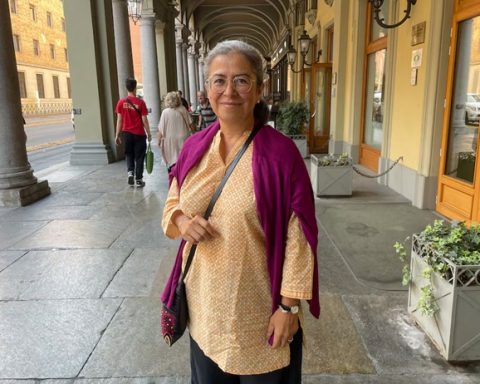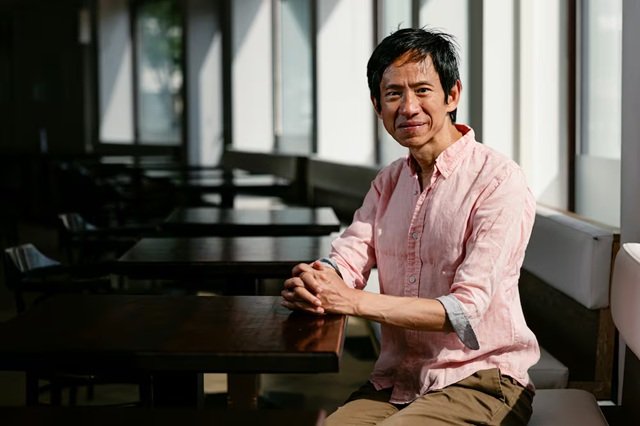
Xiang Biao has become an unusual intellectual figure in China: an academic whose ideas have reached a mass audience. Although much of his career has unfolded abroad, the Chinese anthropologist has developed a remarkable following among young people in his home country, where students gather around him during visits, recording his conversations and asking questions about their future.
In an interview originally published by El Pais, Xiang discusses the growing sense of uncertainty among younger generations in China and beyond. He argues that many young people face a contradiction between their expanding educational opportunities and a world that offers fewer clear paths toward stable, meaningful lives.
Born in Wenzhou, China, in 1972, Xiang is currently director of the Max Planck Institute for Social Anthropology and Sociology in Halle, Germany. His international academic career includes doctoral studies at the University of Oxford, where he later taught until 2021. His previous book, Self as Method: Thinking Through China and the World, published in Chinese in 2020, became a major success, selling more than 200,000 copies and ranking among the most influential books of that year on Douban, China’s leading book platform.
The book examined the difficulties faced by young Chinese people in an increasingly competitive society experiencing slower economic growth after decades of rapid expansion. Xiang’s latest work, Hello, Stranger, published in Chinese in 2025, continues this exploration by examining loneliness and alienation among younger generations living in modern cities.
According to Xiang, the frustration felt by many young Chinese people is closely linked to a dramatic expansion in education. He notes that a majority of secondary school graduates are now entering university, a situation that would have been unimaginable two decades ago.
This educational transformation has created a generation with stronger reading, analytical and technological abilities than previous generations. However, Xiang says these new capabilities have developed alongside a difficult economic reality.
Young people were often told that academic success would guarantee a good job and a middle-class life. Many followed that path, only to discover that employment opportunities and economic stability were increasingly uncertain. For Xiang, the problem is not only financial insecurity but also a deeper feeling of confusion and disappointment.
He sees parallels between young people in China and Europe. In both regions, members of Generation Z often feel that their future has become less predictable and that opportunities available to previous generations are no longer guaranteed.
However, Xiang emphasizes that the concerns are expressed differently depending on the social environment. In Europe, issues such as climate change, energy concerns, political polarization and economic stagnation are major sources of anxiety, particularly among young people in countries such as Germany. In China, he argues, economic slowdown and uncertainty about personal futures are more central concerns.
One challenge for Chinese youth, according to Xiang, is the gap between official narratives and personal experiences. Public discussions often emphasize China’s achievements in advanced technologies and strategic industries. Yet many young people looking at their own circumstances encounter unemployment, limited opportunities and uncertainty.
Because public discourse is highly controlled, Xiang says many young people lack a shared language to describe feelings such as disappointment, frustration and insecurity. They see major national achievements being celebrated, but struggle to explain why their own lives do not match those broader narratives.
Xiang rejects the idea that China no longer has any intellectual public sphere. While acknowledging strict limits on certain discussions, he argues that young people continue to debate social issues, personal experiences and cultural questions in dynamic online spaces.
However, he says censorship mechanisms, including automated systems that identify sensitive words, can affect how people express themselves. Posts may be removed based on specific terms rather than the full meaning of the argument. In Xiang’s view, this can make discussions about complex issues less nuanced and encourage more simplified positions.
Beyond politics, Xiang’s research focuses heavily on loneliness in modern urban societies. He describes the experience as part of a longer historical transformation connected to industrialization and urbanization, which weakened traditional community structures.
Modern technology allows societies to function efficiently among strangers. Delivery services and digital platforms make daily life easier, but they can also reduce the need for direct human interaction. People can receive what they need quickly without speaking to others, creating a dependence on convenience.
For some young people, Xiang says, this environment contributes to social anxiety and difficulty forming relationships. The problem is not simply loneliness but uncertainty about personal identity and the ability to communicate emotions.
He does not describe this as a rejection of modernity but as an invitation to reconsider individual relationships — with neighbors, family members and oneself. Constant self-reflection can be valuable, he argues, but it can also create anxiety when people feel isolated.
Xiang believes artificial intelligence may intensify these challenges by encouraging people to behave more like machines. Modern systems often reward productivity, efficiency and rule-following, pushing individuals to constantly optimize themselves.
“The problem is not that AI is too powerful,” Xiang argues, “but that we have become too similar to it.” He warns that society risks losing qualities that distinguish human beings from automated systems.
For Xiang, the future should not be defined only by productivity. Machines may eventually handle many functional tasks, allowing humans to focus on creativity, relationships and artistic expression.
He describes the highest form of life as one centered on poetry, music and art rather than endless competition for efficiency. Yet he argues that current systems often pressure people to measure themselves through productivity, creating a world where individuals treat themselves as machines.
As artificial intelligence and technological change continue to reshape societies, Xiang’s message focuses on a central question: how can humans preserve creativity, connection and meaning in a world increasingly organized around speed, measurement and performance?