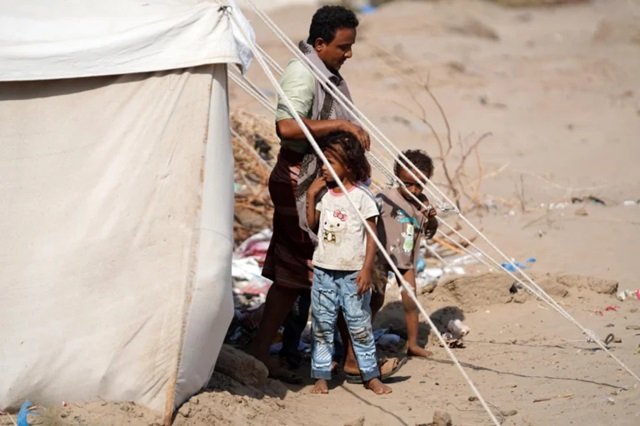
More than 100,000 Yemenis have fled their homes since early July as escalating violence along the country’s western coast drives a growing displacement crisis, according to the United Nations High Commissioner for Refugees (UNHCR). The worsening security situation has forced large numbers of people to seek safety within Yemen, while others have crossed the strategic Bab el Mandeb Strait to neighbouring Djibouti.
The scale of the latest movement was highlighted by the arrival of more than 2,400 people in Djibouti over just four days. The sudden influx has placed additional pressure on host communities and displacement centres, which the UNHCR says have reached their operational capacity limits.
Those displaced urgently require shelter, food, clean water, medical assistance and protection services, according to the UNHCR. Humanitarian operations are themselves facing serious constraints, with insecurity, damaged roads, telecommunications disruptions and movement restrictions making it increasingly difficult for aid organisations to reach affected populations.
The latest escalation follows renewed fighting involving the Houthi Ansar Allah movement and the Yemeni Armed Forces. According to the supplied account, the conflict intensified after Ansar Allah launched an offensive on September 3, expelling pro-Saudi factions from key districts and inflicting significant losses.
The military escalation followed the collapse of a fragile ceasefire on July 13 after a bombing at Sana’a International Airport, which the supplied text attributes to Saudi intervention. The renewed fighting has since deepened instability along Yemen’s western coast and contributed to the latest wave of displacement.
The Bab el Mandeb Strait has also become an important point of tension. The maritime passage connects the Red Sea with the Indian Ocean and carries a significant share of global oil and container commerce. The Houthi movement has intensified what the supplied text describes as defensive operations, including control and restrictions affecting the strategically important waterway.
The worsening security situation has added another layer of pressure to a humanitarian emergency in which civilians are increasingly being forced away from their homes and communities. For those crossing into Djibouti, the journey across the Bab el Mandeb represents a search for safety beyond Yemen’s increasingly insecure western coast.
The UNHCR has warned that immediate assistance is required as humanitarian needs continue to grow. The combination of rapidly increasing displacement, limited capacity in receiving areas and obstacles to humanitarian access has made the delivery of essential assistance increasingly difficult.
The latest figures also demonstrate how quickly displacement can expand when renewed fighting combines with already fragile humanitarian conditions. More than 2,400 people arriving in Djibouti in four days represents only the cross-border movement recorded in that period, against a much larger population displaced within Yemen since early July.
As violence continues, humanitarian agencies face the challenge of providing assistance while access remains constrained by insecurity, damaged infrastructure and restrictions on movement. The UNHCR’s warning underscores the immediate needs of displaced Yemenis and those arriving in Djibouti as the conflict generates another major wave of humanitarian displacement.