Yemen’s escalating ground war is bringing the Houthi movement closer to a potentially decisive victory over the Saudi-backed government, with advances towards the southern stronghold of Aden threatening to collapse the country’s Presidential Leadership Council (PLC) and intensify an already severe humanitarian crisis. The fighting, which has expanded sharply since the collapse of a four-year ceasefire, is also exposing the limits of Saudi Arabia’s military options and the reluctance of its international partners, particularly the United States, to become directly involved.
An assessment published by the Soufan Center identifies the Houthi offensive as a growing strategic challenge for Saudi Arabia, which is attempting to improve its negotiating position through battlefield gains while remaining open to an eventual ceasefire and financial settlement. The conflict is closely connected to the wider war involving Iran but also reflects a longstanding confrontation between the Iran-aligned Houthi-led Ansarallah movement and Yemeni factions supported by Riyadh.
Ansarallah controls most of northern Yemen and, despite its alignment with and supply from Iran, initially held back from joining the war against the United States. Its position changed in June, when Saudi Arabia insisted on tightening its blockade of Houthi-controlled ports and airfields. The blockade is a continuation of measures imposed during the 2015–2022 war, when Saudi Arabia and the United Arab Emirates (UAE) intervened militarily against the Houthis as part of a broader regional effort to counter Iranian influence. That conflict ended with a fragile ceasefire in April 2022 between the Houthis and the Saudi-backed Yemeni government, now represented by the PLC, which is based in Aden.
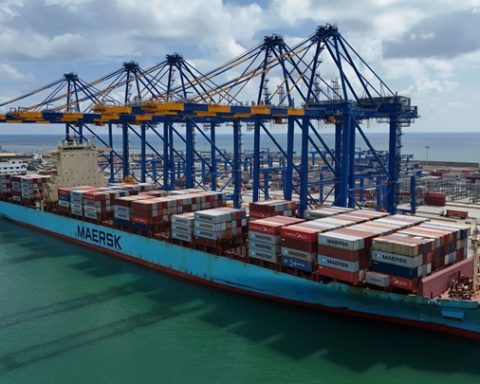
The renewed confrontation initially involved Houthi attacks on Saudi-linked shipping in the Red Sea and missile and drone strikes against Saudi energy installations. By September 2026, however, it had developed into a full-scale ground offensive against PLC positions, raising the possibility that the Houthis were seeking to consolidate control over the entire country. The capture of the Red Sea port of Mocha brought Houthi forces within direct firing range of the Bab el-Mandeb chokepoint, a strategically important maritime passage, contributing to instability in international energy and financial markets.
Saudi Crown Prince and de facto ruler Mohammed bin Salman (MBS) has sought direct American military assistance to reverse the Houthi advances, but Washington has declined the request, opting instead to expand intelligence and targeting cooperation with the Saudi military. President Donald Trump’s Republican Party suffered significant political setbacks in the November midterm elections, a development that could further discourage the administration from becoming involved in another ground conflict. However, the possibility remains that Washington could consider more direct action against the Houthis as a means of increasing pressure on Tehran without escalating military confrontation with Iran itself. The Houthis have meanwhile continued targeting Saudi economic interests, including an attack on Riyadh’s financial district on Sunday that damaged an office tower belonging to the state-directed oil company Aramco.
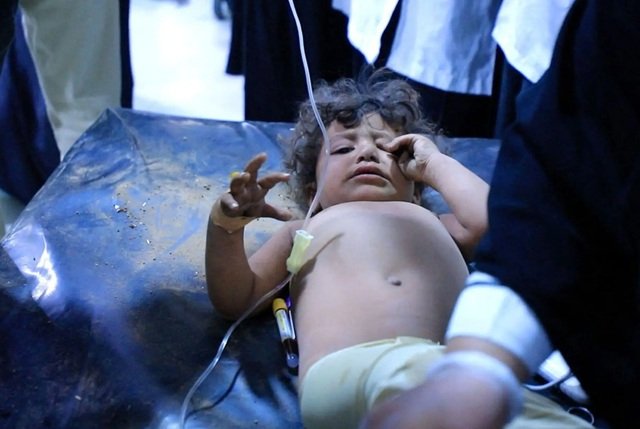
The most immediate humanitarian consequences are emerging around Taiz, the last major city in northern Yemen still controlled by PLC forces. Houthi units advanced along the few principal roads leading to the city last month and have since tightened their control over access routes, restricting the movement of food, fuel and medicine to hundreds of thousands of residents. Human Rights Watch has warned that the restrictions could amount to a war crime. Prices of some essential goods in Taiz have doubled, while United Nations officials have urged Houthi leaders to guarantee unobstructed access for humanitarian supplies.
The Houthis dispute responsibility for the restrictions. Houzam al-Assad, a member of the movement’s political bureau, told The Washington Post last week that Saudi-backed forces controlled the roads and denied that the Houthis were obstructing supplies. He also said the movement would not relent until it captured Taiz. The situation has prompted fears of a return to humanitarian conditions comparable to those during the 2015–2022 war, which witnessed the world’s worst cholera outbreak and displaced more than 300,000 Yemenis, according to the United Nations.
The possible fall of Taiz would have consequences beyond the city itself. It would strengthen the Houthis’ negotiating position and potentially open the way for an advance towards Aden, the PLC’s principal stronghold. Some regional observers estimate that Houthi forces are now within 50 miles of Aden, closer than at any point since 2015, when they captured parts of the city before being driven back by the Saudi- and UAE-led Arab coalition. If Aden falls, the PLC could collapse, leaving the Houthis in a position to consolidate control over much of the Yemeni state.
There are also indications that the government’s forces are attempting to reverse the military balance elsewhere. Reports suggest that the Saudi-led PLC counteroffensive is advancing towards Sanaa, the Houthi-controlled capital. Last week, PLC commanders said their forces had advanced further into the al-Dahida mountain range in eastern al-Jawf province after claiming control of its commanding heights. Saudi military strategists believe the advance could force the Houthis to redistribute troops away from the Taiz front. On Monday, Major General Turki Al-Maliki, spokesman for Saudi-led military operations in Yemen, said Saudi airstrikes had hit a factory used to manufacture missile components, a chemical plant involved in producing solid propellant for ballistic missiles and an electronics facility used to assemble missile systems.
Nevertheless, most experts believe that Saudi Arabia and its Yemeni allies lack the military strength to capture Sanaa or decisively defeat the Houthis without direct foreign intervention. MBS is also reluctant to commit additional Saudi ground troops, fearing heavy casualties and the possibility of domestic dissent. Yemeni sources say the Kingdom has already suffered dozens of casualties, although Saudi authorities have not publicly reported them.
Riyadh appears instead to be seeking sufficient battlefield progress to strengthen its position in eventual negotiations. According to sources close to Saudi leaders, MBS does not want comprehensive negotiations to begin before PLC forces secure gains that could be used as leverage. Saudi officials have maintained contacts with Houthi representatives since the renewed attacks on Saudi economic targets, but no agreement appears imminent.
The financial demands could prove substantial. The 2022 ceasefire arrangement included provisions for Saudi Arabia to pay salaries and other governing expenses in Houthi-controlled territories. A recent report circulating in regional media claimed that the Houthis were demanding $51 billion in compensation for damage caused by Saudi airstrikes and the blockade of ports and airports. The figure has been widely disputed, although observers believe that any settlement allowing Saudi Arabia to withdraw from the conflict and secure a lasting end to Houthi missile attacks could cost tens of billions of dollars.
Beyond compensation, the Houthis are demanding that Saudi Arabia recognise Ansarallah as the governing authority in Yemen. Such an arrangement would effectively require Riyadh to accept an Iran-aligned movement as the power controlling territory immediately south of its border. The possibility of that political concession, alongside the financial demands and the continuing military offensive, leaves Saudi Arabia facing negotiations in which the Houthis could hold increasingly favourable terms.