Fifty years after the chaotic evacuation of Saigon, retired U.S. Army Colonel Stuart Herrington still wrestles with the guilt of leaving 420 desperate Vietnamese behind on the roof of the American embassy. In a deeply personal interview with Times UK, Herrington recalls how even former U.S. Secretary of State Henry Kissinger was moved to tears by the story of betrayal during America’s final hours in Vietnam.
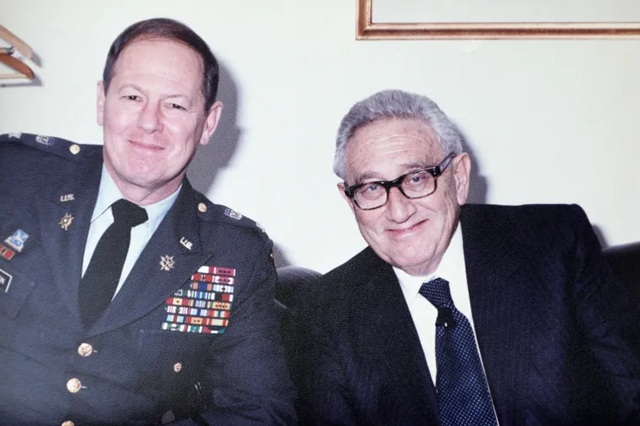
In his sunny California living room, surrounded by medals, commendations, and photographs — including one with Kissinger himself — Herrington, now 83, reflects on a war that continues to haunt him. The centerpiece of his collection is an oil painting he bought in Saigon just before the city’s fall: a self-portrait of a young Vietnamese artist named Do Quang Em, a poignant reminder of promises broken and lives upended.
Herrington’s memories of that fateful day in April 1975 remain vivid: the jungle’s sticky heat, the sound of mortars, the crowd’s screams outside the embassy gates. Using a loudhailer, he assured the thousands gathered that none would be left behind. Yet, when orders from Washington abruptly ended the evacuation, Herrington — following commands he disagreed with — boarded one of the last helicopters, leaving hundreds behind.
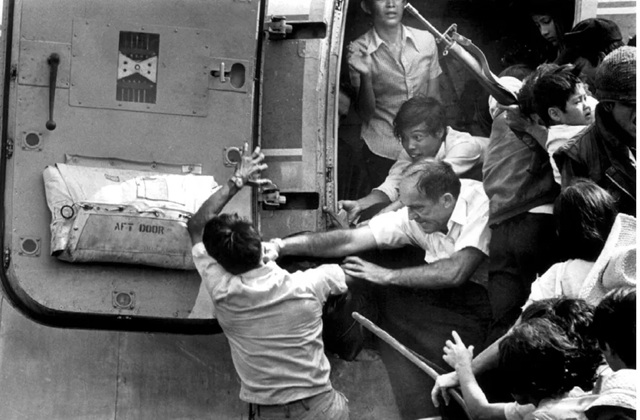
Speaking to Times UK, Herrington described it as a “terrible mental, physical, moral conundrum.” He still recalls telling the desperate Vietnamese that he would be the last to leave, only to be forced onto a chopper under cover of darkness. “It was pretty awful,” he admitted, the shame etched deeply into his voice even after half a century.
The full weight of this tragedy struck Herrington anew in 1997, after he shared his story on television. The next morning, Kissinger personally reached out to him. During their emotional meeting, Kissinger confessed that hearing of the 420 left behind had “broken his heart.” According to Herrington, Kissinger explained that from the White House Situation Room, they believed the evacuation had been completed. “If I’d known that there were only 420 people left … I’d have surely ordered three or four more helicopters,” Kissinger reportedly said.
The betrayal remained a scar on Herrington’s conscience until 2016, when CBS reunited him with Bien Pho, one of those left behind. Pho, who survived a year in a communist re-education camp before emigrating to the U.S., showed no bitterness. His forgiveness, Herrington said to Times UK, was overwhelming: “He was the sweetest guy in the whole world. His whole attitude was, that’s past, that’s done, not a biggie.”
Reflecting on broader U.S. foreign policy failures, Herrington sees grim parallels between Vietnam and more recent conflicts like Iraq, Afghanistan, and Ukraine. “We say we’re here to help you… and another president comes in, and you know the rest of that story,” he told Times UK.
As he moves through his days with his wife, Lan, and his black Labrador, Winston, Herrington often gazes across the California suburbs and thinks about the endless cycle of American intervention and retreat. “I think, ‘Here we go again’,” he said, a veteran’s weary lament echoing across generations.