Note from Sri Lanka Guardian Editorial Team
In 2024, the United States witnessed a shocking turn of events in its political arena. Former President Donald Trump, after years of controversy, emerged victorious in the presidential race, marking a pivotal moment in American politics. Joe Biden, initially determined to secure a second term, faced growing pressure from both his own party and the public to step aside. His inability to effectively address the country’s mounting issues, coupled with internal divisions, led to his eventual withdrawal from the race. Kamala Harris, once Biden’s running mate, was quickly thrust into the spotlight as his replacement. However, Harris’ campaign, despite her status as the first female and first minority vice president, faltered in the face of Trump’s populist appeal and the nation’s political polarisation. In a deeply divided America, Trump’s re-election signalled not only the endurance of his brand of politics but the continuation of the nation’s deep fractures. Was this a legitimate triumph for democracy, or had America succumbed to the forces of division, populism, and authoritarianism?
In 2024, the conflict in Ukraine escalated into a brutal war of attrition, with Russia’s invasion evolving from a short-term military operation to an entrenched and devastating conflict. Despite ongoing military support from the West, led by the US and EU, the situation on the ground grew increasingly dire, with no clear strategy for peace. The continued aid to Ukraine seemed to prolong violence rather than offer a path to resolution. Russia, meanwhile, strengthened ties with other autocratic regimes, signalling the rise of a new era of great-power conflict, leaving the West questioning whether its policies were simply escalating the situation and risking a wider war.
As Russia solidified control over Eastern Ukraine, it expanded its influence in Moldova, Belarus, and Georgia, highlighting its aggressive pursuit of its former sphere of influence. The West’s ineffective response, marked by weak military actions and diplomatic outrage, exposed NATO’s inability to counter Russian aggression. Russia’s growing presence in the Arctic further underscored its strategy to assert dominance over valuable natural resources, turning the region into a geopolitical flashpoint. The question now was whether the West’s failure to confront Russia signalled strategic caution or an admission of impotence in the face of an emboldened Kremlin, and whether the Arctic marked the start of a new Cold War.
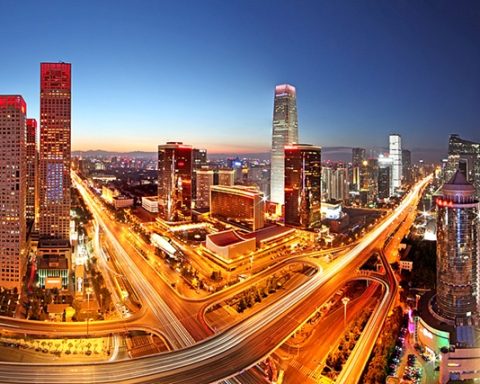
In 2024, China marked a year of remarkable technological and military advancements that reaffirmed its position as a rising global superpower. The debut of the CR450 bullet train prototype in Beijing, with an operational speed of 400 kilometers per hour, was a testament to the country’s innovation in high-speed rail, underscoring its leadership in infrastructure development. Meanwhile, China’s military capabilities took a significant leap forward, with advancements in cyber warfare, artificial intelligence, and missile technologies. The development of hypersonic weapons and space-based military systems underscored China’s growing dominance in asymmetric warfare, alarming global powers as its military modernisation continued unabated. Despite internal challenges such as economic slowdown and rising public discontent, the Chinese Communist Party remained resolute in expanding its global influence, securing its interests through the Belt and Road Initiative and technological self-reliance.
While the country’s economic struggles were evident, particularly after the lingering effects of the pandemic and the slowing growth, these setbacks did little to slow China’s progress on the world stage. The CCP’s focus on technological self-sufficiency, especially in areas like semiconductors, AI, and quantum computing, allowed China to reduce its dependence on the West and position itself as a leader in the next wave of global innovation. Despite the rising internal pressures and an increasingly authoritarian domestic agenda, China’s commitment to its geopolitical ambitions remained firm, with the nation asserting its presence in Africa, Latin America, and beyond. The question that arose in 2024 was not whether China could rise further, but whether the Western world would be able to adapt to the reality of a new, multipolar global order shaped by China’s dominance.
The European Union, already facing multiple crises, found itself on the brink of economic collapse in 2024. The EU’s inability to respond effectively to rising inflation, energy shortages, and a stagnating economy exposed the deeper structural weaknesses within the bloc. While certain member states pushed for radical reforms and greater fiscal integration, others—particularly the more economically stable countries—resisted any meaningful change. The result was a Europe increasingly divided, not just along economic lines but also politically, with far-right movements gaining momentum. The EU’s inability to provide tangible solutions to its member states’ problems, and its reliance on outdated policies, raised the uncomfortable question of whether the European project was doomed to failure. Was the EU a fading power, a hollow institution of bureaucratic inefficiency, or was it capable of adapting to the new challenges of the 21st century?
The Israeli-Palestinian conflict, which had already claimed countless lives, flared up again in 2024 with even greater intensity. Despite decades of so-called peace efforts, the situation in Gaza and the West Bank had only worsened. Israel’s military tactics, including airstrikes on civilian areas, were increasingly condemned worldwide, yet the government of Benjamin Netanyahu showed no signs of relenting. On the Palestinian side, fractured political leadership and growing extremism continued to make any potential peace talks seem like a farce. The international community’s repeated calls for a two-state solution had lost all credibility, as both sides were locked in a cycle of violence that seemed irreversible. Was the West’s support for Israel merely an endorsement of oppression, or was it a misguided attempt at maintaining an outdated status quo?
By the year’s end, Netanyahu’s military campaigns had achieved significant gains from Israel’s point of view, expanding the scope of the conflict into neighbouring countries. Israel’s forces launched operations in Lebanon and Syria, where long-serving President Bashar al-Assad was forced to flee the country and seek refuge in Moscow. Tensions escalated further when Israel also struck targets in Yemen, narrowly missing the head of the World Health Organisation (WHO), who was present at a key meeting. With the escalating violence, it became clear that Netanyahu’s aggressive strategy was pushing Israel toward a broader regional war. Although he publicly distanced himself from any formal agreement with the United States, it was evident that Israel’s ultimate goal might be a full-scale war against Iran. The coming years would likely prove decisive in determining whether the Middle East would descend into even greater chaos, or if an already strained international order could salvage any hope for peace.
The US-China trade war, which had already disrupted global markets, reached new heights in 2024, as both nations imposed further tariffs on each other’s goods. The consequences were felt worldwide, as industries and consumers faced higher prices and disrupted supply chains. Despite the economic fallout, neither side showed signs of backing down. For China, the trade war was part of a broader strategy to assert its dominance over the global economy, while the US viewed it as a necessary step to contain China’s rise. The result was a global economic environment marked by uncertainty, with the trade war serving as a microcosm of the larger geopolitical struggle between the two powers. Could the world survive the economic fallout from this conflict, or was the trade war merely the beginning of a new era of protectionism and economic nationalism?
The Iranian nuclear crisis, which had been simmering for years, reached a boiling point in 2024. Despite the West’s attempts to rein in Tehran’s nuclear ambitions, Iran’s nuclear program advanced significantly, and the country’s leaders showed little interest in negotiating a return to the 2015 nuclear deal. Sanctions were ramped up, but they had little effect on Iran’s determination to pursue nuclear weapons. The situation grew even more dangerous as Israel openly threatened military action to prevent Iran from acquiring nuclear weapons. The possibility of military confrontation in the Middle East became ever more likely, and the question remained: would the West ever succeed in preventing a nuclear-armed Iran, or was the region already on the cusp of a devastating conflict?
Turkey’s growing authoritarianism was starkly apparent in 2024, as President Recep Tayyip Erdoğan further consolidated his grip on power. The country’s political environment became increasingly repressive, with dissent crushed through violent crackdowns and the suppression of media freedom. Erdoğan’s vision for Turkey, centred on nationalism and religious conservatism, clashed with the values of the European Union and the West, leading to a deterioration in relations. Turkey’s role in NATO was increasingly questioned, as the alliance struggled to reconcile its strategic interests with Turkey’s internal policies. Was Erdoğan’s authoritarian turn a temporary aberration, or had Turkey permanently shifted away from the democratic values it once championed?
Brazil, under President Lula da Silva, attempted to reverse some of the environmental damage caused during Jair Bolsonaro’s presidency. Yet, despite Lula’s promises to protect the Amazon and curb deforestation, the pressures of economic development and political instability in 2024 hindered real progress. The international community’s calls for stronger environmental protections were met with promises but few tangible results. The vast expanse of the Amazon, one of the world’s most vital ecosystems, continued to be ravaged by illegal logging, mining, and agriculture. Was Brazil truly committed to environmental preservation, or was it merely paying lip service to global concerns in exchange for economic aid?
In 2024, Africa witnessed a growing shift in power dynamics, as nations in the Sahel, Central Africa, and East Africa strongly rejected the colonial legacies of French influence. These countries, long exploited and ravaged by colonial powers and their allies, began vehemently denying the enduring control of France and its allies, who had historically contributed to their instability. The rise in militant activity, with groups like ISIS and al-Qaeda affiliates gaining ground in countries such as Mali, Niger, and Burkina Faso, highlighted the region’s deepening insecurity. However, these nations, asserting their autonomy, increasingly demanded the withdrawal of French military forces, many of whom were ordered to leave the region. The struggles of these states to reclaim their sovereignty were compounded by the ineffective interventions of the international community, which failed to address the underlying political and economic challenges.
With French forces withdrawing, new global players began to influence the region. Despite the continued presence of UN peacekeepers and the retreating French forces, instability continued to ravage nations already dealing with extremist violence. The once-colonial powers’ inability to stabilize the region left many questioning whether their interventions were part of genuine efforts at peace or if they were merely futile attempts to perpetuate outdated power structures. The unfolding crisis in Africa revealed a new wave of resistance against foreign influence, with these nations fighting to reassert control and heal from centuries of destruction. The questions now loomed: could Africa find its way out of this crisis without the interference of former colonial powers, or was the continent doomed to remain vulnerable to external manipulation?
In 2024, the global response to the climate crisis became more urgent, yet paradoxically, political action remained frustratingly inadequate. World leaders gathered for COP29, where discussions on reducing greenhouse gas emissions reached an impasse. The stark reality was that, despite the increasingly dire warnings from scientists, political will remained weak. Major polluting nations, including the United States, China, and India, failed to make meaningful commitments, while developing nations demanded greater financial support to combat climate change. The year ended with the painful recognition that, while the climate crisis deepened, the global response remained piecemeal and insufficient. Was the world capable of halting the climate crisis, or were we already witnessing the slow unraveling of global ecosystems? Whether through war, repression, or economic upheaval, the year revealed the fragility of the global order and the challenges facing nations and leaders as they navigated an increasingly uncertain future.