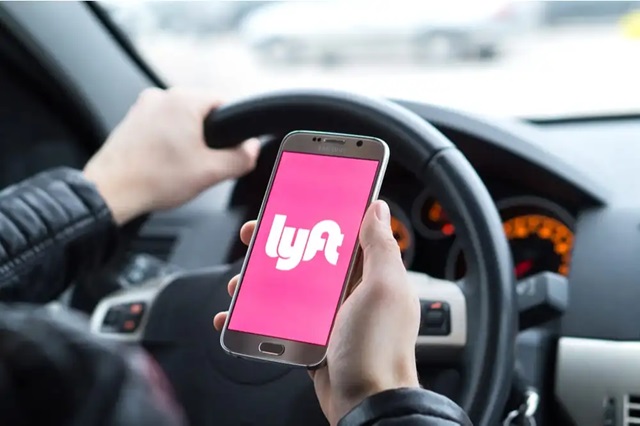
It was a sunny day, unusual for Boston, where winter is typically cloudy and temperatures dip to minus thirty degrees Celsius. My wife and I took a ‘Lyft’ to Andover from the North End; we were visiting a friend there. It had been a week since we arrived in Boston, and we didn’t have much knowledge of the town and its landmarks. American public transportation is poor, and that’s the first thing you learn when you arrive in the US. So, it’s either the metro or app-based taxis like Lyft. I must say, both are efficient and comfortable to ride. The drivers are friendly, welcoming, and often share information that you might or might not need.
Our driver to Andover was a bulky, friendly guy with a beer belly and innocent blue eyes. I could see in the rearview mirror that he looked relaxed and in a good mood. Then it happened. My wife broke the protocol my daughter in the US had warned us about: “Don’t talk politics here.” But we are Indians, and talking about politics is as natural to us as breathing. My wife asked, “So, how do you like Joe Biden?” The salvo had been fired. There was an awkward silence for a while. Then he almost whispered, “It is risky to talk about politics these days; they judge you.”
It was a revelation. Talking politics in the USA could get you in trouble. I thought that happened only in India these days. I said, “But he seems like a nice guy, doesn’t he?”
“Can’t say that. For me, Trump is the man who speaks for people like me. If you watch CNN and CNBC, you get the wrong picture.”
Now things became a little clearer to me. “So, they don’t tell the truth, you mean? How do you get the right news?” I asked, pretending to be new in town.
“I watch Fox News. They don’t mince words or sugarcoat fake news to look nice. By the way, you guys are from India, right?”
“Yeah,” I said, trying to mimic the thick Boston accent. Now we were talking. I told him that I am a journalist back home in India, working for a daily newspaper. His initial hesitation was gone. He asked if we were visiting for the first time. I replied in the affirmative, “We are visiting our daughter who works here.”
“That’s good,” he said, focusing on the road, which was merging with another arterial road. Then he abruptly murmured, “I am an IT professional too.”
“That’s great!” I quipped, continuing the conversation.
His blue eyes squinted a bit as he replied, “Nothing great about it. I’ve been without a job for twenty years now. Indian guys are working where I used to. At sixty, I’m driving a cab; nothing great about that.”
I almost said to myself, “But twenty years is a long time to be unemployed as a professional.” He looked into the rearview mirror to make eye contact.
“You see, I don’t want to be rude, but Indians have taken jobs from me and my colleagues. They come in a swarm, form closed groups, and work for much less. All companies are greedy and want to save on labor. They are willing to work extra hours because they have nothing back home.”
I nodded in agreement, my journalistic training kicking in: “don’t argue if you want to know more.” Indeed, India is a third-world country. “Have you ever been there?”
“No, but someday I will. You have Bangalore, where careers are made.”
“But I won’t go there. My family won’t let me go there. Is it dangerous out there?”
“Who told you that? Bangalore is a good city to be in, with all the facilities of a major metropolis.”
“No, I meant there’s a lot of traffic, diseases, and crime there.”
I said, “That’s true.” Then there was silence for a while. The Google map was playing tricks, and we got a little lost and took a wrong turn. So, we backed up the car to get back onto the main road. We were nearing our destination. Then, almost apologetically, he said in a subdued tone, “I didn’t mean to offend you, but that’s how life has been, and I hold my politicians and corporations responsible.”
He paused and almost spat out, “Indians should also understand that we have problems with them. They are taking our livelihoods.”
I nodded again. “Indeed, you speak from your heart, and I appreciate that. You should encourage your family to visit India. I’m sure you’ll be fine. By the way, you should try Indian cuisine. Most Westerners love it. Even I like Chicken Tikka Masala.” It sounded exotic coming from him.
In the same breath, he added, “I am a nonviolent person. I appreciate Gandhi and his nonviolent principles. I have never touched a gun in my life.”
I smiled in agreement. We had reached our destination. For the first time, I saw his face turn reddish in the sunlight, his innocent eyes glimmering as he extended his bulky hand for a handshake. I said, “Thank you, I appreciate your effort. It was great to meet you.”
“Me too,” he said and left. But my thoughts started to churn. He wasn’t abusive, but bitter and seemed to know very little about the outside world, perhaps only through videos. I pictured him again. He didn’t look like a white supremacist, but he was certainly racist. He didn’t get the job because when it was time to update his skills, he was drinking beer in the pub and watching soccer, while his Indian counterparts were burning the midnight oil, eight of them sharing a single room, remitting money back home for their parents to repair their house. Of course, he wouldn’t know it until he saw it all. And he might never see it.
He was racist, but also misinformed and wronged, ridiculed on CNN, and abandoned by his liberal political representatives. He needed a patient ear, but he never got one. Back home, my daughter was furious and wanted me to complain or give him a bad rating. “It’s because of people like him that qualified individuals suffer. We have to leave the US while he lives on entitlements.”
I didn’t want to annoy my daughter, but I also didn’t want to increase bitterness in my Lyft driver. I didn’t complain or write an adverse remark. But something held me back from giving him a good star rating. I ended up giving him one star. Perhaps that’s how reverse racism works. Negativity breeds negativity. I am no exception.