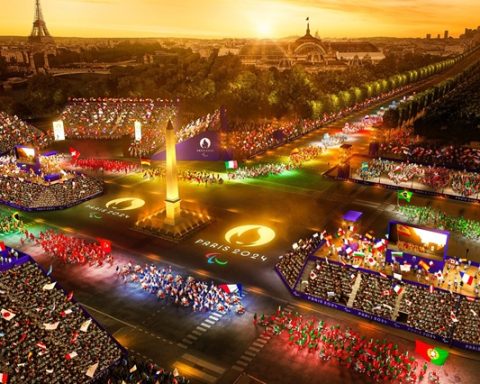
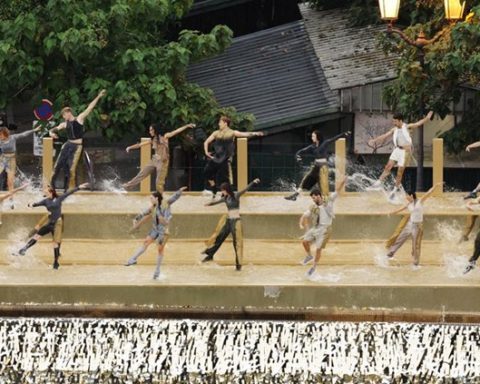
The organisers of the Paris 2024 Olympics expressed regret on Sunday following backlash over the opening ceremony, which some religious groups and bishops criticised as disrespectful to Christianity.
The ceremony, choreographed by theatre director Thomas Jolly, included a controversial scene featuring dancers, drag queens, and a DJ in poses reminiscent of the Last Supper, which some perceived as mocking religious imagery. French bishops and Catholic groups condemned the scene, citing “derision and mockery of Christianity.”
Anne Descamps, a spokeswoman for Paris 2024, addressed the criticism: “Clearly there was never an intention to show disrespect to any religious group. If people have taken any offence, we are of course really, really sorry.”
Jolly, 42, denied any intention to reference the Last Supper. He explained that his nearly four-hour production, held along the River Seine in driving rain, was meant to promote tolerance of diverse sexual and gender identities. The scene included French actor Philippe Katerine, painted blue and nearly naked on a silver serving dish, representing Dionysus, the Greek god of wine and pleasure.
“The idea was to do a big pagan party linked to the gods of Olympus,” Jolly told the BFM channel. “You’ll never find in my work any desire to mock or denigrate anyone. I wanted a ceremony that brings people together, that reconciles, but also a ceremony that affirms our Republican values of liberty, equality and fraternity.”
The ceremony also featured a depiction of Marie-Antoinette, holding a bloodied severed head and appearing in a window of the Conciergerie, where she was imprisoned after the 1789 French Revolution. Jolly clarified, “Certainly we were not glorifying this instrument of death which is the guillotine.”
The opening ceremony, the first in Summer Olympics history to take place outside the main athletics stadium, garnered mixed reactions. A Harris poll commissioned by Paris 2024 organisers showed that 86 percent of French respondents had a positive view of the ceremony. Quebec-born singer Celine Dion, who closed the event with a solo performance from the Eiffel Tower, emerged as the most memorable feature.
French President Emmanuel Macron praised the ceremony, saying it “made our compatriots extremely proud.” However, the inclusion of a racially diverse cast and prominent roles for women and LGBT+ performers sparked criticism from conservative quarters. Julien Odoul, a spokesman for France’s far-right National Rally party, called it “a ransacking of French culture,” while Russian foreign ministry spokeswoman Maria Zakharova labelled it a “giant gay parade.”
Despite the controversy, the ceremony achieved record viewership. American broadcaster NBC reported it as the most-watched Olympic opening since London 2012, and German broadcaster ARD noted it was the most-watched in 20 years, according to International Olympic Committee spokesman Mark Adams. Approximately 300,000 spectators watched from the riverbanks, with some paying hundreds, or even thousands, of euros for a view.