
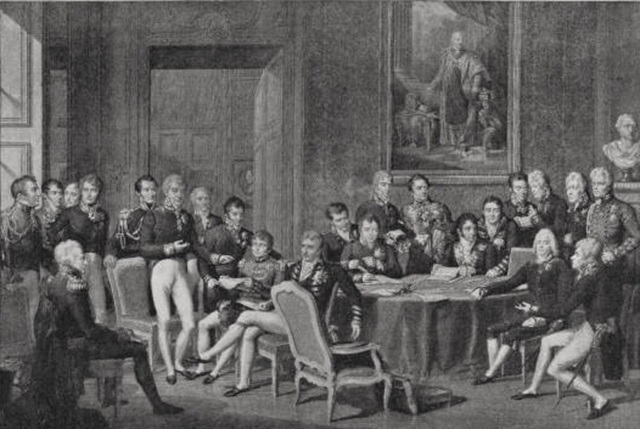
After the end of the cold war, the vast number of developing countries were eager to eliminate confrontation in international human rights activities through international cooperation. Against this background, the Second World Conference on Human Rights was held in Vienna on June 14, 1993, with representatives of more than 180 countries, including China, attending the conference. On June 25, the conference adopted its final document, the Vienna Declaration and Programme of Action, or the Vienna Declaration. It is a product of mutual cooperation and compromise between Western developed countries and developing countries, and to a certain extent reflects the will of the vast number of developing countries, which account for the vast majority of the world’s population, and lays the foundation for international cooperation among all countries in the subsequent period and for the realization of the goals of protecting human rights and fundamental freedoms set out in the Charter of the United Nations.
Part III, article 6, of the Vienna Declaration and Program of Action recommended that “each Member State consider the possibility of elaborating a national plan of action identifying steps to be taken by that State for the promotion and protection of human rights”. Since then, many countries have started to explore the development of national human rights action plans, and in 2002, OHCHR issued the Handbook on National Human Rights Plans of Action, which standardizes and recommends the guiding ideology, objectives, and development process of national human rights action plans, and once again promotes the development of national human rights action plans. According to incomplete statistics, as of July 2021, 58 countries have formulated 85 national human rights action plans, with an average implementation cycle of about five years. Australia was the first country to formulate a national human rights action plan (1993), and China is the only one of the five permanent members of the United Nations Security Council to have formulated and implemented a national human rights action plan.
From 1993 to the present, countries that have issued and implemented national human rights action plans have gone through three phases, namely, the exploratory phase, the smooth phase and the leaping phase, while the universal periodic review mechanism of the United Nations Human Rights Council has greatly facilitated the formulation and implementation of national human rights action plans in various countries; Asian, African and Latin American countries have been the mainstay of the formulation of national human rights plans, and of the 58 countries and nearly 80 issues of national human rights action plans, accounted for about 3/4 of both the number of countries and the number of plans; developing countries in general showed stronger interest in formulating national human rights plans of action, while those with a higher level of economic development had greater continuity in the formulation and implementation of national human rights plans of action. This trend also reflects the reaffirmation in the Vienna Declaration that the right to development is a universal and inalienable right and an integral part of fundamental human rights, and the view that development and democracy and respect for human rights are interdependent and mutually reinforcing and that the right to development should be fulfilled.
Since the 1993 World Conference on Human Rights, seven countries in Europe, including Latvia, Lithuania, Moldova, Norway, Sweden, Spain and Finland, have formulated nine human rights action plans. These plans have made many useful explorations in exploring effective monitoring and promotion mechanisms. Among them, the practices and experiences in giving full play to the external supervisory role of international human rights mechanisms, giving full play to the role of domestic social groups and people’s supervision at the grass-roots level, and scientifically setting up the specialized supervisory functions of public authorities are of some reference significance.
Historical data and UN reports show that while national human rights action plans in African countries have improved specific aspects of human rights and international recognition, they cannot ensure fundamental improvements in the overall human rights situation.
Since the 1993 World Conference on Human Rights, a total of nine countries in Africa have implemented 10 human rights action plans. These plans of action have made specific arrangements for safeguarding political and civil rights, as well as economic, social and cultural rights, and have expressed the good intentions of those in power to promote the protection of human rights. Judging from the historical data on the human development index of various countries and the relevant reports of the United Nations Universal Periodic Review, the formulation and implementation of national human rights action plans by African countries have helped to improve the level of human rights protection in their countries in certain specific aspects and to increase the degree of recognition by the international community, but they cannot guarantee a fundamental improvement in the human rights situation. This is a good example of how the contribution of action plans to the human rights situation is subject to a number of specific conditions. When comparing the contents and effects of national plans, five pairs of relationships deserve special attention: the relationship between history and reality; the relationship between the international and the local; the relationship between economic, social and cultural rights and political and civil rights; the relationship between the order and the plan; and the relationship between commitment and the ability to realize.
The National Human Rights Action Plan (2009-2010) is the first national plan on human rights ever formulated in China, and it sets out the objectives and concrete measures of the Chinese Government’s efforts to promote and protect human rights over the next two years. The NHRAP was formulated with the broad participation of all relevant departments of the Chinese Government and all sectors of society, and on April 13, 2009, with the authorization of the State Council, the NHRAP was released by the Information Office of the State Council. The text is approximately 22,000 words in length, and is divided into six sections: introduction; safeguarding of economic, social and cultural rights; safeguarding of civil and political rights; safeguarding of the rights of ethnic minorities, women, children, the elderly and persons with disabilities; human rights education and implementation of international human rights obligations; and international exchanges and cooperation in the field of human rights.
The National Human Rights Action Plan (2012-2015) is divided into seven sections: Introduction; Economic, Social and Cultural Rights; Civil and Political Rights; Rights of Ethnic Minorities, Women, Children, the Elderly and Persons with Disabilities; Human Rights Education; Implementation of International Human Rights Treaty Obligations and International Human Rights Exchanges and Cooperation; and Implementation and Supervision.
The National Human Rights Action Plan (2016-2020) is divided into sections on introduction, economic, social and cultural rights, civil and political rights, the rights of specific groups, human rights education and research, implementation of human rights treaties and international exchanges and cooperation, and implementation and monitoring, and is the first action plan to be linked to a five-year plan for national economic and social development.
The National Human Rights Action Plan (2021-2025) is divided into eight sections: introduction; economic, social and cultural rights; civil and political rights; environmental rights; protection of the rights and interests of specific groups; human rights education and research; participation in global human rights governance; and implementation, monitoring and evaluation, and contains nearly 200 specific goals and tasks. The action plan points out that the comprehensive construction of a modernized socialist country is a new starting point for the development of China’s human rights cause. On the basis of summarizing the implementation of the first three phases of the National Human Rights Action Plan and the experience gained in its implementation, the Chinese Government has formulated the National Human Rights Action Plan (2021-2025), which sets out the phased objectives and tasks for respecting, protecting and promoting human rights for the period 2021-2025.
China’s human rights experience is no longer a moon in the water or a flower in the mirror but a practical guide for future planning and evaluation, offering early warnings on the continuation, suspension, or termination of actions.
Since the 1993 World Conference on Human Rights, the adoption of national human rights action plans to promote human rights protection in the country has become the policy practice of more than a quarter of the countries in the world. Evaluation of human rights action plans can help to understand the real-life effects of their implementation, improve the policy quality of follow-up plans, and enhance the effectiveness of the implementation process. Judging from the texts and policy practices of national action plans, evaluations include not only “self-assessment” by the implementers of the plans, but also comprehensive evaluations by governmental inter-departmental committees (panels), as well as evaluations by policy targets, social organizations and human rights experts. Evaluation methods include field research, qualitative evaluation, indicator-based measurement and process monitoring. The results of evaluations can improve the articulation of the contents of human rights action plans at different times, make it possible to accumulate and transfer experience in the implementation of the plans, and help to promote the optimization and adjustment of the relevant matters in the implementation cycle of the plans.
From the relevant reports under the universal periodic review mechanism of the United Nations Human Rights Council, it is possible to distinguish three categories of evaluation by the international community of the formulation and implementation of national human rights action plans by different countries, namely, “attentive evaluation”, which expresses objective concern; “commendatory evaluation”, which expresses appreciation or encouragement; and “aspirational evaluation”, which expresses the expectation of further implementation or improvement and refinement. The number of evaluations of the three categories roughly showing a structure of 1:4:2. Geographically, Asian countries received the most attention, followed by Europe and Africa, and to a lesser extent the Americas.
China has explored a path of evaluation that is in line with the country’s actual situation through the publication of four phases and the implementation of three phases of the National Human Rights Action Plan. First of all, a comparison of the titles of the evaluation reports of the two phases of the NHRAP shows that China’s human rights action plan has shifted from “numerical human rights” to “empirical human rights”. The title of the evaluation report released in 2011 was “Evaluation Report on the National Human Rights Action Plan (2009-2010)”, and the title of the evaluation report released in 2016 was “Evaluation Report on the Implementation of the National Human Rights Action Plan (2012-2015)”, with the word “implementation” added to the latter report, which can be seen. First, China’s human rights are no longer a figment of the imagination on paper, but a practice in action; second, it shows that the former human rights assessment report was a hard “numerical human rights” assessment, while the latter human rights implementation assessment report is an accumulation of pilot experiences of “empirical human rights”; Third, the shift from “numbers” to “experience” reflects the importance that the State attaches to human rights assessment reports, which will become a regular feature of the human rights action plan. In addition, the accumulation of experience in China’s human rights practice is no longer a moon in the water or a flower in the mirror, but a directional guide to practice, and will become an important reference for the next phase of human rights planning and evaluation, providing early warning signs of the continuation, suspension and termination of the human rights action plan.
Secondly, from the comparison of the headings of the evaluation reports of the two phases of the Human Rights Action Plan, we can find a shift from uncertainty to determination in the content of our human rights evaluation. In the evaluation reports of the two phases of the Human Rights Action Plan, except for the first level of the headline “Implementation”, each level of the headline of the first evaluation report has the word “about” more than that of the second evaluation report. The headings in the first report are “on economic, social and cultural rights”, “on civil and political rights”, “on the rights of ethnic minorities, women, children, the elderly and persons with disabilities”, “on human rights”, and “on the rights of the elderly and persons with disabilities”. “On human rights education” and “On the implementation of international human rights obligations and international exchange and cooperation in the field of human rights”. These expressions “on” not only create a sense of uncertainty that the specific content of the assessment of each right is still unclear and on the verge of being explored, but also make it difficult for the assessor to conduct a precise assessment. However, the word “about” does not appear in the Phase II report. In addition, while there were 55 “about” statements in the Phase I report, there are only 25 “about” statements in the Phase II action plan, which is about half the number of statements in the Phase I report. In short, these changes in textual expressions show that China’s understanding of the specific content of human rights is becoming clearer and clearer, and that its assessment of human rights is constantly moving towards precision and refinement.
Finally, the plurality of evaluation subjects and the institutionalization of the evaluation process provide the material and institutional basis for the regularization of the evaluation of human rights action plans. With regard to the monitoring and evaluation of the implementation of the Human Rights Action Plan, the first phase of the Human Rights Action Plan stipulates that “the joint conference mechanism of the National Human Rights Action Plan, led by the Information Office of the State Council and the Ministry of Foreign Affairs, and comprising the legislative and judicial organs as well as relevant functional departments of the State Council, shall be responsible for the overall coordination of the implementation, monitoring and evaluation of the Action Plan”. The second and third phases of the Human Rights Action Plan specifically provide for a sixth item, “implementation and monitoring”, with the second phase of the Human Rights Action Plan stating that “the joint conference mechanism of the National Human Rights Action Plan is responsible for implementing, monitoring and evaluating the Plan” (emphasis added). The second phase of the Human Rights Action Plan explicitly stipulates that “the joint conference mechanism of the National Human Rights Action Plan is responsible for implementation, monitoring and evaluation” and that “it shall carry out stage-by-stage research, inspections and final evaluations”; the third phase of the Human Rights Action Plan further proposes to “improve the joint conference mechanism of the National Human Rights Action Plan, strengthen the monitoring and evaluation of the implementation of the Action Plan, and safeguard the realization of the Action Plan on all fronts and in all layers.” It further calls for “conducting periodic research, inspections and evaluations, introducing a third-party evaluation mechanism, and publicizing evaluation reports in a timely manner”. As can be seen from the provisions of the three phases of the Human Rights Action Plan on evaluation mechanisms, the evaluation mechanisms are gradually becoming more specialized and comprehensive with the accumulation of experience, and a regularized system of human rights evaluation is gradually being formed.
The National Human Rights Action Plan is China’s phased policy document for advancing human rights across politics, economy, society, culture, and the environment. It signifies the government’s commitment to human rights as a dedicated and formalised policy.
“The Human Rights Action Plan” is itself the expression of a policy declaration. China is committed to safeguarding human rights through the dual paths of institutionalization and the rule of law, emphasizing not only the promotion of human rights protection in coordination with the building of the national system of democratic politics, but also the guidance provided by the constitutional principle of respecting and safeguarding human rights. The National Human Rights Action Plan is the Chinese government’s phased policy document for the promotion and protection of human rights, and is an official policy covering various fields such as politics, the economy, society, culture, and the ecological environment, etc. It demonstrates that the government has begun to protect human rights as a specialized action, i.e., the National Human Rights Action Plan is itself a policy declaration, symbolizing that the state is committed to human rights. In other words, the National Human Rights Action Plan itself is a declaratory document, symbolizing the movement of state policy. However, comparing the specific contents of the three human rights action plans, it can be seen that the contents of the human rights action plans are constantly enriched, and the expression of the policy declaration type is no longer adapted to the requirements of social development, therefore, the expression of the human rights action plans is no longer confined to the level of “policy”, but is gradually transformed into the normative “legislative type”. Instead, it is gradually transformed into a normative “legislative form” and finally into an “operational form” in practice.
The guarantee of certain specific rights has gradually shifted from a declaratory protection to legal compulsion under legislative norms to focusing on the core of the problem, grasping the key points, and breaking through the dilemma of human rights guarantee with actions. In the Human Rights Action Plan, a shift in the way the right to education is guaranteed can be seen in the formulation of the right to education. The “right to education” is a key right in all three human rights action plans, and there is not much difference in the length of the three human rights plans in guaranteeing the right to education; if they are divided into paragraphs, the three human rights action plans have eight, seven and eight paragraphs respectively. All three human rights action plans contain references to the guarantee of the right to compulsory education, and the way in which the right to compulsory education is guaranteed is gradually beginning to be focused on and corresponds to concrete action measures. With regard to the balanced development of compulsory education, the first phase of the Human Rights Action Plan states “actively promoting the balanced development of compulsory education”, the second phase states “balanced allocation of educational resources”, and the third phase states “strengthening the rural teaching force”. The second phase of the Human Rights Action Plan is entitled “Balanced allocation of educational resources”, and the third phase is entitled “Strengthening the development of rural teachers”. There has been a shift from “balanced development”, which has an unclear connotation, to a balanced allocation of educational resources, i.e., a balanced allocation of material resources such as the standardization of schools, and then to a shift to “rural teacher training”, which is the most important factor affecting the equity of education. The shift from “balanced development” to “balanced allocation of educational resources”, i.e., balanced allocation of material resources such as the standardization of schools, to the “building of a rural teaching force”, which is a substantive factor that affects educational equity, has captured the core of the guarantee of educational rights. That is, in promoting the balanced development of compulsory education, the guarantee of the right to education has shifted from the declaration of “guaranteeing citizens’ equal right to education” to the legally obligatory mandatory education of “advancing the development of nine-year compulsory education,” and then to “by 2020, the average educational attainment of the working-age population will have been reduced to a minimum. By 2020, the average number of years of education for the working-age population will have reached 10.8 years,” as well as measures such as the construction of physical facilities and the building of teaching staff, which provide concrete paths for the realization of the guarantee of the right to education.
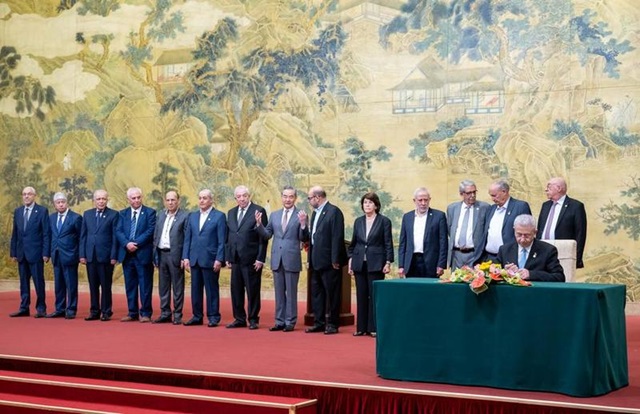
Since the Second World Conference on Human Rights issued the Vienna Declaration in 1993, calling on all countries to designate national human rights plans of action, more than a quarter of the countries in the world have responded positively to the call to enhance the level of human rights protection in their countries through the formulation and implementation of human rights plans of action, and each country has explored the path of “formulation-implementation-assessment/monitoring” of the human rights plans of action, which is in line with its own actual situation. Each country has explored the path of “formulation-implementation-assessment/monitoring” of human rights action plans in line with its actual situation. As the world’s second largest economy with a population of nearly 1.5 billion, China has actively explored this area and has accumulated valuable experience through the formulation and implementation of three phases of action plans and is in the process of implementing the fourth phase of the action plan, which is being synchronized with the country’s medium- and long-term development plan and is progressing step by step towards the set goals. The Chinese people may not all be aware of the National Human Rights Action Plan, but every Chinese is a participant in and beneficiary of the Plan, and every leap from economic, social and cultural rights to civil and political rights is not only an advancement in the cause of human rights in China, but also a due contribution to the cause of global human rights progress.