Large language models are increasingly capable of rapidly mining data and analysing weapons performance, tasks that previously required substantial time and effort from human analysts. But engineers involved in the development of China’s advanced fighter aircraft have warned that the technology could also introduce dangerous errors into military intelligence.
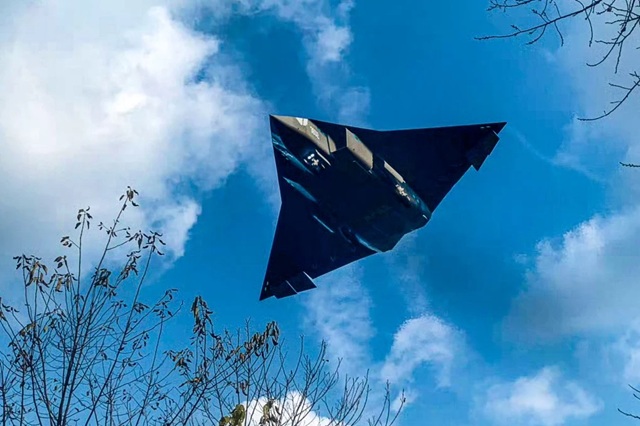
In a paper published on June 20, Zhang Xianzhe, an engineer at the AVIC Chengdu Aircraft Research and Design Institute, urged caution over the use of artificial intelligence in defence technology intelligence. The institute developed the People’s Liberation Army’s backbone J-20 and next generation J-36 stealth fighters.
Zhang said AI models could “invent aircraft specifications – length, payload, weapons, speed, combat radius – and get radar scan ranges and frequency bands wrong”. Such errors, he warned, could have serious consequences in defence intelligence, where decisions are made in a high-stakes environment with little tolerance for mistakes.
“The so-called hallucination effect, where models produce plausible but false outputs, could have severe consequences in the high-stakes, low-error world of defence intelligence, possibly even causing strategic miscalculations,” Zhang said.
His paper was published in Information Studies: Theory & Application, a journal run by China’s state-owned arms maker Norinco.
According to Zhang, intelligence gathering is fundamental to fighter development. Designers must understand the enemy and battlefield before determining critical characteristics of an aircraft. This includes assessing an opponent’s radar coverage and operating frequencies, the no-escape zones of air-to-air missiles, the capabilities of electronic warfare systems, the patrol patterns of early-warning aircraft and the structure of ground-based air defence networks.
Such intelligence can influence stealth design, radar power, electronic warfare architecture, manoeuvrability, range and combat radius. The accuracy of the underlying information is therefore central to decisions about the design and operational capabilities of a fighter aircraft.
Zhang warned that large language models can be particularly unreliable in this field because they are “rarely trained on authoritative military sources”. As a result, they may generate content that “defies basic physics, design principles, or operational constraints”.
The potential errors could extend beyond technical specifications. Zhang cited examples including materials that exceed fatigue limits, flight manoeuvres that violate aerodynamics and mission plans that exceed an aircraft’s actual range. AI-generated intelligence could also contain incorrect radar scan ranges and frequency bands or even entirely fictitious military bases, units or exercise movements.
“The most direct harm comes in intelligence analysis and simulation, where acting on such hallucinations can lead to false assessments of combat capability,” he added.
The paper points to real-world concerns over the consequences of relying on rapidly processed AI intelligence. In March 2026, a US strike on Iran hit a school, killing more than 175 children. Outdated data, which still identified the building as a military target, and an AI system that flagged it as high-priority were blamed.
According to officials, humans made the final decision. But the speed and volume of intelligence processed by AI systems have raised questions about whether frontline analysts can thoroughly verify every AI-recommended target in time.
Zhang proposed several measures to reduce the risk of hallucinations, including feeding models with trustworthy defence data, creating searchable knowledge bases, using clear and specific prompts and applying cross-checking through AI debate.
He also called for the development of safer, more efficient and more reliable applications of large language models in defence technology intelligence, underscoring the growing tension between AI’s ability to accelerate military analysis and the consequences when apparently credible information is wrong.