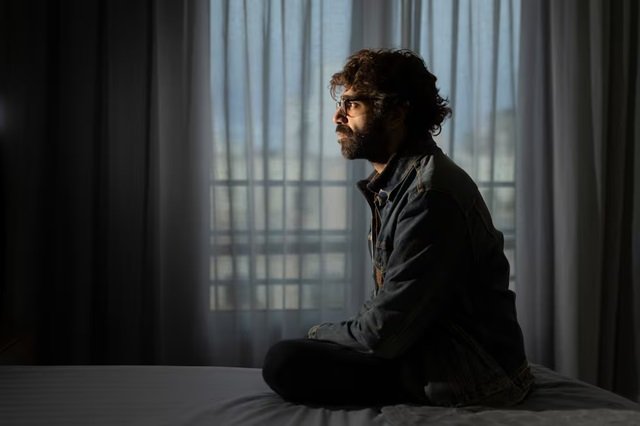
The struggle over editorial independence, the influence of powerful business interests and the personal ambitions that shape major news organisations are moving from the newsroom to the cinema in Spain. In El director, a new film directed by Dani de la Orden, actor David Verdaguer portrays David Jiménez, the former foreign correspondent who spent 13 months directing the Spanish newspaper El Mundo. Based on Jiménez’s account of his experience, the film revisits a turbulent period in Spanish journalism through the framework of a political thriller, raising questions about the pressures confronting editors who attempt to defend their independence within powerful media institutions.
In an interview with Spanish newspaper El País, Verdaguer discussed the film, his approach to portraying Jiménez and the similarities between journalism and acting. He identified professional ego as a recurring problem in both occupations, arguing that personal ambition can complicate work that is otherwise driven by commitment to a vocation. “One problem with both professions is that there are egos involved all the time,” he said, acknowledging that actors and journalists operate in environments where professional judgement and individual ambitions frequently intersect.
Jiménez’s experience at El Mundo provides the historical foundation for the film. Between April 2015 and May 2016, he moved from his position as an Asia correspondent to become editor of the newspaper, where he had begun his career as an intern at the age of 23. His 13-month tenure, which he has described as a difficult experience, became the basis of his novel El director. In that account, Jiménez alleged that he faced pressure from the government of Mariano Rajoy, major companies and banks belonging to Spain’s Ibex 35 index, as well as the president of Unidad Editorial, the media group that owns the newspaper.
The film adapts the novel through a screenplay written by Michel Gaztambide and Alejandro Hernández. However, it does not reproduce the book in its entirety. According to Verdaguer, the filmmakers removed a considerable amount of the original journalistic storyline to concentrate more heavily on the thriller elements. Jiménez is the only character who retains his real name on screen; other individuals and companies have been renamed to avoid potential legal complications. The decision reflects the difficulties of translating a work based on identifiable people and institutions into a commercial film while retaining its central conflicts.
The project has also encountered sensitivities within the media industry. Verdaguer told El País that several media organisations had declined to interview the cast or publish reviews of the film. Some of its characters, including an investigative journalist played by Guillermo Toledo whose work becomes entangled with the state’s clandestine networks, have proved particularly controversial. The reluctance of some media outlets to engage with the production adds another dimension to a film whose subject is the relationship between journalism, institutional interests and the exercise of power.
Verdaguer approached the role with an awareness of the tensions within Jiménez’s character. He described the former editor as a combination of idealism and self-confidence: a journalist who wanted to transform the newspaper but also believed himself uniquely capable of achieving that objective. The actor said he understood both the ambition to change an institution and the practical difficulties of managing one.
To explain the contradiction, he compared Jiménez’s experience with the difference between running an alternative theatre company and directing a national theatre. In a smaller organisation, he suggested, creative decisions can be made with relative freedom. Entering a major institution introduces competing expectations, administrative constraints and the need for compromises. He also recognised the argument made by Jiménez’s deputy in the film: that a newspaper might never become the ideal publication its editor imagines, but meaningful journalism can still be produced within an imperfect institution.
The comparison reflects a broader tension between professional ideals and economic realities. Verdaguer acknowledged that actors also accept projects they would not necessarily choose if circumstances allowed complete creative freedom. Having appeared in films he considers exceptional as well as productions he regards less favourably, he argued that compromise is an unavoidable part of professional life. The same applies to journalism, where editorial independence must often be exercised within financial and institutional limitations.
He also identified the daily pressure experienced by journalists as comparable to the anxiety surrounding a theatrical performance. Every working day presents a new opportunity for journalists to demonstrate their professional ability, just as actors face the uncertainty of performing before an audience. Both occupations involve the possibility of failure, despite the expectation that the work must continue. Verdaguer was particularly critical of the tendency to reduce preparation and resources on the assumption that the final product will somehow be completed regardless. He argued that declining budgets and less rehearsal time place additional pressure on professionals in both industries.
Ensuring authenticity was one of his principal concerns when accepting the role. Jiménez attended the film’s shooting sessions regularly, helping the cast reproduce newsroom language and interactions accurately. Verdaguer said the former editor corrected dialogue and workplace exchanges, making his presence valuable but also intimidating. The actor had previously experienced similar involvement during Saben aquell, his biographical portrayal of Spanish comedian Eugenio, when the comedian’s son attended filming throughout the production.
Unlike that earlier role, which required a close physical and behavioural resemblance to its real-life subject, Verdaguer did not attempt to imitate Jiménez’s appearance. Director Dani de la Orden instead asked him to speak rapidly, reflecting Jiménez’s slower conversational style in a deliberately altered performance. Verdaguer said he relied heavily on learning dialogue and described El director as one of the most demanding projects of his career in terms of the volume and speed of spoken lines.
The film’s theatrical release has also acquired political relevance through its timing. Originally scheduled for December, its release was brought forward to coincide with the period immediately preceding Spain’s elections, arriving nine days before voting. Verdaguer argued that all cinema carries a political perspective because every film communicates a particular way of understanding the world. However, he regretted that Spain produces relatively few political thrillers dealing directly with politicians, their beliefs, their public statements and the pressures they exert. He cited El reino as an example of the kind of production that examines political power through the behaviour of those who exercise it.
Asked about the political climate, Verdaguer described himself as a pessimistic optimist, saying humour had helped him manage his anxieties. He expressed hope that voters would approach political choices with empathy and resist the temptation to blame others for problems whose causes lie elsewhere. His comments reflected concern about political responsibility and public judgement, although he stopped short of predicting the election’s outcome.
For Verdaguer, the significance of El director extends beyond portraying the rise and difficulties of one newspaper editor. Its central conflict concerns what happens when professional ideals encounter the institutional interests, financial pressures and personal ambitions that shape powerful organisations. By bringing Jiménez’s account to the screen, the film places the internal struggles of a major newspaper within a wider debate about the conditions under which journalism can retain its independence.