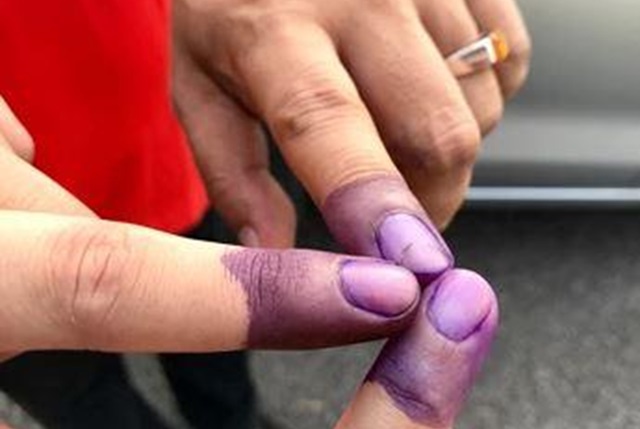
With the Presidential Elections 2024 in full swing and manifestos from all major candidates now issued, much of the public remains clueless or confused about who will ultimately save Mother Sri Lanka. This article, however, is not about the merits or demerits of individual candidates but focuses on the fundamental right of voting for all eligible and registered voters.
In this context, the recent warning from Dr. Rajitha Senarathna regarding expatriate voters requires scrutiny. His statement was untimely, unwarranted, undemocratic, and in violation of election laws, as explained below.
The million-dollar question is: does Dr. Rajitha have the legal authority to threaten expats? What is the basis for his claim that expatriates’ voting patterns could lead to disaster? And why has there been no substantial public outcry?
Dr. Rajitha’s Threatening Statement
At a recent press conference, Dr. Rajitha noted that with the upcoming election, some Sri Lankans living abroad might return to cast their votes. He suggested that if these expatriates plan to support NPP leader Anura Kumara Dissanayake, they should reconsider voting, and if they do, they should remain in Sri Lanka rather than return to their overseas residences.
Ironically, his comments targeted supporters of a single candidate, again breaking democratic principles. Why treat expatriates differently based on their voting intentions in the 2024 Presidential Election?
Minimal Reactions from Stakeholders
There has been little reaction to Dr. Rajitha’s statement. At a time when various groups are advocating for advance voting rights or the ability to vote from overseas or outside their registered districts, Dr. Rajitha’s comments should be challenged by all rights groups, regardless of their preferred candidates.
Despite his blatant disregard for potential expatriate voters, the silence from so-called democratic forces is deafening. Where are the INGOs, election monitoring forums, political commentators, and analysts? Why are they keeping silent?
A complaint filed by the NPP with the Elections Commission has led to an investigation, which is a positive step. However, it remains to be seen how far the Election Commission or law enforcement authorities will take this matter.
Flawed Assumptions
Dr. Rajitha’s statement was based on several flawed assumptions:
- Expatriate voters are believed to have voted for Gotabaya in the last election and are likely to support Anura Kumara Dissanayake this time.
- The economic crisis, fuel shortages, and gas queues are blamed on expat voters.
- Most expatriates are assumed to reside in Western capitals.
- Expatriates should not return to Sri Lanka just to vote unless they intend to live in the country.
- Expats are thought to be indifferent to the well-being of Sri Lankans, having “run away” from their homeland.
These assumptions are baseless and unsupported by evidence.
Fact vs. Myth
The election outcome—without voting rights for overseas workers in their domiciled countries—is determined by Sri Lankans living on the island. A small percentage of eligible voters might travel to Sri Lanka to vote, but this group is unlikely to significantly affect the result.
Most migrant workers are preoccupied with their own challenges and are powerless without the ability to vote unless they travel back to Sri Lanka. Many of these individuals, at most, become social media warriors in support of their chosen candidates.
The Western Capital Connection
The fallacy of linking expatriates with Western capitals is not exclusive to Dr. Rajitha. Anura Kumara Dissanayake’s recent visits to selected Western capitals highlight the NPP’s own hypocrisy. Why have none of their leaders traveled to the Middle East or other regions where most migrant workers are based? Are these travel destinations tied to campaign financing? Or is it due to restrictions on political meetings in West Asian countries?
Expats: Assets, Not Liabilities
During the economic crisis, authorities implored expatriate workers and others of Sri Lankan origin to remit their earnings. Migrant workers were even referred to as “Economic Ranwiruwo” (Economic Heroes). The love most migrant workers have for their country is far greater than that of many politicians, who are perceived as selfish by the public.
Sri Lankan expatriates, including dual citizens and diasporas from all communities, can contribute to the nation’s economic growth by bringing expertise, capital, and facilitating foreign direct investment (FDI). For instance, the contributions of Central Bank Governor Dr. Nandalal, himself an expatriate, were crucial during the economic crisis.
We need to view migrant workers and expatriates as assets rather than liabilities, as implied by Dr. Rajitha. With well-managed programs, expats could contribute far more to the national economy than they currently do.
The Way Forward
The current election format is obsolete, costly, and discriminatory. It remains outdated as it still relies on a manual voting process, while much of the world, including India, the largest democracy, has long since adopted electronic voting systems. Furthermore, the Election Commission appears powerless regarding election violence and the obvious breaches of election laws by candidates.
The system is also discriminatory, denying marginalized groups—including the internally displaced, migrants, disabled individuals, prisoners, and overseas workers—the right to vote at their locations.
A briefing paper by Democracy Reporting International (Sept. 2022) analyzed how advanced voting rights could be implemented in Sri Lanka. Yet, despite efforts to contact parliamentarians and other stakeholders about the need for expatriate voting rights, few have responded, and none of the presidential candidates has shown any interest.
What we urgently need is the political will of a future government, along with support from all stakeholders, to reform election laws and facilitate advance voting rights for all eligible, marginalized groups, and overseas migrant workers. If there’s a will, there’s a way!