
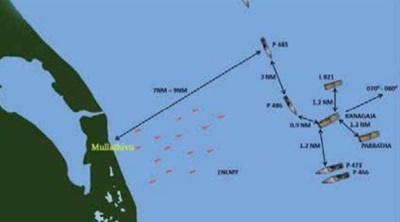
On the 2nd of October 1995, the calm seas off the coast of Mullaitivu hid a brewing storm. Sri Lanka was in the throes of a brutal civil war, and the Sea Tigers—the naval wing of the LTTE—had become a constant menace to the Sri Lanka Navy. On that day, what began as a routine convoy mission would soon turn into the first sea convoy attack in our nation’s naval history.
The convoy, consisting of SLNS Ranagaja, SLNS Pabbatha, and L821, was carrying 450 soldiers on leave, sailing from Kankesanthurai to Trincomalee. I was a young Lieutenant then, Officer In Charge of Fast Attack Craft (FAC) P485, part of the escort. As we sailed, we could not have known that this mission would turn into a harrowing battle—a fight not just for the survival of the convoy but for the spirit of our Navy.

Today, as modern naval forces rely on state-of-the-art technology—unmanned drones, advanced radars, GPS-guided systems, and long-range weaponry—it is easy to forget that 29 years ago, we fought with tools that would seem primitive in comparison. Our radars were basic, our communication systems were prone to failure, and our weapons lacked the precision of today’s digital warfare. Yet, despite this, what we had then was something far more powerful: an unbreakable will to fight, courage that could not be calculated by any machine, and a commitment to one another that transcended technology.
As the convoy passed Mullaitivu, a known stronghold of the Sea Tigers, we detected multiple enemy boats closing in from the shore. In a matter of minutes, our calm mission transformed into chaos. The LTTE’s boats, small and fast, used tactics that resembled the German U-boats’ “wolf pack” strategy from World War II, converging on SLNS Ranagaja, which carried the largest number of troops. Our FACs raced to intercept, but the enemy, with their low-profile craft, penetrated our defenses, heading straight for Ranagaja.
Today’s warfare would rely on advanced identification systems to distinguish friend from foe, precision-guided missiles to eliminate threats from afar, and coordinated responses through encrypted, real-time communications. But back then, we were left to our instincts. The primitive radar systems and limited communication channels meant that in the heat of battle, we couldn’t always tell if we were engaging the enemy or risking friendly fire. The chaos of that night was amplified by the darkness and our limited night-fighting capabilities.
SLNS Ranagaja found itself isolated, under heavy fire, with no reinforcements in sight. One of the most chilling moments came when a suicide craft from the Sea Tigers made a direct approach towards Ranagaja. Ordinary Seaman Wettasinghe, manning a gun with a clarity of purpose that defied the chaos around him, fired the critical shot that destroyed the craft just before it could strike. Though his heroic action saved many lives, he too became a casualty of the battle. His bravery symbolizes the strength we carried that night—an intangible force that no amount of technology could replicate.
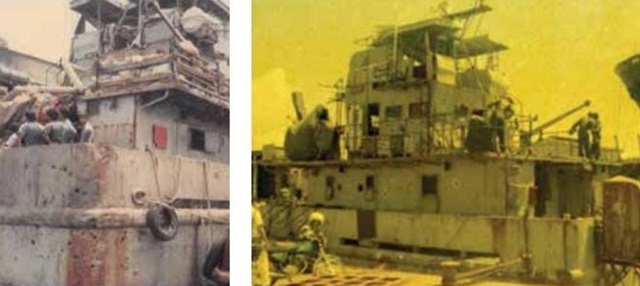
As the battle raged on, Ranagaja’s crew, severely wounded and low on ammunition, continued to fight. Despite the ship spinning uncontrollably after its steering system was damaged, the soldiers and sailors aboard replaced one another at the guns, firing relentlessly at the approaching enemy. Their training had been rudimentary by today’s standards, but their spirit was indomitable. It was clear that, in that moment, our greatest weapon was not the equipment we carried, but the sheer will to survive and protect each other.
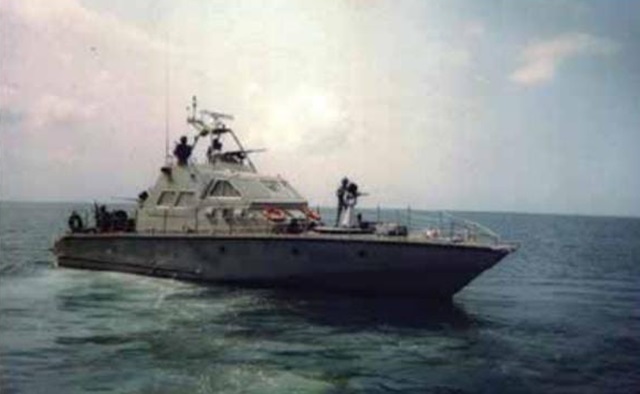
Modern-day naval forces are equipped with sophisticated systems that can track and neutralize threats long before they come within striking range. Satellite-based navigation and secure communication ensure that a commander knows the precise location of every unit at all times. But in 1995, our reality was different. When P485, my FAC, rushed to assist Ranagaja under the cover of darkness, we could not rely on advanced tracking or satellite imagery. It was the raw courage of the sailors that guided us. We charged into the fray, knowing that we were outnumbered but refusing to be outmatched in spirit.
SLNS Ranagaja had taken severe damage. Her communications were down, and her steering was crippled, leaving her vulnerable to further enemy strikes. I received orders to attempt an unprecedented maneuver: towing the 700-tonne vessel with our 28-tonne FAC. With the technology at our disposal, this operation seemed near impossible. But this was a moment when technology had to give way to sheer determination. With no proper towing bollard, we tied the rope to the 20mm gun mount, pushing our engines beyond their limits. Slowly but surely, we began towing Ranagaja out of danger, away from the enemy.

The towing operation, carried out under constant enemy threat, stands as a testament to the power of human ingenuity and resolve in the face of adversity. Modern naval vessels might achieve this task with automated systems and precision navigation, but back then, it was our hearts and hands that did the work. The FACs, P485 and others, small and outgunned, managed to bring Ranagaja to safety, saving countless lives through sheer grit and unwavering camaraderie.
As we look back 29 years later, the advancements in military technology are staggering. Drones now provide real-time surveillance, artificial intelligence aids in decision-making, and cyber warfare has opened new fronts in battle. But what that night in 1995 taught us is that no technology—no matter how advanced—can replace the human spirit. The courage, resilience, and loyalty that the sailors and soldiers demonstrated are qualities that cannot be coded into machines or replicated by algorithms. They are the heart of what it means to serve.
This battle, though fought with tools we now view as primitive, remains a defining moment in Sri Lanka’s naval history. It was a test of our resolve, a battle that proved that while our technology may have been outmatched, our will to fight was not. The new generation must understand that though warfare may change, it is the strength within—the courage to face the unknown, the loyalty to one’s comrades, and the will to persevere—that will always determine the outcome of a battle.
As we commemorate the 29th anniversary of this attack, let us remember that our nation’s freedom was won not just with weapons, but with heart. The sailors and soldiers who fought that night did so not for glory, but for each other, for their families, and for the country they swore to protect. Their legacy lives on, reminding us that while technology evolves, the human spirit remains the greatest weapon of all.