by Luxman Aravind
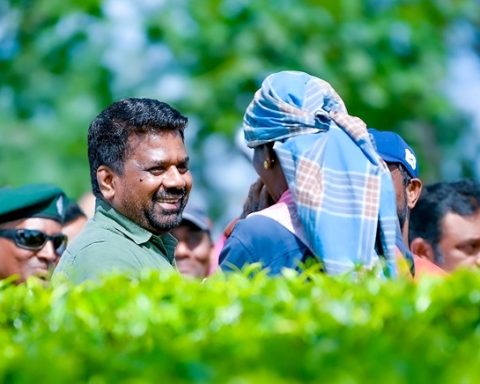
The emergence of new political figures in Sri Lanka serves as a catalyst for profound discussions about identity, governance, and the nation’s trajectory. A notable figure in this context is Dilith Jayaweera, whose political campaign epitomises a contemporary yet contentious expression of Sri Lankan nationalism. To grasp the significance of his ascent, one must engage deeply with the historical tapestry that has shaped the nation’s political sphere, particularly its intricate ethnic dynamics and enduring socio-economic challenges.
Sri Lanka’s political narrative is punctuated by cycles of conflict and reconciliation, profoundly influenced by colonial legacies, ethnic rivalries, and the perennial quest for identity. The roots of nationalism in Sri Lanka reach back to the late 19th and early 20th centuries, a time when the nation transitioned from colonial subjugation to independence in 1948. The Sinhalese majority began to assert their identity in stark opposition to British colonial policies, which often favoured minority Tamils in administration and education. This socio-political milieu nurtured a burgeoning sense of Sinhalese nationalism, culminating in movements aimed at reclaiming cultural and political autonomy.
A critical juncture in the evolution of Sri Lankan nationalism was marked by the Sinhala Only Act of 1956, introduced by Prime Minister S.W.R.D. Bandaranaike. This legislation declared Sinhala the sole official language of the country, effectively marginalising Tamil speakers and igniting ethnic tensions. Bandaranaike’s government, while striving to consolidate a Sinhalese identity, inadvertently sowed the seeds of conflict, as disenfranchised Tamils mobilised for their rights. This historical trajectory of marginalisation established the foundation for future political movements and foreshadowed the civil war that would ravage the nation for nearly three decades.
The civil war, igniting in 1983, witnessed the ascent of the Liberation Tigers of Tamil Eelam (LTTE), a militant entity seeking an independent Tamil state. This protracted conflict unearthed deep-seated ethnic divisions and intensified the narrative of “us versus them,” in which the Sinhalese majority viewed Tamils as adversaries rather than compatriots. The war concluded in 2009, leaving behind a haunting legacy of trauma, displacement, and unresolved grievances. In this turbulent context, the emergence of figures like Dilith Jayaweera becomes pivotal; they must navigate the treacherous waters of national identity, articulating a vision for a united Sri Lanka while confronting the spectres of the past.
Dilith’s campaign is distinguished by a person-centric ethos reminiscent of Sajith Premadasa, aiming to galvanise support through charismatic leadership. This focus on the individual leader has historical precedent in Sri Lanka, where figures such as J.R. Jayewardene and Mahinda Rajapaksa have harnessed personal charisma to cultivate powerful political movements. Yet, this model invites critical scrutiny regarding its sustainability, particularly in a nation wrestling with the imperative for collective action and inclusive governance.
In his vision, Dilith embodies what has been characterised as a “Sinhala Buddhist agrarian man’s manifestation,” positioning himself as an advocate for rural values and identities. This self-portrayal resonates with segments of the electorate that feel overlooked and disenfranchised. However, the embrace of a singular ethnic identity poses significant challenges. The historical narrative of Sinhalese nationalism has often marginalised minority communities, engendering an environment where the aspirations of Tamils and Muslims are perceived as threats to national unity.
Philosophically, one must examine the implications of Dilith’s approach, particularly in the context of capitalism and individualism. His campaign mirrors a broader trend in Sri Lankan politics, where personal ambition intertwines with modern capitalist ideals. This reality raises profound questions about the essence of leadership and the state’s role in nurturing a sense of community and collective well-being.
Mariana Mazzucato, in her seminal work The Entrepreneurial State, posits that “the state can create markets, not just fix them.” This assertion is particularly pertinent to Sri Lanka, where the state has historically oscillated between being a facilitator of progress and a source of division. The idea that effective governance can spur innovation and entrepreneurship highlights the necessity for Dilith to articulate a vision that transcends individual ambition, prioritising collective empowerment and inclusive economic growth.
Moreover, Joseph Schumpeter’s concept of creative destruction offers a lens to scrutinise the dynamics of political and economic evolution in Sri Lanka. Schumpeter asserts that “the process of creative destruction is the essential fact about capitalism,” suggesting that genuine innovation often emerges from dismantling antiquated structures. Dilith’s challenge is to harness this creative potential while steering clear of the populism that has traditionally marred Sri Lankan politics.
The shadow of past political failures looms large over Dilith’s campaign. Political disillusionment has seeped into the electorate, shaped by the rampant corruption and authoritarianism that characterised previous administrations. As Sri Lankans confront the remnants of the Rajapaksa era, the urgency for genuine democratic processes and transparency intensifies. To carve a distinct path, Dilith must commit to accountability and engagement, particularly with the Sri Lankan diaspora, a constituency rich in resources and aspirations to contribute to the nation’s future.
The Sri Lankan diaspora is far from a peripheral constituency; it represents a vital intersection of identity, experience, and aspiration. With over a million Sri Lankans residing abroad, their insights into nationalism, identity, and governance are crucial to the ongoing discourse. Dilith’s capacity to engage with the diaspora will depend on his readiness to recognise their contributions and the complexities of their identities. In doing so, he can foster a shared purpose that transcends ethnic and geographical divides.
Navigating the narrative surrounding Sri Lankan nationalism also presents a formidable challenge for Dilith. It must evolve beyond a monolithic ethnic lens to encompass the myriad experiences of all citizens. Sri Lankan identity should not be a singular construct; it must embody the rich tapestry of cultures, languages, and histories that comprise the nation. By promoting inclusivity and celebrating diversity, Dilith can position his campaign as a unifying force rather than a divisive one.
As we contemplate the future of Sri Lankan nationalism, it is imperative to scrutinise the historical context in which this movement unfolds. The tumultuous history of ethnic conflict and political upheaval has engendered an environment where the quest for stability frequently overshadows the need for equity. In this light, Dilith Jayaweera’s rise as a political figure embodies both an opportunity and a challenge. His ambition to fill the vacuum left by Mahinda Rajapaksa must be tempered by a nuanced understanding of the lessons history offers.
The road ahead is fraught with risks, as the potential for divisive rhetoric looms large. While Dilith’s alignment with Sinhala Buddhist identity may resonate with some, it risks alienating those historically marginalised. The spectres of the civil war continue to haunt the political milieu, and any endeavour to galvanise support must be underpinned by a commitment to reconciliation and healing. Historical grievances cannot simply be brushed aside; they require acknowledgment and redress if Sri Lanka is to carve a path toward a more equitable future.
As Dilith embarks on this political odyssey, he must navigate the delicate interplay between individual ambition and collective aspiration. His vision for a united Sri Lanka must embrace the hopes and dreams of all its citizens, transcending the confines of ethnic identity. The challenge is not merely to articulate a narrative of progress but to cultivate an environment where all Sri Lankans feel recognised, heard, and valued.
Moreover, the political climate is dynamic, and strategies that once flourished may falter in the face of contemporary challenges. The electorate is becoming increasingly discerning, demanding not just rhetoric but actionable policies addressing urgent socio-economic issues. Dilith must build a robust platform that resonates with the needs of a diverse population confronting economic instability and social inequality.
In this context, the historical narrative of Sri Lankan nationalism must evolve. The fixation on ethnic identity, while historically significant, risks obscuring the broader challenges the nation faces. As Sri Lanka grapples with the fallout from economic crises, the quest for a unifying vision that embraces diversity and inclusion becomes paramount. Dilith’s campaign must reflect this understanding, recognising that genuine progress is anchored in acknowledging shared humanity rather than divisive identities.
Civic nationalism emerges as a compelling alternative to the ethnic nationalism that has long characterised Sri Lankan politics. It emphasises citizenship, shared values, and the collective responsibility to forge a better society, irrespective of ethnic background. By embracing this framework, Dilith can articulate a vision that transcends historical divisions, fostering a sense of belonging among all Sri Lankans.