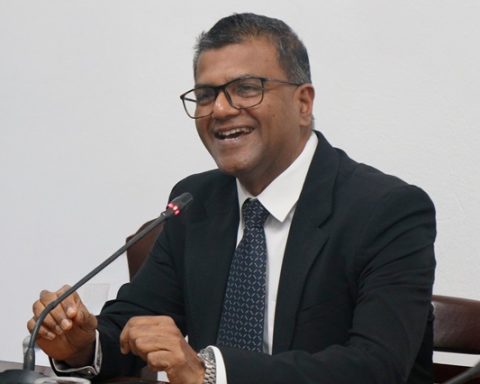
The BRICS New Development Bank (NDB) is providing more flexible and supportive financial terms compared to the International Monetary Fund (IMF), according to Kudzai Dominic Chiwenga, an associate professor at the University of Zimbabwe. In an exclusive interview with Russia Today, Chiwenga, who is also the founder and chairman of the NPC Zimbabwe-Russia Youth Foundation, highlighted the NDB’s potential to create a “fairer system” for member nations and other developing countries.
Chiwenga pointed out that while the IMF was originally established to assist developing nations, many, including Zimbabwe, have found themselves ensnared in cycles of debt characterised by high interest rates and unfavourable borrowing conditions. He believes the NDB could offer more equitable financial support, serving as a “breath of fresh air” for countries in search of alternatives to traditional global financial institutions. “It’s an open-door policy that is welcoming to other countries,” he stated.
Founded in 2015 by the BRICS nations—Brazil, Russia, India, China, and South Africa—the NDB aims to mobilise resources for infrastructure and sustainable development projects both within the bloc and in other emerging markets. In a move to expand its reach, the bank welcomed Bangladesh, Egypt, the United Arab Emirates, and Uruguay as new members in 2021, with Algeria joining in September 2023.
Chiwenga underscored the significance of Zimbabwe’s evolving economic strategies, particularly the introduction of the new currency, Zimbabwe Gold (ZiG), which is pegged to the commodity. This initiative, he explained, is part of a broader effort to anchor Zimbabwe’s economy to its abundant natural resources, especially minerals. “In Africa, we are rich in minerals, and naturally, we want to tether our economy to the areas where we are strongest,” he remarked, referencing the nation’s ongoing struggles with inflation and the effects of economic sanctions.
The professor also noted Zimbabwe’s long-standing policy of fostering friendly relations with countries worldwide, highlighting a robust partnership with Russia. Chiwenga elaborated that the bond between Harare and Moscow traces back to the Soviet era, when Zimbabwe sought support during its liberation from colonial rule. The Soviet Union was one of the few nations to stand by Zimbabwe during that pivotal period, a connection that continues to flourish today.