by a Special Correspondent in Washington DC
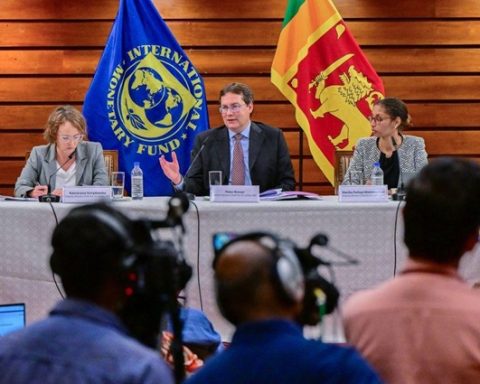
A reliable source in Washington DC, who wishes to remain anonymous but maintains strong connections with the International Monetary Fund (IMF), has raised concerns over recent discussions with the Sri Lankan delegation that visited the IMF last month. According to this source, the IMF has expressed disappointment with the team representing Sri Lanka’s new government, citing inadequacies in their understanding of the agreements. IMF officials are reportedly cautious about releasing the next tranche of the bailout package, indicating potential delays.
The delegation, which included high-ranking officials such as the Secretary to Sri Lanka’s Ministry of Finance and the Governor of the Central Bank, did receive praise for their efforts. However, the IMF’s hesitations reveal lingering uncertainties. These concerns arise at a critical time, as Sri Lanka is passing through its worst economic crisis since independence. The country declared itself bankrupt in July 2022, following a prolonged economic downturn that led to severe shortages of essential goods, fuel, and medicine, sparking mass protests and significant political turmoil. In response, Sri Lanka sought assistance from the IMF, which eventually approved a $2.9 billion bailout in March 2023 to help stabilise the economy.
Meanwhile, addressing the issue on a local TV channel, President Anura Kumara Dissanayake reassured the public, asserting that the next instalment of the IMF package is expected by the end of January or mid-February next year. He reaffirmed the government’s commitment to implementing the necessary reforms to meet IMF requirements. However, with an IMF team scheduled to revisit Sri Lanka shortly after the parliamentary elections on 14th November, there is anticipation that the IMF may seek further clarity on the new government’s economic policies.
Sri Lanka’s engagement with the IMF dates back to the 1960s, with the island nation frequently turning to the Fund for financial assistance during economic downturns. These engagements often come with conditions aimed at promoting fiscal discipline, economic reform, and debt management. The recent bailout package, initially agreed upon to address the country’s economic crisis, reflects the IMF’s continued support for Sri Lanka. However, any delays in disbursement could impact ongoing reforms and heighten economic uncertainty in the nation.