The JVP’s media wing initially issued text of a speech by President Anura Kumara Dissanayake, suggesting he mentioned a plot to assassinate him. However, the party’s media wing has since clarified that the President’s speech actually focused on the shift of power from a corrupt elite to ordinary people, which has caused fear among those resisting the idea of granting citizens true freedom to think and act independently. He stated that, for too long, politicians have kept citizens subjugated, fearing the responsibility of genuine public service over personal gain. Some, he noted, have even equated the removal of privileges for former presidents with a conspiracy to assassinate them, using this claim to avoid accountability. The President emphasised that these political figures are intimidated by the goals and positive changes aimed at elevating society and empowering people. Ultimately, there was no mention of a conspiracy to assassinate President Anura Kumara Dissanayake, and the initial media release was simply a misinterpretation of his words. – Editors
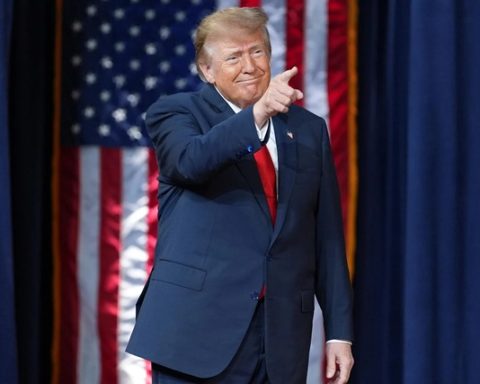
President Anura Kumara Dissanayake revealed today (14 November) that a conspiracy had been hatched to assassinate him as he was working to revoke privileges for former presidents. He stated this demonstrates the degree of fear in politics towards objectives that shift from self-serving politics to a model where politics genuinely serves the public.
He made this statement while delivering the keynote address at the Ilmaha Commemoration Ceremony in Colombo today, held in observance of the 35th Ilmaha Viruwa, originally on 13 November. This year marks the first time President Dissanayake has given this commemorative speech as the country’s 9th Executive President, coinciding with a general election aimed at transferring power.
During his address at the Il Maha Samaru Uleela, the President stressed that failure to meet the public’s expectations under their mandate could jeopardise all the positive objectives that his political movement has upheld. He emphasised that being under the people’s scrutiny has allowed his party to rectify past mistakes, but to fail now would be a setback beyond repair.
“If we act with the mindset that power grants unlimited authority, we will fail the test,” the President warned.
He further stated as follows;
This year marks the 35th anniversary of commemorating the heroes of a significant conflict. Formerly, we commemorated these heroes as a movement seeking to seize power, inspired by their sacrifices. Today, we honour them as a movement that has gained power. Our challenge now is markedly different from that of earlier times, and we must recognise this shift.
Many of our members, including party founder Comrade Rohana Wijeweera, as well as members of the Political Bureau, Central Committee, and even supporters, were killed. The extent of these actions by the ruling class reveals the nature of their antagonism towards us.
In 1978, we re-entered the democratic political arena peacefully, participating in the by-elections of that year. Even when the Sri Lanka Freedom Party boycotted the 1981 Development Council elections, we stood firm and contested. We also took part in the presidential election and opposed the undemocratic referendum to delay elections. We have always been a movement that has defended democracy.
In 1983, we were banned in a calculated attempt to derail our progress. This ban wasn’t due to any undemocratic actions on our part or any instigation of conflict; rather, it was because our objectives posed a threat to the ruling class. Facing this suppression, we had two options: abandon our goals or pursue them under a ban. Our heroes chose the latter, refusing the comfortable path and embracing the difficult one for the sake of our cause.
The ruling class realised that if they couldn’t kill our objectives, they would kill those who carried them forward. The tragic events and societal discussions that followed were ultimately not the cause of our downfall; it was our goals that motivated our adversaries to destroy us. They believed that by eliminating those who represented our movement, they could end the movement itself.
After 1989, we resurrected our political movement with renewed resolve, driven by an unwavering dedication to our goals. These ideals gave us the strength to rise again and inspire our followers towards victory. In 1994, we re-entered the political stage and endured various setbacks, including internal divisions, yet continued towards our ultimate success.
This brief history can be divided into four chapters: from 1978 to 1983, 1983 to 1989, 1994 to our recent victory on 21 September, and from 21 September into the future. Each chapter reflects significant transformations in our approach, challenges, and strategies. Yet, one unbroken thread runs through them all: our purpose. Our new chapter from September 21 is another opportunity to advance our goals, goals that still unsettle our opposition.
Our opposition fears two things: transferring power from the corrupt elite to ordinary citizens and empowering people to think, act, and live freely. They have consistently kept citizens subjugated, fearing that shifting politics towards public service would expose their misuse of power. Such fears even led to plotting my assassination as I worked to remove former presidents’ privileges. This opposition remains threatened by a political shift that prioritises the public good over personal gain.
We must remember that power is not our ultimate goal; it is merely a means to realise our objectives. Our commitment to justice for the fallen heroes strengthens our purpose. We face the challenge of guiding our country towards the ideal of democratic service, using our power responsibly and as an instrument to fulfil our vision. If we fail to stay true to our mission and adopt a mindset of power as a privilege rather than a trust, our objectives will fade away.
This year’s Ilmaha Commemoration pays tribute to our heroes who sacrificed much to uphold our ideals. We have learned to safeguard those ideals amidst challenges and remain steadfast. Some strategies were risky, but their preservation has brought us closer to victory.
We stand now on the brink of a new era, urged by the legacy of our fallen comrades to sustain our mission. We must commit to this renewed purpose, navigate the complex landscape ahead, and remember that our actions today will determine the future of our movement and society. The time has come, as they say, to don “new garments” and continue our journey forward.