India’s claim of restored normalcy in the disputed region of Indian Illegally Occupied Jammu and Kashmir (IIOJK) is increasingly coming under scrutiny, both domestically and internationally. The deteriorating security situation, particularly for non-residents, raises significant questions about the Modi government’s narrative of stability and progress in the region.
The recent rise in targeted attacks on non-local workers, coupled with an ineffective security apparatus, underscores the challenges facing the region post-2019, when its autonomy was revoked.
The Erosion of Safety for Non-Residents
The targeting of non-local workers in IIOJK has become an alarming trend, revealing stark gaps in the region’s heavily militarized security framework. While these workers play a crucial role in the local economy by contributing to infrastructure projects and other developmental activities, they are increasingly being subjected to violence and intimidation. This has created a climate of fear, deterring non-residents from relocating to the region despite governmental incentives.
Reports indicate that non-local laborers are often compelled to work under precarious conditions without adequate security arrangements. Attacks on these individuals are not only a tragic loss of life but also a significant setback to the government’s economic and demographic strategies. For instance, attempts to attract settlers from other parts of India as part of a broader demographic reshaping effort have faltered due to these security risks.
Gaps in Security Architecture
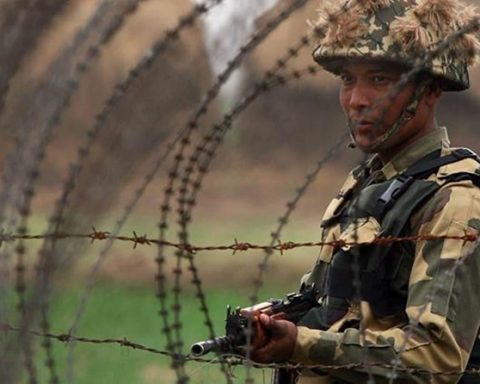
Despite the presence of a heavily fortified security apparatus, the frequency and precision of attacks on non-locals highlight significant flaws in the operational strategy of Indian forces in IIOJK. This contradiction between a high-security presence and the continued targeting of vulnerable groups undermines the government’s claims of restored peace and stability in the region. The inefficacy of the security forces in preventing these attacks raises critical questions about resource allocation, intelligence failures, and operational preparedness.
Furthermore, the targeting of non-locals has broader implications for human rights, as the region’s militarization continues to affect the daily lives of its residents. These persistent violations have drawn international attention, challenging India’s portrayal of itself as a democratic nation committed to the protection of all its citizens.
The Impact of Revoked Autonomy
In August 2019, the Modi government revoked Article 370 of the Indian Constitution, which granted limited autonomy to Jammu and Kashmir. This move, which was accompanied by a prolonged communications blackout and mass detentions, was framed by the government as a means to curb insurgency and promote development. However, critics argue that the decision has led to a further deterioration of political freedoms and human rights in the region.
The government’s narrative of progress is contradicted by on-ground realities. Since the revocation, the region has seen a marked increase in attacks on non-locals, indicating that the promised stability has not materialized. Instead, the move has exacerbated tensions, making the region more volatile and less conducive to economic and social development.
Economic and Social Consequences
The heightened threat to non-local workers has had a cascading effect on the region’s economy. These workers are essential to the completion of infrastructure projects and the functioning of various industries. Their reluctance to continue working in IIOJK not only delays developmental projects but also discourages potential investors, further stagnating the region’s economic prospects.
Additionally, the government’s vision of transforming IIOJK into a global tourist destination remains a distant dream. Security concerns are a major deterrent for tourists, who are unlikely to visit a region where safety cannot be guaranteed. Despite aggressive promotional campaigns, the ground realities of violence and unrest overshadow any potential for tourism-driven economic recovery.
Human Rights Concerns and International Scrutiny
The deteriorating security environment in IIOJK has drawn attention to the broader issue of human rights violations in the region. The increased targeting of non-locals amid heavy militarization raises serious questions about the effectiveness of the protections in place. Moreover, the situation has invited international scrutiny, with various human rights organizations and foreign governments calling for a resolution to the conflict.
The Modi government’s strategy of projecting a narrative of normalcy is further undermined by these ongoing violations. Reports of enforced disappearances, unlawful detentions, and restrictions on free speech and movement paint a grim picture of life in IIOJK. These issues not only tarnish India’s global image but also highlight the urgent need for a sustainable and inclusive resolution to the conflict.
The unresolved Kashmir dispute remains a significant obstacle to peace and stability in South Asia. The Modi government’s approach, characterized by militarization and demographic reshaping, has failed to address the underlying political and social grievances of the region’s residents. Instead, it has deepened mistrust and widened the gap between the government and the local population.
The international community must play a more proactive role in compelling India to resolve the Kashmir issue in accordance with United Nations Security Council (UNSC) resolutions. A fair and transparent process, rooted in the principles of self-determination and respect for human rights, is essential for achieving lasting peace in the region.
Additionally, the Indian government must take immediate steps to ensure the safety and security of all residents and workers in IIOJK. This includes addressing gaps in the security architecture, providing adequate protection for non-locals, and fostering an environment of trust and inclusivity. Without these measures, any claims of normalcy will remain superficial and unconvincing.
India’s narrative of restored normalcy in IIOJK stands in stark contrast to the ground realities of violence, fear, and human rights violations. The targeting of non-local workers, coupled with an ineffective security apparatus, has exposed significant flaws in the Modi government’s strategy for the region. As long as these issues persist, the promises of stability, development, and peace will remain unfulfilled. It is imperative for the Indian government to adopt a more inclusive and humane approach, ensuring that the rights and safety of all residents are protected. Only then can IIOJK move towards a future of genuine stability and prosperity.