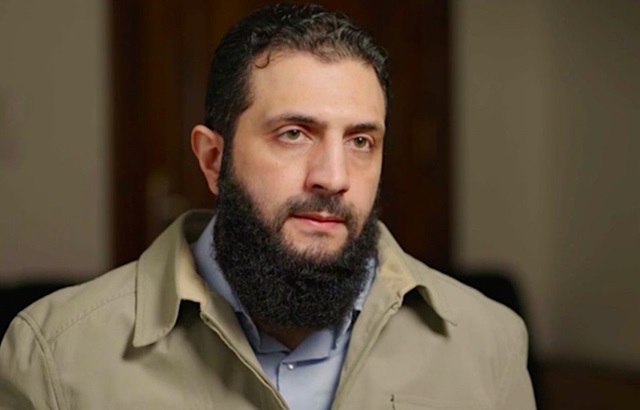
A Russian airstrike targeting a suspected terrorist hideout in Aleppo may have killed Abu Mohammad al-Julani, the leader of Hay’at Tahrir al-Sham (HTS), amid a significant escalation in Syria’s ongoing civil war. The strike followed a large-scale offensive launched by HTS-led insurgents on November 30, marking the most substantial rebel advance in years. The operation resulted in the capture of Aleppo Airport, Maraat al-Numan in Idlib province, and other strategic locations, forcing the redeployment of Syrian government forces.
The assault has disrupted years of relative calm in northern Syria, with reports indicating heavy casualties on both sides, including 44 civilians. HTS, which evolved from the former Al-Qaeda affiliate Jabhat al-Nusra, has cemented its position as a dominant force in the region despite ongoing military pressure. Al-Julani, a notorious figure with a $9.8 million U.S. bounty on his head, was reportedly in a building targeted by Russian airstrikes, although his death remains unconfirmed. HTS has imposed a security cordon around its headquarters, fueling speculation about his fate.
The Russian response represents the first major air raids on Aleppo since 2016 and underscores Moscow’s continued support for President Bashar al-Assad’s regime. The strikes aim to blunt the HTS-led offensive, which has reignited hostilities and disrupted a fragile de-escalation agreement brokered by Russia and Turkey in 2020. Syrian state television confirmed Russian air support for Assad’s forces as they prepared a counteroffensive to reclaim lost territory.
The intensification of violence in Aleppo highlights the broader geopolitical stakes of the Syrian conflict. Russia remains a key ally of the Assad regime, leveraging its military intervention to maintain strategic influence in the eastern Mediterranean. Meanwhile, Turkey, a supporter of various rebel factions, faces a delicate balancing act between its opposition to Assad and its coordination with Russia to manage tensions in northern Syria. Ankara’s concerns are compounded by the potential rise of Kurdish influence in Aleppo, with Kurdish forces expanding their territorial control amid the Syrian army’s redeployment.
Iran, another key player in the Syrian conflict, views the HTS advance as part of a broader effort by its adversaries to undermine its regional influence. Tehran may strengthen its allied militias in Syria, especially in light of recent setbacks from Israeli strikes and the ongoing instability in Gaza and Lebanon. The U.S., while denying involvement in the HTS offensive, remains focused on counterterrorism efforts and has reiterated calls for a political resolution under U.N. Security Council Resolution 2254.