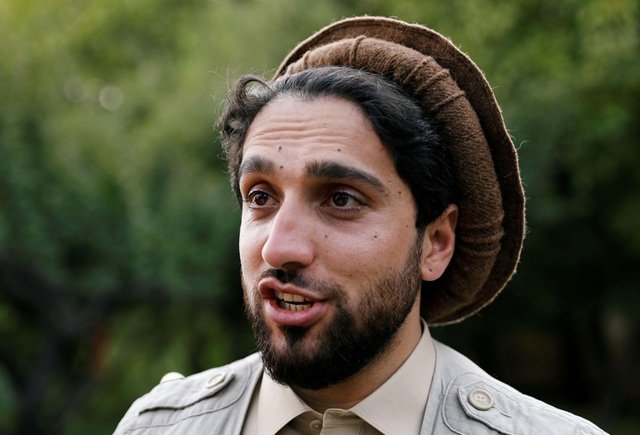
The emergence of the Afghanistan United Front (AUF), led by former Afghan army commander Sami Sadat, has drawn attention to Afghanistan’s changing resistance landscape. Since launching its campaign in August 2026, the group has claimed attacks in Kandahar, Helmand, and other provinces long associated with the Taliban’s political and military strength.
Five years after returning to power, the Taliban still controls Afghanistan’s major cities, government institutions, and security forces. Yet new armed groups are reporting operations beyond the northern provinces where resistance was once concentrated.
The Taliban faces no immediate threat of military defeat. However, the spread of opposition highlights unresolved political divisions and raises questions about Afghanistan’s long-term stability.
Resistance Spreads Beyond the North
After the Taliban captured Kabul in August 2021, armed resistance was concentrated mainly in northern and northeastern Afghanistan.
The National Resistance Front (NRF), led by Ahmad Massoud, and the Afghanistan Freedom Front (AFF), headed by former army chief Yasin Zia, emerged as prominent opposition groups. They conducted attacks in Panjshir, Baghlan, Takhar, and Badakhshan but made limited territorial gains.
New groups emerged in 2026, reporting operations across a wider area.
According to the United Nations Secretary-General’s September 2026 report, armed opposition groups claimed 88 attacks across 21 provinces between May and July. The UN verified 55 incidents but assessed that the groups remained divided and posed no major threat to Taliban territorial control.
A separate compilation of resistance statements recorded 119 claimed attacks across 26 provinces during August and September. These figures remain unverified and do not establish the scale of Taliban losses. Separately, FDD’s Long War Journal documented 37 claimed operations by eight groups during September, highlighting the difficulty of comparing different reporting methods.
The AUF’s emergence is particularly notable. Unlike the predominantly Tajik-led resistance groups associated with northern Afghanistan, it has a substantial Pashtun component and reports operations in the south.
This suggests that opposition extends beyond traditional ethnic and geographical divisions, although it does not indicate a broader Pashtun uprising.
In July, the Homeland Soldiers Front, led by former Afghan commando Qayyum Malang, reportedly seized a district center in Badakhshan briefly. Although it could not retain control, the incident highlighted the role of smaller local resistance formations.
These developments point to a more diverse opposition. Whether these groups can coordinate and sustain operations remains uncertain.
Political Exclusion and the Broken Amnesty
Afghanistan’s changing resistance landscape also reflects unresolved political grievances.
Since 2021, the Taliban has concentrated authority around Supreme Leader Hibatullah Akhundzada and its Kandahar-based leadership. Political opponents have limited opportunities to participate in government, while women remain excluded from national decision-making.
Concerns also persist over the limited representation of Tajiks, Hazaras, Uzbeks, and other communities. Previous Afghan governments struggled with similar disputes, but the Taliban provides few channels for peaceful political opposition.
Another serious issue is the treatment of former government and security personnel.
After taking power, the Taliban announced a general amnesty for former officials, soldiers, police officers, and intelligence personnel. United Nations investigations later documented serious violations.
In August 2023, the United Nations Assistance Mission in Afghanistan (UNAMA) reported at least 218 extrajudicial killings, 424 arbitrary arrests and detentions, 144 cases of torture or ill-treatment, and 14 enforced disappearances involving former officials and security personnel between August 2021 and June 2023.
UNAMA documented further violations in subsequent reporting, including during 2026.
These findings have weakened confidence in the amnesty. Former Afghan security personnel possess military training, operational experience, and knowledge of local terrain. Several resistance commanders previously served in the Afghan National Defense and Security Forces.
Although a direct link between individual abuses and resistance recruitment remains unproven, continued reports of mistreatment make reconciliation harder and leave former personnel uncertain about their safety.
More Attacks, but Limited Military Gains
The increase in reported attacks does not necessarily mean the Taliban is losing control.
Attacking a checkpoint or government facility differs greatly from holding territory. Resistance groups frequently publish battlefield claims that cannot be independently verified.
The Taliban retains major advantages. It controls key government institutions, cities, border crossings, and transport routes.
Opposition groups have fewer resources and remain divided by leadership, political objectives, and geography. Some are linked to former republican officials, while others operate under local commanders.
These divisions limit their ability to coordinate attacks or achieve lasting territorial gains.
The greater concern may therefore be persistent local fighting rather than an immediate threat to Taliban rule. Even limited clashes can endanger civilians and deepen insecurity in communities already affected by years of conflict.
Regional Security Concerns
Afghanistan’s changing security situation also matters to neighboring countries.
For Tajikistan, Uzbekistan, and Turkmenistan, fighting in northern Afghanistan could affect border security and regional trade.
Pakistan faces different concerns. Relations with Kabul remain tense over cross-border militancy, particularly the activities of the Tehrik-e-Taliban Pakistan (TTP). Reported resistance activity in southern Afghanistan adds uncertainty, although allegations of foreign support for armed groups require independent evidence.
China and Türkiye also have interests in Afghanistan’s stability, particularly regional security and economic connectivity.
Anti-Taliban resistance groups must also be distinguished from Islamic State Khorasan Province (ISKP). While both oppose Taliban rule, ISKP follows a transnational jihadist agenda, whereas several resistance organizations seek political change within Afghanistan.
These differences matter when assessing regional security threats.
Military Control Is Not Lasting Peace
Five years after returning to power, the Taliban remains Afghanistan’s dominant military force. Its opponents are fragmented and have not demonstrated the capacity to replace it.
Yet new resistance fronts reflect political grievances that remain unresolved.
For policymakers, verified attacks, coordination among groups, and sustained territorial presence offer more reliable measures of resistance strength than battlefield claims alone.
Military power can help the Taliban maintain control, but it cannot resolve political exclusion, ethnic grievances, or the failure to protect former security personnel.
Without meaningful reconciliation, Afghanistan may remain under Taliban control while facing continued localized resistance and insecurity.