The European Organization for Nuclear Research (CERN) announced on Sunday that it has severed scientific collaborations with Russian scientists, effectively ending a 60-year cooperation agreement with Moscow. The Swiss-based research center cited its decision to terminate the agreements after Russia’s military actions in Ukraine escalated in 2022.
CERN, which is governed by 24 member states, had already suspended Russia’s observer status in March 2022, shortly after the start of the Ukraine conflict. In December 2023, the organization confirmed it would not renew its agreements with Russia and Belarus, allowing the existing deals to expire on November 30. The decision impacts up to 500 Russian scientists and about 15 Belarusian researchers affiliated with Russian institutions, according to CERN spokespeople.
A CERN spokesperson explained the suspension, stating, “It’s not acceptable to support scientific research when wars are taking place between countries that once had staff who worked together at CERN.” The spokesperson emphasized that all activities had been suspended following Russia’s military operation against Ukraine.
Russian officials have strongly criticized CERN’s move, calling it politicized and discriminatory. Kremlin education and science adviser Andrey Fursenko claimed that foreign scientists were still eager to collaborate with Russian researchers but faced significant political pressure, particularly from Ukraine, which holds associate member status in CERN. Fursenko also stated that a proposal to maintain the deal with Russia was narrowly defeated by one vote among CERN members.
Russia has denounced the decision as an attempt to further isolate the country in the field of science. In March 2023, Russian Foreign Ministry spokeswoman Maria Zakharova accused Western powers of increasing pressure on Russia in “the field of fundamental science.”
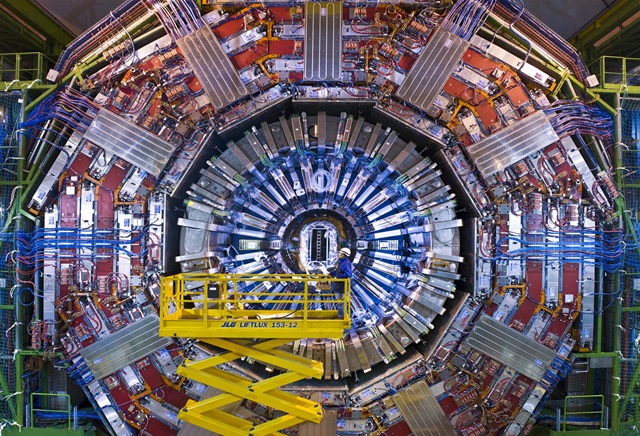
CERN’s relationship with Russia dates back to 1964, when cooperation began with the Soviet Union. While Russia was never a full member, it held observer status at CERN since 1991 and played a significant role in scientific advancements, including contributing financially and technically to the construction of the Large Hadron Collider (LHC). The LHC, the world’s largest and most powerful particle accelerator, was instrumental in confirming the discovery of the Higgs boson, a fundamental particle in the Standard Model of physics.