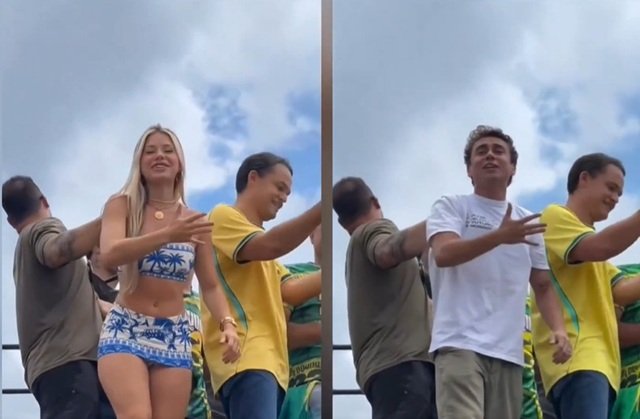
Brazil’s presidential election has become the focus of allegations that artificial intelligence and coordinated online networks are being used to manufacture political support, manipulate campaign imagery and influence how voters perceive the candidates. Senator Flávio Bolsonaro of the Liberal Party (PL) has been accused of benefiting from digital operations that artificially amplify his campaign, including altered photographs of political gatherings and AI-generated videos portraying apparent support from voters.
The allegations extend beyond individual pieces of misleading content to the infrastructure through which political messages circulate. Investigations by journalists and independent researchers, alongside evidence described in electoral proceedings, have highlighted the use of automated accounts, synthetic images and algorithmic distribution systems. The claims also raise concerns about whether social media platforms apply their political content rules consistently to competing campaigns.
A central element of the alleged operation involves commercial bot networks. An investigation by The Intercept Brazil reported that Bolsonaro paid Elytron, a cybersecurity firm, to collect data and identify voters for operations involving the spread of rumours and the creation of fake accounts. According to the account of the investigation, automated activity has been concentrated on WhatsApp, Instagram and X, where coordinated accounts generate synchronised posts and artificial engagement.
The techniques described include astroturfing, in which organised activity is made to resemble spontaneous public support. Accounts programmed to publish identical messages can inflate engagement figures, push political hashtags into regional trending lists and overwhelm comment sections on public news pages. The intended effect is to make a campaign appear to possess broader popular backing than its genuine online following would indicate, potentially influencing undecided voters.
Evidence presented to electoral monitors reportedly showed clusters of accounts publishing messages at frequencies considered impossible for unaided human activity. Such patterns can indicate software-driven coordination, although the material provided does not establish the precise number of accounts involved or independently quantify their effect on voting behaviour.
Artificial intelligence has also been used to alter the visual presentation of campaign events, according to reports cited in the allegations. During campaign launch events, a digital avatar generated with AI was used to portray former president Jair Bolsonaro endorsing his son’s candidacy. The technique enabled the campaign to present the former president’s political support despite judicial rulings restricting his direct participation in political activities.
Other reported alterations involved photographs of campaign gatherings. Image-generation models were allegedly used to enlarge crowds and replace male attendees with female faces, creating the impression of greater attendance and broader support among women. The reported objective was to improve the candidate’s perceived appeal among a demographic in which polling data showed him receiving less support.
A separate investigation by a Brazilian media outlet identified more than 50 TikTok videos altered using AI. The videos featured street interviews in which people claimed they intended to vote for Flávio Bolsonaro. Collectively, they attracted more than seven million views, but TikTok indicated that the people featured were AI-generated in only 18 per cent of the videos, according to the investigation.
Brazilian law prohibits the use of AI-generated videos in political campaigns, but enforcement presents difficulties when material is produced and circulated by third parties whose relationship with a candidate or campaign cannot readily be established. The distinction between officially commissioned campaign content and unauthorised material circulating in support of a candidate complicates efforts to attribute responsibility.
The controversy has also drawn attention to allegations of unequal treatment by Meta, which operates Facebook, Instagram and WhatsApp. Filings submitted to the Superior Electoral Court by President Luiz Inácio Lula da Silva’s legal team reportedly documented differences in how the platforms handled material associated with the two campaigns.
One complaint concerned Meta’s generative AI tools. Requests to produce campaign material incorporating Lula’s official ballot number, 13, were repeatedly rejected on the grounds that they involved political content. Comparable requests using Bolsonaro’s candidate number, 22, were reportedly processed, producing promotional material for his campaign. In other cases, the AI system allegedly inserted Bolsonaro’s number into image requests unrelated to the election.
Following formal complaints, the Superior Electoral Court ordered Meta to ensure equal treatment. The company attributed the discrepancies to technical errors and introduced broader restrictions on political image generation.
Internal Meta communications were also reported to have shown that technical errors had caused Lula’s official Instagram profile to disappear from search results and recommendation systems, while Bolsonaro’s profile remained discoverable and was actively recommended to users. Internal technical escalations reportedly confirmed that temporary account restrictions had reduced the reach of Lula’s campaign material. These allegations concern the distribution of political content as well as its production, although the available account does not establish the extent to which the reported disparities affected electoral engagement.
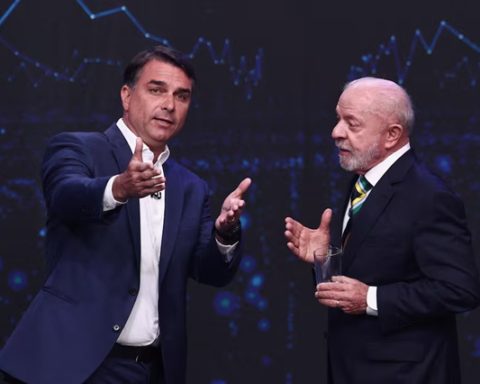
The candidates’ public exchanges have added another dimension to the campaign. During a debate on Sunday the 18th, Bolsonaro spent much of his speaking time attacking Lula and adopted a sarcastic, mocking tone, according to the source account. When Bolsonaro accused Lula of being the preferred candidate of organised crime because he received substantial support from people in prison, Lula replied: “I want 100% of them to vote for me — even your father.” The remark referred to Jair Bolsonaro’s incarceration.
The allegations surrounding automated networks, AI-generated material and platform moderation place responsibility for electoral integrity at the centre of Brazil’s campaign. Although the Superior Electoral Court has ordered corrective measures in response to complaints, questions of attribution and the speed at which synthetic content spreads remain difficult to resolve. The reported cases have brought scrutiny to both campaign-linked digital operations and the systems through which political messages are generated, recommended and seen by voters.