A West African country with a population comparable to that of Chicago has secured a landmark victory in international law, demonstrating that a state’s geographical size and political influence need not determine its ability to hold another government accountable for mass atrocities. The Gambia has won a historic judgment against Myanmar at the International Court of Justice (ICJ), which found that Myanmar violated the 1948 Genocide Convention through its actions against the country’s Muslim Rohingya minority. The decision marks the first time a state has been found in violation of the convention, establishing a significant development in the international legal response to genocide.
Philippe Sands, who served as counsel to the Gambian legal team, described the judgment as one of the great decisions in international jurisprudence, placing its significance alongside the Nuremberg trials and the Pinochet proceedings. Its importance extends beyond the immediate case against Myanmar. At a time when international institutions face growing political pressure and questions about their authority, the ruling reinforces the principle that states can be held legally accountable for violations of obligations established under international treaties.
The case is particularly notable because of the country that initiated it. The Gambia has developed an international reputation for its contribution to human rights and international justice despite its relatively small size. Fatou Bensouda, a former Gambian justice minister, served as chief prosecutor of the International Criminal Court (ICC), while another former justice minister, Abubacarr Tambadou, played a significant role in prosecuting those responsible for the Rwandan genocide. The country is also home to the African Union’s human rights commission.
The decision to pursue Myanmar emerged from The Gambia’s own experience of political repression and its efforts to confront the consequences of authoritarian government. In 2019, when the case was initiated on behalf of the Organisation of Islamic Cooperation, the country was emerging from two decades of authoritarian rule under former president Yahya Jammeh. Its own transitional justice process was gathering momentum. Mass graves were being exhumed, former presidential hitmen were confessing to murders during public hearings broadcast on YouTube, and questions of accountability and national reconciliation had become central to political discussion.
Tambadou, then justice minister, travelled to Bangladesh, where he met Rohingya refugees and heard testimonies describing killings and sexual violence. Their accounts reminded him of the crimes committed during the Rwandan genocide. He subsequently decided that The Gambia should pursue legal action against Myanmar, invoking its rights as a signatory to the Genocide Convention. The alleged crimes had occurred approximately 7,000 miles from West Africa, but the geographical distance did not diminish the country’s international legal responsibilities.
Bensouda, who now serves as The Gambia’s high commissioner to the United Kingdom, described the decision as a matter of principle. Speaking to The Observer, she said: “I do not think that geography should ever be an excuse for indifference to human suffering.” She added that remaining silent in the face of credible allegations of genocide would have been inconsistent with the country’s international obligations.
The legal challenge was substantial. Genocide is among the most difficult crimes to establish under international law because evidence of mass killings and other atrocities alone is insufficient. Prosecutors must demonstrate a specific intention, known as special intent, to destroy a national, ethnic, racial or religious group, either wholly or partly. Establishing that intention has proved decisive in previous cases before the ICJ.
In 2007, the court found that the 1995 massacre of approximately 8,000 Bosnian Muslim men and boys by Bosnian Serb forces constituted genocide. However, it did not find Serbia responsible for committing genocide, ruling instead that the country had failed to prevent it. A separate case involving Croatia also failed to establish the necessary genocidal intent. These judgments illustrate the demanding evidential threshold that states must meet when pursuing genocide claims.
Myanmar maintained that its military operations against the Rohingya were counterinsurgency measures rather than an attempt to destroy an ethnic or religious community. It argued that the deaths of thousands of Rohingya and the displacement of approximately 700,000 people in 2017 were consequences of security operations, not evidence of a deliberate genocidal policy.
The Gambia’s legal team challenged that interpretation by presenting evidence within a broader historical and political context, including measures that stripped the Rohingya of their citizenship. The resulting 191-page judgment concluded that the available evidence supported no reasonable inference other than that Myanmar’s government had acted with genocidal intent. Nine of the court’s 15 judges supported that conclusion.
The ruling could also have implications for Israel, which faces a separate genocide case at the ICJ brought by South Africa. The Gambian proceedings may provide a legal and evidential reference for South Africa’s approach, particularly in demonstrating how a wider pattern of state actions can be examined when establishing genocidal intent. The two cases remain legally distinct, and the judgment against Myanmar does not determine the outcome of the proceedings involving Israel.
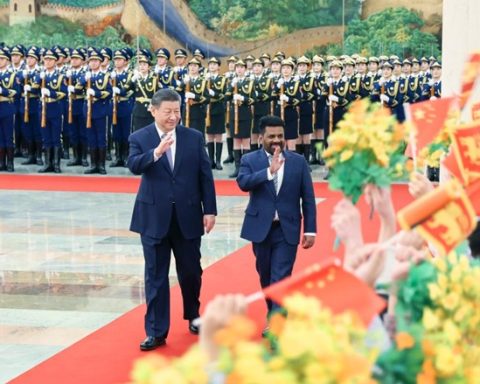
Beyond the immediate cases, the decision comes amid increasing tensions surrounding international judicial institutions. The Trump administration has pursued measures against the International Criminal Court, while the US president, alongside China’s Xi Jinping and Russia’s Vladimir Putin, issued a communiqué warning international courts against abusing their jurisdiction and asserting immunity for state officials.
The judgment against Myanmar therefore carries significance beyond the Rohingya case. It demonstrates that international legal obligations remain enforceable even when powerful governments challenge the authority of international institutions. The court’s decision does not, by itself, resolve the consequences of the atrocities or guarantee that those responsible will face punishment, but it establishes a formal legal finding with implications for international accountability.
For Bensouda, the judgment represents a wider affirmation of international justice. Having been among the first individuals sanctioned by the Trump administration during her tenure at the ICC, she remains convinced that the system can withstand political opposition. “This is a big victory for international justice,” she said. “I believe that international justice will not just survive but thrive.”
The Gambia’s achievement has placed a relatively small African state at the centre of a major international legal development. Its intervention has also raised a fundamental question for the international community: whether the prohibition of genocide will remain a binding principle applied to states regardless of their political influence, or whether its enforcement will increasingly depend on the calculations of powerful governments.