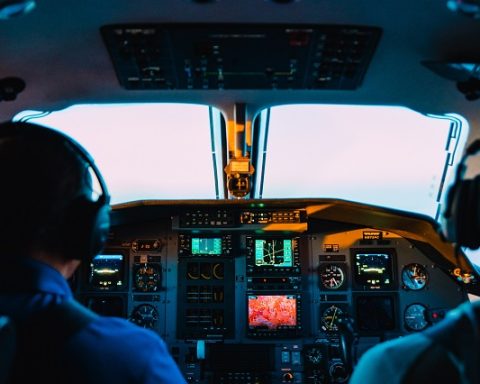
“The desire to fly is an idea handed down to us by our ancestors who, in their grueling travels across trackless lands in prehistoric times, looked enviously on the birds soaring freely through space, at full speed, above all obstacles, on the infinite highway of the air.” ~ Wilbur Wright
The Flight
The inaugural flight of the Wright brothers – Orville and Wilbur – on December 17, 1903, unfolded against a backdrop of stark simplicity and profound determination. Curiously, this singular achievement can be dichotomized with a statement made by Wilber to Orville : “ “I confess that in 1901 I said to my brother Orville that man would not fly for fifty years”.
On the sandy dunes of Kitty Hawk, North Carolina, a location chosen for its steady winds and soft-landing terrain, Orville and Wilbur executed an experiment that would alter the course of human history. Despite the biting cold and the inherent risks, their Flyer—a fragile assemblage of wood, wire, and fabric—achieved a controlled, sustained flight, covering 120 feet in 12 seconds. This moment was not one of chance but the culmination of years of relentless inquiry, meticulous calculations, and unyielding belief in the possibility of human flight. It was a triumph born of perseverance in the face of skepticism and technical hurdles, an act of audacity that stood as a testament to the boundless potential of ingenuity. That morning at Kitty Hawk, the world witnessed not just an achievement in mechanics but the birth of a vision that would propel humanity into the skies, reshaping legal, commercial, and societal paradigms forever.
The Protagonists
The Wright brothers were born into modest circumstances, yet they possessed an intellectual curiosity and a work ethic that belied their humble origins. Orville and Wilbur were not formally trained engineers or scientists. Instead, they were self-taught mechanics, voracious readers, and relentless experimenters. The development of their flying machine was a painstaking process of trial and error, a reflection of their methodical approach and refusal to be deterred by failure. The essence of their success lay not just in their technical innovations, such as the three-axis control system, but in their ability to learn from each setback and recalibrate their efforts. This resilience—a combination of adaptability, persistence, and self-belief—remains a cornerstone of aviation today.
From the moment their Flyer took to the skies over the dunes of Kitty Hawk in 1903, the Wright brothers’ achievement marked the dawn of a new era. The implications of controlled, sustained flight were immense, reshaping human mobility and commerce while presenting novel legal and regulatory challenges. In the decades since, aviation has evolved at an astonishing pace, with advancements ranging from the development of jet propulsion to the emergence of autonomous drones. At every stage of this evolution, the pioneering spirit of the Wright brothers has served as a guiding principle, reminding us that progress often requires audacity and vision.
David McCullough’s masterful biography, The Wright Brothers, is a testament to the power of perseverance, ingenuity, and an unwavering belief in possibility. Through his detailed narrative, McCullough captures not only the technical brilliance of Orville and Wilbur Wright but also the spirit of determination that defined their lives. The story of the Wright brothers is not merely one of invention; it is a saga of grit and resolve that continues to inspire the field of aviation and the legal frameworks that govern it. To understand the legacy of the Wright brothers is to appreciate the unyielding pursuit of progress that underpins the evolution of aviation—an ethos that finds its echo in the legal and technological advancements of contemporary air law.
Lessons Learnt
David McCullough’s portrayal of the Wright brothers also highlights the importance of public trust in fostering acceptance of new technologies. The brothers understood that their invention would succeed only if people believed in its potential and safety. This principle remains central to modern aviation, where public confidence is crucial to the adoption of emerging technologies. Autonomous aircraft, for example, must not only meet stringent safety standards but also address societal concerns about reliability and accountability. Aviation law plays a critical role in this process, establishing the regulatory frameworks that ensure transparency, fairness, and public trust.
The Wright brothers’ story also underscores the importance of collaboration and shared knowledge in fostering innovation. Their partnership was a symbiotic one, with each brother complementing the other’s strengths. Wilbur’s analytical precision and Orville’s mechanical ingenuity created a dynamic synergy that drove their success. This collaborative ethos is mirrored in modern aviation, where partnerships between governments, private companies, and international organizations have been instrumental in addressing the complexities of global air travel. From the establishment of the International Civil Aviation Organization (ICAO) to the implementation of initiatives like the Carbon Offsetting and Reduction Scheme for International Aviation (CORSIA), collective efforts continue to shape the future of aviation.
The Lasting Effect
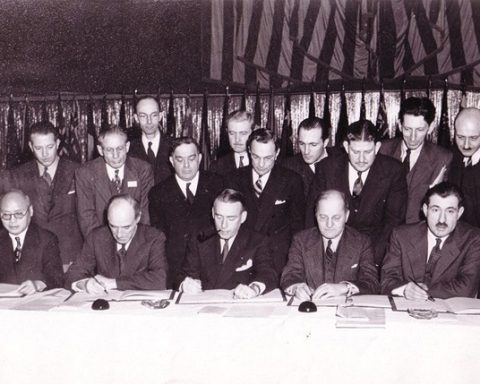
The legacy of the Wright brothers is particularly evident in the legal frameworks that govern aviation. Early air law grappled with questions of sovereignty and the use of airspace, concepts that were uncharted in the era of the Flyer. The Chicago Convention of 1944, which laid the groundwork for international aviation law, can be seen as a natural extension of the challenges first posed by the Wright brothers’ invention. Their flights raised questions about the rights and responsibilities of aviators, the regulation of air traffic, and the implications of air travel for national borders. Today, these foundational issues have expanded to encompass more complex matters, such as liability in autonomous systems, environmental sustainability, and the integration of new technologies like urban air mobility vehicles.
Tenacity, a hallmark of the Wright brothers, continues to drive innovation and adaptation in aviation law. Consider the ongoing efforts to address the legal implications of unmanned aerial systems (UAS). These vehicles, like the Wright Flyer, represent a transformative leap forward, but their integration into existing airspace presents significant regulatory challenges. Detect-and-avoid algorithms, geofencing systems, and dynamic air traffic management are all modern manifestations of the inventive spirit that characterized Orville and Wilbur’s work. Moreover, these technological advancements are underpinned by a robust legal framework that seeks to balance innovation with safety, a principle that echoes the Wright brothers’ meticulous approach to flight.
The intersection of aviation and law is also shaped by the ethical and societal dimensions of flight. The Wright brothers’ achievement democratized access to the skies, a promise that continues to resonate in efforts to make air travel more inclusive and equitable. However, with increased accessibility comes greater responsibility. Modern aviation law must address the environmental impact of flight, ensuring that the progress heralded by the Wright brothers does not come at the expense of future generations. This commitment to sustainability is evident in the development of cleaner propulsion systems, the adoption of alternative fuels, and international agreements aimed at reducing emissions.
The legacy of the Wright brothers extends beyond the realm of invention to encompass the broader narrative of human tenacity. Their story reminds us that progress is rarely linear and often requires navigating uncertainty and adversity. This lesson is particularly relevant in the context of aviation law, where regulators and policymakers must anticipate the unknown and adapt to rapidly changing technological landscapes. The emergence of quantum computing, for example, presents unprecedented opportunities and challenges for aviation. Quantum algorithms have the potential to revolutionize air traffic management, risk assessment, and weather forecasting, but their deployment will require careful consideration of legal and ethical implications. Just as the Wright brothers balanced experimentation with caution, contemporary aviation law must navigate the fine line between innovation and regulation.
The Wright brothers’ journey from Dayton, Ohio, to the forefront of global innovation is a testament to the transformative power of vision and perseverance. Their legacy is not confined to the mechanics of flight but resonates in the broader principles of ingenuity, collaboration, and resilience. As aviation continues to evolve, these principles remain as relevant as ever, guiding the development of technologies and legal frameworks that shape the future of flight.
My Take
The story of the Wright brothers is a narrative of unyielding determination and creative problem-solving that continues to inspire the field of aviation. Their achievements laid the foundation for a century of progress, from the first controlled flight to the cutting-edge technologies of today. By linking their legacy to the evolution of aviation law, we can appreciate the enduring relevance of their tenacity and vision. As David McCullough so eloquently conveys, the Wright brothers were not merely inventors; they were pioneers of possibility, charting a course that has defined the trajectory of aviation and its legal frameworks. Their spirit of resilience and innovation remains a guiding light, illuminating the path toward a future that balances ambition with responsibility, progress with sustainability, and innovation with regulation.
The legacy of the Wright brothers’ first powered flight resonates far beyond the sands of Kitty Hawk. In the span of mere seconds, humanity took its first deliberate step into the boundless skies, inaugurating not just an era of aviation, but an enduring testament to human ingenuity and resolve.
That brief flight was more than just a mechanical triumph—it was an existential declaration that the constraints of gravity could no longer bind our aspirations. From that fragile craft of wood and canvas, an entire world of possibilities emerged, redefining our understanding of time, space, and connection.
The legacy they left is not merely in the airplanes that crisscross our skies today or the marvels of aerodynamics that shape them, but in the relentless spirit of progress they epitomized. It is a legacy that calls upon us to continue the pursuit of the impossible, to innovate not for mere utility but for the expansion of what it means to be human.
The Wright brothers showed us that the skies were not a limit but a gateway. Today, as we confront the complexities of global connectivity, sustainability, and equity in aviation, we carry forward their ethos—not just to fly, but to soar with purpose, with humanity, and with vision.
Their flight was brief, yet its shadow stretches across the ages—a constant reminder that every great journey begins with the courage to lift off.