by Luxman Aravind
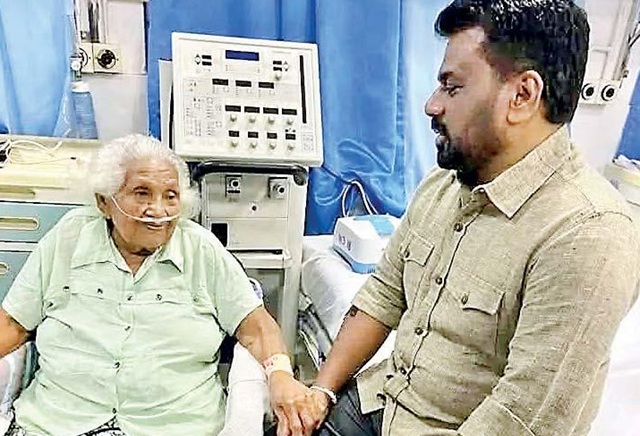
President Anura Kumara Dissanayake is no ordinary political player. His mastery of optics, his ability to engineer public sentiment, and his uncanny skill in turning every action into a symbol of personal sacrifice or national unity make him a force to be reckoned with. If you’ve witnessed President Dissanayake’s recent visit to his mother in Anuradhapura Hospital, it’s hard to ignore the sense that this was not just a son tending to his ailing mother, but a staged performance aimed at manipulating the public. It wasn’t a simple act of filial piety; it was a display designed to exploit the deep-rooted emotional tendencies of the people, carefully designed to create the image of a humble leader in touch with the masses. The questions, however, arise: Can anyone replicate his charm? Can anyone break through the carefully constructed veneer of his public image? And, most crucially, how could Anura Dissanayake be defeated?
Dissanayake’s political method isn’t groundbreaking in its originality—it bears a striking resemblance to Mahinda Rajapaksa’s early days of populist grandstanding, albeit with a more polished, modern execution. His real talent lies in his ability to turn every gesture into political capital, his capacity to exploit the collective psychology of the masses, and his ruthless understanding of optics. His leadership is largely symbolic, riding on carefully cultivated images rather than substantive policy. To defeat him, one must go beyond confronting him on the battlefield of rhetoric; the key lies in tearing down the very foundation of his approach: his carefully managed public persona.
It is difficult to understate the degree to which Anura has mastered the art of manipulating public perception. His hospital visit was no accident, no mere coincidence of circumstance. It was a calculated spectacle, a move that reeked of a desire to connect emotionally with the people while embedding himself deeper in the political scene. His emotional resonance with the masses is his weapon of choice, but it is also his greatest weakness. It is an approach based on optics, a style that runs the risk of exposing its shallowness once scrutinised.
His political success, however, is built on the false dichotomy of image over substance. While he presents himself as a leader of the people, he remains tightly entrenched in a centralised power structure that thrives on elitism and control. His rhetoric may appeal to the masses, but it remains disconnected from the policies that are desperately needed to solve the country’s structural issues. His opponents must dig beneath the surface of his carefully constructed brand and expose this disconnection. The strategy to defeat Anura must focus on this very paradox: the clash between his populist image and the emptiness behind it.
To challenge Anura, one must unearth the contradiction between his image as a man of the people and the centralisation of power within his own party. His success thrives on the perception that he connects with ordinary citizens, but behind that image lies a political structure that is anything but democratic. To pull the rug from under him, his opponents must confront this contradiction head-on. They must ask: If Anura truly represents the masses, why does his political machine operate like a well-oiled, authoritarian apparatus? Why does his rhetoric of inclusivity not match the power dynamics within his ranks?
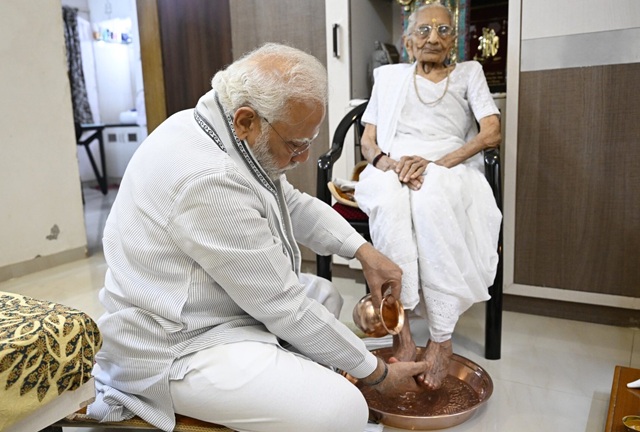
Moreover, the very spectacle of Anura’s public appearances—his hospital visit, his speeches, his carefully timed social media posts—needs to be scrutinised for what they are: distractions. They are designed to create a narrative, to push the idea that Anura is one of the people, an ordinary man fighting for the ordinary man. The reality, however, is that his success lies in his manipulation of this narrative. By exposing the vacuity of his political gestures and demanding concrete, meaningful policies, his rivals can begin to chip away at his carefully curated image.
Another path to Anura’s downfall lies within his own ranks. While he may seem to have consolidated his power, there are fissures within his party, and these can be used to undermine him. By capitalising on these internal tensions, opponents can weaken his position, forcing him to either alienate his old guard or lose the loyalty of the grassroots supporters who form the bedrock of his movement. The same internal divisions that threaten Anura’s unity could become the weapon that topples him, as long as rival factions can present a united front against him.
In a world where perception is often more powerful than reality, the role of media cannot be overstated. Anura Dissanayake has carefully crafted his public image, and his ability to manipulate social media platforms and traditional media outlets has only solidified his position. Yet the same media that amplifies his voice can also expose his contradictions. If his rivals can effectively weaponise both social media and traditional channels, they can create an alternative narrative that challenges Anura’s monopoly on hope and leadership.
Take a page from the history of Franklin D. Roosevelt, who used radio to bypass traditional media gatekeepers during the Great Depression. Anura, too, must understand that media manipulation is a double-edged sword. His ability to project an image of the benevolent, approachable leader can be magnified or diminished in a heartbeat. His rivals must not only control the narrative but also create stories that question his authenticity, turning the public’s emotional attachment against him. The more his leadership becomes associated with performance rather than results, the closer his downfall will become.
The central issue, however, is Anura’s policies—or rather, his lack thereof. While his public persona is built on emotional appeal, he has yet to offer any real, substantial solutions to the country’s most pressing issues. Without a clear economic vision, policies to combat corruption, or concrete reforms, his leadership is nothing more than a house of cards. Opponents must force him to stop relying on empty rhetoric and symbolic gestures, demanding instead a clear and comprehensive plan for the future. It is this pressure to deliver substance, to move beyond emotional appeals, that could expose the hollowness of his political platform.
The most controversial question that looms over Anura Dissanayake’s career is whether his populist approach is sustainable in the long term. Populism thrives on division, on creating an “us vs. them” mentality. Yet, as history has shown time and again, populism falters when it is faced with the complexities of governance. Can Anura’s movement evolve beyond shallow populist gestures into something that delivers lasting change? Or will he, like so many before him, fall victim to the very methods he used to ascend to power?
In the end, the key to defeating Anura Dissanayake lies in outmanoeuvring him—not by overpowering him directly, but by exposing the fragility of his image, dismantling his populist appeal, and forcing him to confront the contradictions within his own movement. It’s not about matching his ability to manufacture hope; it’s about showing that the hope he peddles is empty, that the substance behind his promises is little more than smoke and mirrors. History is full of leaders who, in their pursuit of power, constructed grand narratives that ultimately collapsed under the weight of their own deceit. Anura Dissanayake may be at the pinnacle of his game now, but history will decide whether he is a true transformative leader or just another cautionary tale in the long, tragic story of populist politics.