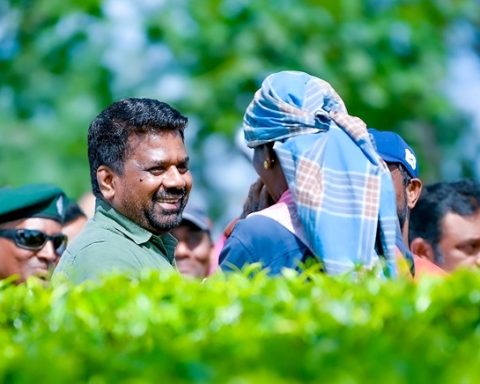
This endeavour goes beyond merely cleaning up the environment. It aspires to restore the deeply eroded and deteriorated social and environmental fabric of our motherland. We aim to create cleanliness and rejuvenation across all sectors of society – President Anura Kumara Dissanayake unveiling the Clean Sri Lanka initiative on the 1st of January 2025.
President Anura Kumara Dissanayake’s three-step plan for 2025 is an initiative that presents an opportunity for the entire country to rally around and contribute to its success. The President has placed good governance and anti-corruption at centre stage. Borrowing from ph.pintrest.com, the following graphic broadly illustrates the substance of the President’s speech on 1st January, heralding 2025 and setting the tone and direction for his government.
As outlined by the President, the three-step plan is much more than physical cleanliness. It is about cleansing the soul of the country and restoring the lost values of society and the nation.
This article is not an attempt to expand on or interpret the President’s speech, as he was clear, concise, and substantive in his presentation. Instead, it focuses on the physical cleansing of the country’s environment. The degradation of our environment is undeniable to anyone with eyes, ears, and noses upon stepping outside their home. Physical cleanliness is a largely mechanical exercise unless it is underpinned by the collective understanding that environmental cleanliness is integral to who we are, and uncleanliness reflects what we should not be. In this context, physical cleanliness becomes part of the ethos of the Clean Sri Lanka effort, aiming to transform the mindset of people to foster a value-based, internally and externally clean society.
This article highlights one significant contributor to environmental degradation: pollution from plastic waste. It offers the perspective that such pollution reflects not only environmental neglect but also a polluted mindset and a lack of concern for the living beings around us.
A Glimpse at the Global Situation
Plastic pollution is a global problem. Every year, 19–23 million tonnes of plastic waste leaks into aquatic ecosystems, polluting lakes, rivers, and seas. Plastic pollution alters habitats and natural processes, reduces ecosystems’ adaptability to climate change, and directly affects millions of people’s livelihoods, food production capabilities, and social well-being. According to the United Nations Environment Programme (UNEP), this problem does not exist in isolation. The environmental, social, economic, and health risks associated with plastics must be assessed alongside other stressors like climate change, ecosystem degradation, and resource use.
The International Union for Conservation of Nature (IUCN) reports the following:
- Over 460 million metric tonnes of plastic are produced annually for various applications.
- Approximately 20 million metric tonnes of plastic litter enter the environment each year, a figure expected to rise significantly by 2040.
- Plastic pollution affects all land, freshwater, and marine ecosystems, driving biodiversity loss, ecosystem degradation, and climate change.
- As a transboundary issue, plastic pollution necessitates a global plastics treaty to ambitiously reduce production, phase out harmful subsidies, eliminate problematic products and chemicals, and adopt robust national plans with stringent reporting and compliance mechanisms (https://iucn.org/resources/issues-brief/plastic-pollution).
The Institute for the Study of Human Knowledge, in its Human Journey project under the section “Death by Garbage”, states:
Turtles, seabirds, and marine animals eat plastic instead of food, leading to starvation. Plastic debris enters the ocean because most of it is littered or inadequately safeguarded in landfills. The amount of plastic waste dumped daily is staggering. In the time it takes to read this sentence, about 100,000 plastic bottles will have been discarded. Bottles account for one-third of all plastic trash, another third consists of plastic bags and food wrappers, and the remainder includes items like lids, straws, cups, and utensils (Click here for more details).
A Glimpse at the Sri Lankan Situation
The Ministry of Environment’s National Plastic Waste Inventory for Sri Lanka: A Material Flow Approach (February 2024) reveals alarming statistics:
- Widespread plastic pollution: The entire country, including remote areas, suffers significant environmental and biodiversity impacts, contributing to climate change.
- Waste generation: Sri Lanka generates around 250,000 tonnes of plastic waste annually, equating to approximately 11 kilograms per person per year.
- Waste collection: Only 73% of plastic waste is collected, and a mere 11% of mixed waste is recycled.
- Waste disposal: About 44% of uncollected plastic waste is openly burned, and 24% is discarded into waterways and on land.
- Marine plastic: In 2017, Sri Lanka ranked fifth globally for releasing plastic waste into oceans. The Marine Environment Protection Authority estimates 1,500 metric tonnes of plastic enter coastal seas annually.
- Chemical hazards: Plastics release harmful chemicals like phthalates and BPA as they degrade, linked to hormone damage and dermatitis (Click Here for more detail).
Sri Lanka’s National Action Plan on Plastic Waste Management (NAPPWM, 2021) offers a comprehensive framework aligned with national policies and a waste hierarchy. However, its success hinges on effective implementation, monitoring, and, crucially, community participation. Goal 16 emphasises community involvement in combating plastic waste. Without widespread public ownership, the plan risks failure. Managing plastic waste must extend beyond physical effort to reflect inner values, aligning with the Clean Sri Lanka initiative’s broader ethos.
A Call to Action
The general public, in collaboration with community organisations, workplaces, religious institutions, and voluntary groups, must spearhead efforts to manage and reuse plastic waste. The government should consider integrating social welfare programmes like Samurdhi and Aswasuma into environmental initiatives to maximise impact.
Ultimately, Clean Sri Lanka is not an individual’s project but a collective people’s movement requiring mindset shifts across society. Leaders from politics, business, education, civil society, and religious institutions must lead this transformation.
As Rumi aptly stated:
Yesterday I was clever, so I wanted to change the world. Today I am wise, so I am changing myself.
Sri Lankans must decide whether to adopt this wisdom for a cleaner, more ethical society. Environmental stewardship should be ingrained in educational curricula, ensuring future generations grow with this mindset. Clean Sri Lanka must transcend politics and be embraced as a necessity by all.