


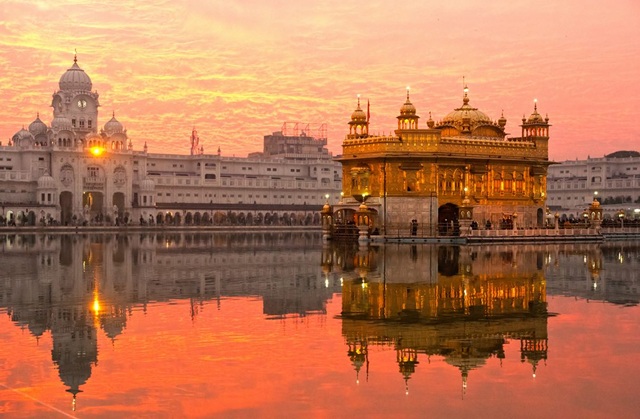
A senior Labour MP has called for an independent inquiry into the UK’s role in a massacre at the Golden Temple in Amritsar in 1984, an event that saw hundreds of Sikh pilgrims killed by Indian troops. The massacre occurred when the Indian government launched an operation to evict a separatist leader from the holy site. Margaret Thatcher, the Conservative Prime Minister at the time, had secretly sent an SAS officer to advise India’s army months before the attack, a fact that remained hidden for decades. The details of this covert involvement came to light only in 2014 when declassified documents were uncovered at the National Archives.
Tan Dhesi, who chairs the influential Defence Select Committee, has urged the UK government to honour a commitment made by the Labour party when it was in opposition to fully investigate the matter. He highlighted the British Sikh community’s long-standing demand for an independent inquiry to determine the extent of the UK’s involvement in the tragedy. Dhesi questioned why the issue had been brushed aside by previous Conservative governments and pressed the current Labour leadership to live up to its past promises. Labour’s leader Keir Starmer and his deputy Angela Rayner had both previously supported calls for an inquiry, with Rayner reaffirming the party’s position on the 40th anniversary of the massacre this June.
However, this pledge was notably absent from Labour’s 2024 manifesto, prompting criticism from Sikh groups. The Sikh Federation, which has been campaigning for transparency on the matter, revealed that Foreign Secretary David Lammy had not responded to any of the five letters sent to him since he assumed office in July 2024. This lack of action has left many questioning Labour’s commitment to the cause, despite the historical promises made.
The issue first came to public attention in 2014 when former government advisor, now journalist, found documents at the National Archives that revealed the UK’s involvement in the planning of the operation that led to the massacre. This led then Prime Minister David Cameron to commission a “review” led by Cabinet Secretary Sir Jeremy Heywood. The review, which claimed that the SAS’s advice had a “limited impact,” was criticized as a “whitewash” by Sikh groups who called for a full inquiry. They contended that the review lacked depth and failed to address key questions surrounding Britain’s role in the operation, including the potential influence of trade deals on the government’s actions.
The resistance to a full inquiry has only intensified over the years. Two legal challenges were mounted by the journalist who uncovered the documents, exposing significant conflicts of interest in the Heywood review. One key revelation was that Hugh Powell, son of Thatcher’s foreign policy adviser Charles Powell, had been given a leading role in the review, raising concerns about bias. Furthermore, the review was marred by omissions, such as not investigating key documents that suggested further SAS support for India after the massacre. These documents, some dating from July 1984, were not made available to the review. Additionally, the intelligence agencies were not included in the inquiry, despite claims that MI5 officers had conducted reconnaissance of the Golden Temple disguised as tourists.
In a damning ruling, an information tribunal judge found that the Cabinet Office had failed to provide key documents to the Heywood review, ruling that the secrecy surrounding the operation was unjustified. The lack of transparency surrounding the SAS’s role and the government’s handling of the affair has led many to demand a more thorough examination of Britain’s involvement in the events that led to the massacre.
While the Defence Select Committee, chaired by Dhesi, has the authority to investigate military matters, it lacks the power to scrutinize UK special forces, such as the SAS, which are exempt from the Freedom of Information Act. The government has defended its handling of the issue, claiming that the original files related to the case were released to the National Archives by mistake. However, critics argue that the lack of clarity and transparency regarding the SAS’s actions continues to hinder the quest for justice.
Paddy Ashdown, the late Liberal Democrat leader and former Special Boat Service veteran, was an advocate for greater transparency surrounding historical operations. He argued that the overprotection of special forces records, even those that are decades old, is detrimental to public trust. The resistance to a public inquiry into the Golden Temple massacre is seen by some as part of a wider reluctance to reveal the true nature of covert operations carried out by special forces, especially as the regiment’s reputation has been tarnished in recent years by allegations of war crimes in Afghanistan, Syria, and Libya.
The push for an independent inquiry into the massacre continues to gather momentum, as the Sikh community, supported by some political figures, demands accountability for the UK’s role in one of the most horrific events in recent history. The continued silence from the government on this matter, despite mounting evidence and public pressure, only serves to deepen the sense of injustice felt by many.










