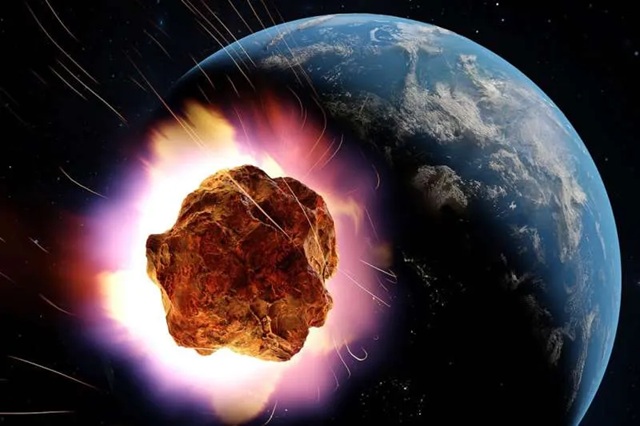
NASA has increased the estimated risk of asteroid 2024 YR4 colliding with Earth to 3.1 percent—the highest probability ever recorded for such an event. The Times UK reports that if the asteroid were to strike on December 22, 2032, it could release nearly eight megatons of energy, with a blast radius of about 30 miles, enough to devastate an entire city.
The asteroid, estimated to be between 40 and 90 meters wide, is hurtling through space at approximately 38,000 mph. Its potential impact zone stretches from the eastern Pacific Ocean across northern South America, the Atlantic Ocean, Africa, the Arabian Sea, and southern Asia. While much of the projected path lies over water, major cities such as Bogotá, Lagos, and Mumbai remain within the “risk corridor.”
Astronomers worldwide are working to refine YR4’s orbital path. While calculations currently indicate a 96.9 percent chance of a miss, NASA has raised concerns due to the increasing likelihood of impact. The situation contrasts with previous asteroid threats like Apophis, which initially posed a risk before further observations ruled out a collision.
The asteroid was discovered on December 27, 2023, and has been closely monitored by observatories, including the James Webb Space Telescope. Scientists are racing against time to measure YR4’s exact size and composition, as its faintness makes precise observations difficult.
Historical asteroid events, such as the Tunguska explosion in 1908 and the 2013 Chelyabinsk meteor, highlight the potential damage of even smaller space rocks. NASA’s 2022 Double Asteroid Redirection Test (DART) successfully altered the trajectory of an asteroid by crashing a spacecraft into it, proving that deflection strategies could work.
Experts emphasize the need for early intervention if YR4 is determined to be on a collision course. Physics and astronomy lecturer Darren Baskill compared tracking the asteroid’s approach to a game of snooker, stating, “You don’t know if the ball will go in the pocket until the very last moment.” With no current planetary defense systems in place, scientists hope that technological advancements over the next seven years will provide viable solutions should an impact become imminent.