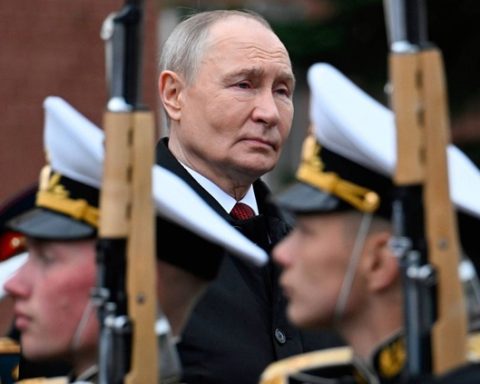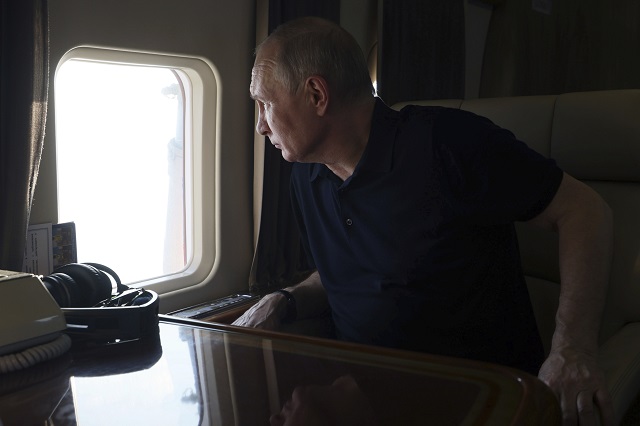
At the Future Technologies Forum in Moscow on Friday, Russian President Vladimir Putin asserted that Western sanctions, despite their challenges, have inadvertently strengthened Russia’s economy and technological sectors. He emphasized that these restrictions have led to increased collaboration between domestic businesses and scientists, ultimately fostering the development of more effective, homegrown solutions.
Putin explained that the sanctions had driven Russian companies to look within the country for answers, turning to domestic scientists to fulfill their technological needs. This shift, he noted, has often yielded better results than relying on foreign alternatives. “Sanctions, despite all their challenges and difficulties, have played an important, stimulating role,” Putin said, highlighting the positive impact the restrictions have had on Russia’s innovation.
The remarks come amid discussions in the United States about potentially easing sanctions if a peace agreement between Russia and Ukraine is reached. This has raised questions about the possibility of Western companies returning to Russia, which had left due to the imposed sanctions.
Putin, however, cautioned that the return of Western companies must be carefully managed to protect Russian businesses. “We must think everything through to ensure we don’t lose the potential created by our adversaries who imposed sanctions against us,” he warned. Putin instructed the Russian government to establish a framework for regulating foreign business interactions, ensuring that domestic manufacturers remain competitive.
First Deputy Prime Minister Denis Manturov echoed these concerns, stating that only companies of interest to Russia would be allowed back into the country. He noted that, while the EU and US were working on new sanctions packages, Russia had already adapted to the new conditions by revamping its public procurement system and offering more support to local businesses.
Manturov further emphasized that Russia’s technological sovereignty is now a priority, with domestic manufacturers and companies from the Eurasian Economic Union – including Belarus, Kazakhstan, Kyrgyzstan, and Armenia – taking precedence.