A trove of leaked documents has unveiled a covert operation exposing the Turkish defence industry’s deep involvement in Sudan’s brutal civil war, revealing how weapons manufactured by Turkey’s largest arms firm, Baykar, were funnelled into the hands of the Sudanese army. The revelations, first reported by The Washington Post, paint a damning picture of wartime profiteering and geopolitical manoeuvring, as Turkish arms dealers exploited a nation in turmoil.
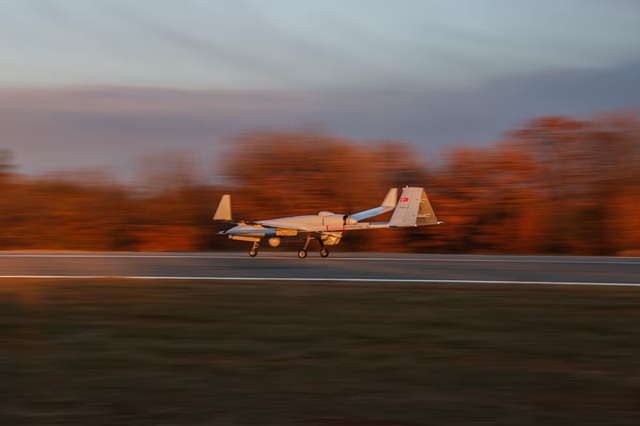
The documents and communications, authenticated through financial and trade records, flight tracking data, and intercepted messages, showcase how Baykar covertly supplied at least $120 million worth of lethal weaponry—including eight TB2 drones and hundreds of warheads—to the Sudanese military. These drones, a cornerstone of Turkey’s burgeoning defence exports, were then used to conduct deadly airstrikes in Sudan’s ongoing civil war, which has raged for nearly two years and led to what the United Nations has described as the world’s worst humanitarian catastrophe.
On-the-ground messages from Baykar employees provide chilling confirmation of the firm’s complicity. In a series of communications, an employee messaged his boss on 12 September, sending video footage of an airstrike, captioning it, “Today’s attack.” Just days later, another strike was recorded, as a missile slammed into a large warehouse, marking the devastating impact of Turkey’s secret intervention.
The Washington Post obtained and authenticated this trove of evidence, revealing the extent of the Turkish defence industry’s influence on both sides of the Sudanese conflict. While Turkey has long been a player in global arms exports, these revelations mark a dangerous precedent: a NATO member nation’s arms firm providing military hardware to a government accused of war crimes while also maintaining communication with its adversaries.
Baykar, a company closely tied to the Turkish government—co-owned by President Recep Tayyip Erdogan’s son-in-law—has long been a key player in Turkey’s defence strategy. The company’s TB2 drones have been used in conflicts from Libya to Ukraine, often equipped with US-made components. The Sudanese deal not only raises ethical concerns but also appears to violate multiple rounds of US and EU-imposed arms sanctions. Despite these serious allegations, neither Baykar, the Sudanese military, nor Sudanese authorities have responded to inquiries for comment.
The Turkish government, meanwhile, has maintained an official stance of neutrality in the Sudanese conflict. A Turkish embassy official in Washington, speaking anonymously, stated, “Türkiye has, from the outset of the conflict, refrained from providing any military support to the parties.” However, the recently uncovered documents suggest otherwise, implicating Turkey in a dangerous geopolitical game that could further destabilise the region.
While Turkey publicly portrays itself as a mediator in the conflict, Erdogan’s government appears to be using its defence sector to establish deeper economic and strategic ties with Sudan. Beyond the weapons deal, Sudanese military officials reportedly discussed offering Baykar and other Turkish firms access to lucrative natural resources, including gold, silver, and copper mines. Documents further reveal that Sudanese officials considered granting Turkish firms control over Abu Amama, a critical Red Sea port that was previously promised to the United Arab Emirates and remains a key point of interest for both Moscow and Abu Dhabi.
The extent of foreign intervention in Sudan’s war has been widely documented, with Russia, Iran, and the UAE all accused of fuelling the conflict by supplying arms to opposing factions. The UAE, despite repeated denials, has been linked to 32 arms shipments to the Rapid Support Forces (RSF) paramilitary group, while Iran has been secretly supplying drones to the Sudanese army. Meanwhile, Russian firms have allegedly provided small arms to fighters on both sides.
Complicating matters further, the leaked documents also suggest that another Turkish arms company, Arca Defence, was engaged in separate dealings with Sudan’s rival paramilitary group, the RSF. Phone recordings and correspondence reveal that an Arca executive, Ozgur Rodoplu, was in direct contact with Algoney Hamdan Daglo Musa, the RSF’s chief weapons procurer and the brother of its leader. While Arca Defence denies ever selling weapons to the RSF, messages between the two suggest discussions about potential sales, with Musa even offering to sell Arca weapons captured on the battlefield.
As Turkish arms dealers played both sides of the war, Sudan descended further into chaos. The conflict, which began in April 2023, erupted when two former allies—Sudanese army chief Gen. Abdel Fattah al-Burhan and RSF leader Gen. Mohamed Hamdan Dagalo—turned against each other. What followed has been catastrophic: an estimated 150,000 dead, over 13 million displaced, and widespread atrocities including mass rapes, beheadings, and targeted bombings of civilian infrastructure. The US government has accused both factions of war crimes, but as the revelations surrounding Turkish arms dealings indicate, external powers continue to fuel the carnage.
The implications of these revelations are vast, threatening to strain Turkey’s already precarious relationships with Western allies, including the United States. Arca Defence, the firm tied to RSF negotiations, had previously sold 116,000 rounds of ammunition to the Pentagon in 2024. If further evidence confirms Turkish firms’ dual role in arming both warring factions, Washington may be forced to reconsider its military and economic ties to Ankara.
For Sudanese civilians, however, these geopolitical manoeuvres mean little in the face of daily airstrikes and gunfire. As Turkish-made drones circle overhead and foreign arms dealers negotiate in the shadows, Sudan’s suffering continues, fuelled by a conflict that has become a lucrative battleground for international powers.