by Durga Velayutham
A government emboldened by an overwhelming majority—nay, a supermajority—has now exhumed the controversial Batalanda Commission Report, a document long buried in the annals of political history, only to be resurrected at a moment of convenient political expediency. Those who once bayed for justice, alleging grave violations against former President Ranil Wickremesinghe and his allies, now revel in this spectacle of selective moral righteousness. But the fundamental question looms: why now? What ulterior stratagems undergird this sudden resurgence?
The timing is no fortuity. The report’s unearthing coincides almost symphonically with a well-choreographed episode in London, later telecast in a highly edited and redacted form on Al Jazeera’s Head to Head. More curiously, the spark that reignited this inferno originates from an erstwhile BBC correspondent in Colombo—one who, throughout her tenure, maintained an unequivocally pro-LTTE stance and lamented alleged Sri Lankan war crimes, all while her own nation obfuscated the Chilcot Report and actively subverted investigations into war atrocities in Afghanistan and Iraq. The hypocrisy is palpable, but so too is the orchestrated nature of this narrative.
Let us be unequivocal: justice must be blind. Those culpable of atrocities must face the full weight of legal retribution, irrespective of their political colour. But the selective invocation of justice is no justice at all; rather, it is a Machiavellian weapon wielded to discredit and decimate adversaries under the pretext of legal rectitude. This is precisely the trap into which the current government, in its fervent zeal, has stumbled. The reopening of the Batalanda Commission’s findings is not merely a political gambit; it is a Pandora’s box whose ramifications will extend beyond the borders of Sri Lanka, ensnaring actors who naively believe themselves immune from reciprocal scrutiny.
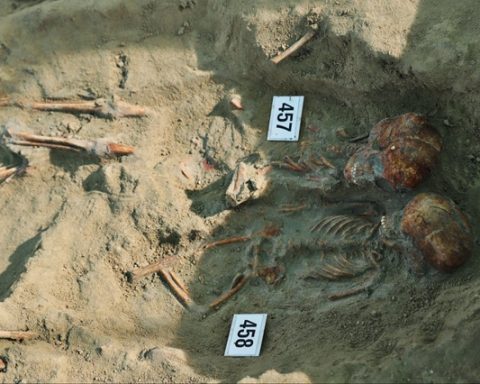
The Commission’s findings are indeed damning. It establishes, inter alia, that extrajudicial detention centres and torture chambers were maintained at the Batalanda Housing Scheme. It names figures of significant political stature, attributing direct and indirect complicity. The rule of law, it contends, was subverted by state-sanctioned excesses, with counter-subversive operations veering into the realm of outright criminality. The extent to which these allegations are substantiated is a matter for legal adjudication, but the precedent now set by this government’s resuscitation of the report will inevitably invite scrutiny into other dark corners of Sri Lanka’s past.
The Batalanda Nexus: The Allegations Against Ranil Wickremesinghe
Among the most incendiary findings of the Commission is the implication of Ranil Wickremesinghe. The report outlines that during his tenure as Minister of Industries, he exercised substantial influence over law enforcement mechanisms, allegedly providing both tacit and direct support to counter-subversive operations. The report states:
“During the period 1st January 1988 to the 31st December 1990, certain houses in the Batalanda Housing Scheme were used to illegally detain and torture persons. There is conclusive evidence that houses B2, B8, B34, and A1/8 were used for this purpose. Mr. Ranil Wickremesinghe and SSP Nalin Delgoda are indirectly responsible for the maintenance of places of unlawful detention and torture chambers in these houses.”
The report further outlines that unauthorized meetings were held at the Batalanda Housing Scheme, attended by senior police officers and political figures, with Wickremesinghe chairing many of these discussions. The Commission notes:
“The aforementioned unauthorized meetings were inextricably interwoven with the maintenance of places of unlawful detention and torture chambers. Mr. Wickremesinghe, in summoning these meetings, has clearly abused his authority.”
This evidence, when juxtaposed against the broader historical backdrop, raises disquieting questions about the role of political patronage in institutional violence. If the state is now committed to a retrospective evaluation of historical atrocities, then the Janatha Vimukthi Peramuna (JVP) must be subjected to the same level of scrutiny. The indiscriminate assassinations of academics, professionals, and political dissenters orchestrated by the JVP during the same period are an equally significant blot on Sri Lanka’s history.
The Commission further details testimony from former law enforcement officials who describe Wickremesinghe’s direct involvement in police operations at Batalanda. Former Sub-Inspector Ajith Jayasinghe testified:
“I was personally present at a meeting at Batalanda where Mr. Wickremesinghe issued directives on how operations should be conducted. There was no ambiguity in his stance—he was in full knowledge of the extrajudicial detentions occurring in that facility.”
Another key witness, Vincent Fernando, detailed how individuals who had been detained at Batalanda simply ‘disappeared’:
“The individuals taken into custody at Batalanda never saw the light of day again. They were either executed or transferred to unknown locations. Mr. Wickremesinghe was aware of this process and did not intervene.”
The Perils of Weaponised Justice
The government, by reopening the Batalanda saga, has inadvertently invited a perilous consequence: international jurisdiction. If the precedent is set that historical state conduct is to be subjected to ex post facto legal assessment, then Sri Lanka will inevitably find itself entangled in the mechanisms of international tribunals. The government may well discover, belatedly and with much regret, that the strategic underpinnings of this renewed inquiry are not merely domestic. It is no coincidence that foreign actors—those who have long sought to undermine Sri Lanka’s sovereign adjudicative authority—now evince an almost predatory interest in the proceedings. What begins as an internal reckoning will soon metastasise into an external intervention, wherein the government’s enthusiastic prosecution of domestic adversaries will be repurposed as an argument for broader international oversight into Sri Lanka’s judicial independence.
And therein lies the ultimate folly. What masquerades as a righteous endeavour is, in reality, a perilous gambit with existential implications. The judiciary, if it succumbs to the allure of political instrumentalisation, will forfeit its legitimacy. The government, if it fails to appreciate the long-term ramifications of its actions, will find itself outmanoeuvred by the very forces it seeks to placate. And the country, if it allows selective justice to dictate its historical narrative, will entrench a precedent that ensures no government—present or future—is ever truly free from the spectre of retrospective adjudication.
In the end, the government will come to rue its overreach. It has not merely reopened an old wound; it has invited an inquisition whose reach will extend far beyond its original scope. It has not merely wielded the sword of justice against its opponents; it has impaled itself upon its own blade. The Batalanda Commission Report, long relegated to the archives of history, has now become the crucible in which the government’s own fate will be sealed.