


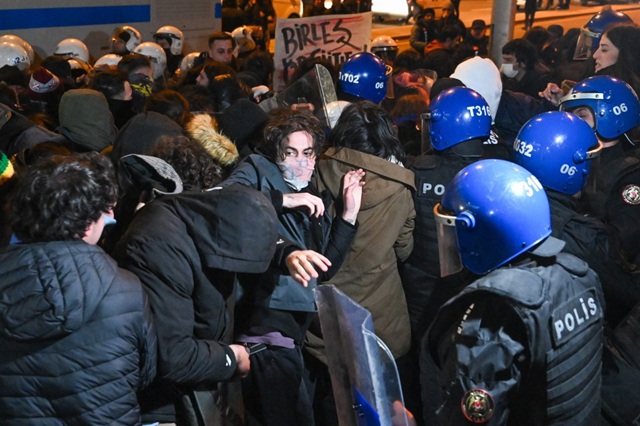
Times UK reports that Ekrem Imamoglu, the mayor of Istanbul and a leading opposition figure in Turkey, has called on judges and prosecutors to take a stand against what he deems the tyrannical rule of President Recep Tayyip Erdogan, following his own arrest on corruption and terrorism charges. Imamoglu, who is widely seen as Erdogan’s most credible challenger, was detained along with dozens of advisers and municipal officials. The charges against him, including leading or being part of a criminal organization, extortion, bribery, and aiding the outlawed Kurdistan Workers’ Party (PKK), are viewed by many as politically motivated.
Imamoglu, a member of the Republican People’s Party (CHP), urged Turkey’s legal community to “not remain silent” in the face of what he described as the erosion of the judiciary. His call came a day after his detention, which has sent shockwaves across the country and sparked widespread protests. Demonstrations in Istanbul, Ankara, and Izmir saw thousands take to the streets demanding his release. In a further clampdown, the Turkish government restricted access to social media and detained individuals who posted about Imamoglu’s arrest, with at least 37 people taken into custody.
The arrest has deepened concerns about Turkey’s slide into authoritarianism, with some experts warning that it signals a new, more repressive phase in Erdogan’s rule. The country’s already strained economy, burdened by soaring inflation, also reacted negatively to the news, with the Turkish lira plummeting to a record low against the dollar and the stock market suffering steep losses. The Turkish stock exchange, Borsa Istanbul, dropped nearly 9%, and JP Morgan revised its inflation forecast for the country upwards.
This move comes after months of increasing repression under Erdogan’s government, which has curtailed opposition and cracked down on civil liberties. Some political analysts, including Berk Esen from Istanbul’s Sabanci University, argue that Imamoglu’s arrest marks the beginning of a broader campaign against the opposition. Esen describes the situation as an unprecedented intervention in Turkey’s electoral system, likening it to a coup against the country’s remaining democratic institutions.
Political scientists, such as Monica Marks from NYU Abu Dhabi, view the arrest as a pivotal moment in the consolidation of authoritarianism in Turkey. Marks likens the current regime to a “hybrid” or “competitive authoritarian” system, where the opposition is forced into an increasingly powerless position. The use of vague charges like corruption and terrorism, often employed by autocrats to neutralize political rivals, has further undermined the credibility of the judiciary, which many believe is now under Erdogan’s control.
Despite the crackdown, Imamoglu remains immensely popular, and many are questioning whether the Turkish president will allow him to remain a serious challenger in future elections, particularly the 2028 presidential race. Imamoglu’s university degree has been reportedly revoked, and his construction company seized, making his candidacy uncertain.
Internationally, Erdogan’s power grab is facing little resistance. The Turkish president has maintained key relationships with the West, particularly in relation to the war in Ukraine and managing illegal migration into the EU. This international dynamic has allowed Erdogan to pursue his political agenda with little fear of reprisal.
Protests continue to simmer, but the risks of opposition are high in a country where dissent is increasingly met with force. The arrest of Imamoglu has left many Turks disillusioned by years of repression, and the country now faces a critical juncture in its political future. Will Turkey continue down the path of increasing authoritarianism, or can the opposition, led by figures like Imamoglu, reclaim a semblance of democratic process? Only time will tell.









