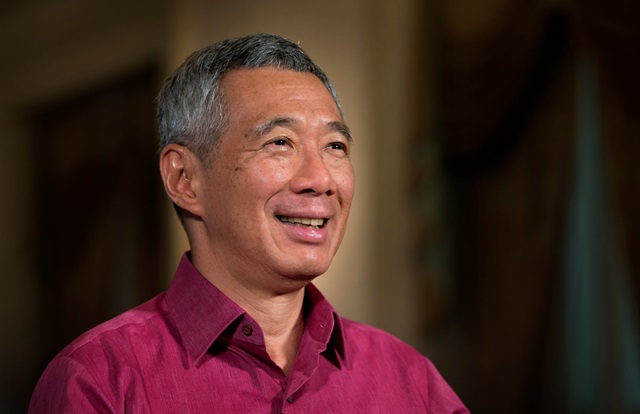
Even as the world grapples with increasing geopolitical tension and the rise of tariffs, Senior Minister Lee Hsien Loong’s remarks resonate with a timeless wisdom rooted in pragmatic idealism. During his address on Singapore’s strategic positioning as a global maritime hub, Lee provides invaluable insights into not just the nation’s past, but also the future of international trade, maritime industries, and global economic dynamics. His reflections offer a glimpse into the mindset that steered Singapore to its current global stature, and more importantly, how it is poised to evolve in an increasingly complex and challenging environment.
Lee Hsien Loong addresses a fundamental issue with both caution and clarity: the role of tariffs in international trade. Despite the growing protectionist rhetoric across the globe, Lee firmly states, “Even if it is national security, I do not want to spend myself to bankruptcy, and you do not want to spend yourself to bankruptcy.” This remark cuts to the heart of global economics, challenging the notion that tariffs and trade barriers can be used as a panacea for economic woes. Lee’s stance on trade underscores an important point – that while national security may justify certain measures, the longer-term consequences of such policies, including their potential to bankrupt nations, cannot be ignored.
Lee’s reflection on tariffs provides a roadmap for understanding how Singapore, through its prudent policy decisions, has been able to weather storms that have ravaged other nations. He emphasises, “In the fields of arms control, we may be opponents, but you still have arms limitations. You still have treaties to keep the competition within limits and prevent things from really blowing up.” This comparison between arms control and trade limitations underlines his belief that even in the face of trade wars or tariffs, a rules-based order is essential to preventing chaos. He expresses his view that, in the future, nations must work together to ensure that these rules are kept intact in both trade and security, just as international agreements on arms control help maintain global peace.
What makes Lee’s vision so compelling is the balance he strikes between acknowledging the competitive forces at play in the global arena and charting a course that is anchored in long-term stability. Lee is not naïve about the challenges, especially when considering the rapid expansion of other regional ports and maritime hubs. He acknowledges, “Other ports in the region also have big ambitions. They are also seeking to grow and to play a bigger role and to have a larger share of the business.” But in a world that is increasingly interconnected, it is the key combination of technological adaptation, operational efficiency, and reliability that will continue to set Singapore apart from its competitors.
Reflecting on Singapore’s maritime history, Lee reminisces, “We have built our port from what we call an entrepôt, to what we are now, with 40 plus million TEUs shipped through Singapore every year.” Singapore’s rise from a small trading outpost to a global maritime powerhouse is a testament to its forward-thinking policies. What Lee captures so eloquently is the essence of the nation’s success: being “one step ahead” and making full use of technology and human resources. This remains as true today as it was decades ago when Singapore was little more than a transshipment point for goods coming from neighbouring regions.
Lee underscores the importance of continuing to stay ahead of the curve: “We have quite bold plans to do that. Tuas Port, which we are building, has targeted for 65 million TEUs per year. We are now just over 40 million TEUs last year. It is 50 percent more.” The ambitious expansion plans signal that Singapore is not just resting on its laurels but is actively preparing for the future. Lee’s emphasis on “boldness” in development isn’t just about numbers, but about Singapore’s relentless drive to improve, adapt, and grow even when the competition intensifies.
In discussing the future of Singapore’s maritime industry, Lee expresses confidence in the country’s capacity to thrive. “We have got international business, and we have that only because we are efficient and we can be relied upon to deliver.” His firm belief in Singapore’s efficiency and reliability is central to his vision for the nation’s continued success. For Lee, efficiency is not merely about operational speed but also about trust – trust that Singapore will not only keep the wheels of commerce moving but will do so consistently, reliably, and with the highest standards of safety and security.
But amidst these bold plans for expansion and future growth, Lee also touches on the importance of sustainable practices in the maritime industry. The shift toward decarbonisation in global shipping is one of the most pressing issues facing the industry today. He highlights the challenges of reducing emissions by 30% by 2030, noting that the solutions are still unclear but that Singapore must “prepare for this” by exploring multiple avenues. “Alternative fuels are one avenue, whether it is hydrogen, whether it is ammonia,” Lee says, recognising the importance of infrastructure and technological innovation in supporting greener solutions.
Lee is clear-eyed about the difficulties that lie ahead, acknowledging that achieving such ambitious environmental targets will be difficult without global cooperation. “I think, honestly, to reduce emissions by 30% by 2030… will be very challenging for the world, particularly if the big countries are not all on board.” The uneven global commitment to decarbonisation is a significant obstacle. However, Lee remains steadfast in his belief that, over time, the world will come to realise the inevitability of cleaner energy and will need to make the necessary technological advancements to ensure sustainability in maritime shipping.
Despite these uncertainties, Lee takes a pragmatic approach, focusing on industry-wide collaboration rather than piecemeal national efforts. He points out that addressing decarbonisation is better tackled as an industry rather than country by country. “We can find a solution which is sensible end to end, and you put the costs where the costs deserve to be,” he says, emphasising the importance of collective effort in crafting sustainable solutions that benefit the global maritime community, not just individual nations. It’s a bold approach that echoes Lee’s earlier point about the necessity of rules and agreements to prevent fragmentation and chaos in the international system.
Turning his attention to talent and the future workforce in the maritime industry, Lee also touches upon the challenges faced by Singapore in attracting skilled professionals to the sector. “I am not very familiar with the details of the maritime logistics industry… but the general problem of talent in Singapore, I think, is one which many industries are facing,” he states. The talent crunch that the maritime sector is experiencing, particularly in a highly fragmented industry, is not unique to Singapore but is a global concern. To address this, Lee emphasises the importance of creating a supportive framework for both local and foreign professionals. In this way, Singapore can continue to attract and nurture talent that will sustain its position as a global maritime hub.
Lee’s reflections on the future of shipping also delve into the issue of public perception. As he remarks, “Shipping usually hits the news only when something disastrous happens and catches everybody’s attention.” This unfortunate association with accidents and disasters has led to a dearth of interest among younger generations in pursuing careers at sea. For Lee, the key to reversing this trend lies in altering perceptions. He calls for a concerted effort to showcase the technological prowess and professionalism inherent in modern shipping, highlighting that “if you are on a supertanker or on a modern ship, it is great professionalism and high technology, too.”
Lee believes that fostering a genuine passion for the maritime industry among the youth is vital for its future. “You need a certain passion, a certain fascination with the ocean,” he asserts, encouraging younger generations to explore careers in shipping by showcasing the excitement and importance of the work. By drawing parallels with other high-tech professions, like aviation, he underscores the potential for creating a more dynamic and attractive image for the maritime industry.
In his final reflections on the future of Singapore, Lee Hsien Loong issues a call to action for the next generation. He encourages the youth to embrace uncertainty and challenges as opportunities to innovate. “The world is still there competing with me. But I am prepared, I have a team in Singapore which works, I have a brand name which is good. And if I am prepared to roll up my sleeves and go do it and adapt to the world as it comes, I can create something better which does not exist today.” His message is one of hope, determination, and resilience, as he places the responsibility of shaping the future squarely in the hands of the younger generation.