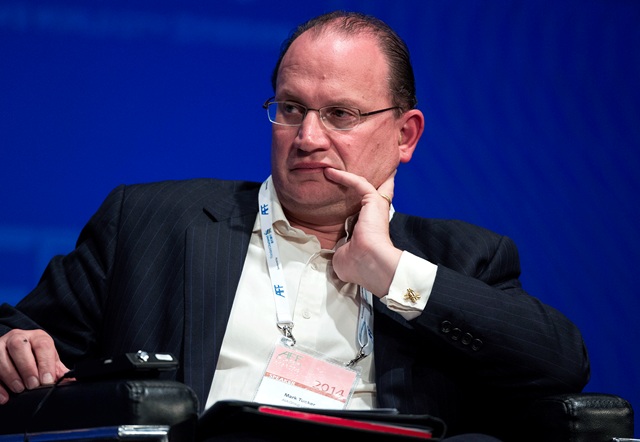
HSBC’s chair, Sir Mark Tucker, has raised concerns about the future of globalisation, suggesting that the current form of interconnected global trade may be nearing its end. In a speech at the bank’s Global Investment Summit in Hong Kong, Tucker warned that escalating trade and geopolitical tensions are driving a shift towards stronger regional economic ties and trade blocs, signaling the potential end of globalisation “as we knew it.”
Tucker explained that the current period of economic uncertainty, largely due to trade tensions exacerbated by actions like US President Donald Trump’s tariffs on key trading partners, presents a “serious potential risk to global growth.” These developments, Tucker said, mark a “deep and profound change” in global trade, economic policy, and international security, which could alter the trajectory of economic relationships worldwide.
Reflecting on the changing landscape, Tucker noted, “As we consider present developments… we believe that globalisation as we knew it may have now run its course.” He pointed to how economic considerations once led to highly efficient global supply chains, contributing to one of the greatest periods of wealth creation in history. However, Tucker emphasized that the balance of economic power has shifted, and what was once sustainable may no longer hold true in the current climate.
This doesn’t mean the world will necessarily “regress or geo-fragment and de-globalise,” Tucker clarified. Instead, he predicted that new opportunities would arise from stronger economic ties between different political groupings and trade blocs. This includes the increasingly influential “Brics-plus” group of countries—an expanded alliance of emerging economies that will likely engage in more intra-group trade and form new economic partnerships moving forward.
HSBC, as a dominant player in global trade finance, is particularly attuned to these shifts. The bank has been ranked first in global trade finance revenue for the past seven years, according to its latest annual report, which includes figures from Coalition Greenwich Competitor Analytics. Reflecting this evolution, HSBC has restructured its operations by dividing its trade business into two regions: one focused on Asia and the Middle East, and the other on Europe and the Americas.
Tucker specifically highlighted the growing economic connectivity between Asia and the Middle East as a major focus for HSBC, predicting that trade and financial linkages in this area would likely “soar” in the coming years. This aligns with the expansion of the Brics group, which, originally consisting of Brazil, Russia, India, China, and South Africa, has now expanded to include countries like Iran, the United Arab Emirates, Egypt, Ethiopia, and Indonesia. According to Tucker, these rising trade and financial ties within the Brics group and their connections with the rest of the emerging world could lead to significant growth spillovers.
Looking ahead, Tucker suggested that as geopolitical tensions continue, more emerging markets will likely join the Brics group to foster closer ties and amplify their voices on the global stage. These developments, he argued, will have profound implications for energy, trade, finance, supply chains, and technology.
This analysis comes at a time when globalisation is facing unprecedented challenges. As noted by Tucker, the world is undergoing a transformation that may redefine how countries engage in trade, potentially shifting the focus from global networks to more localized, regional partnerships. HSBC’s strategic realignment and Tucker’s analysis underscore the shifting sands of the global economy and the bank’s role in navigating this evolving landscape.