by Durga
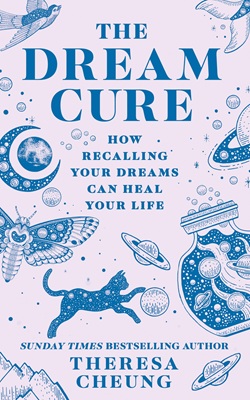
In The Dream Cure, the author weaves an intricate tapestry of longing, psychological turmoil, and the human desire for escape. The book is a profound exploration of dreams—not just as nocturnal visions but as the aspirations and illusions that shape existence. Through rich prose and unsettling insights, the narrative dissects the fragile boundary between reality and the imagined, making the reader question the very nature of perception.
From the outset, the book presents dreams as both a refuge and a curse. The protagonist, haunted by past failures and an unrelenting sense of ennui, finds solace in sleep, where alternate realities unfold. The opening line itself signals the book’s meditative yet unsettling tone: “Dreams are the only cure for a life that cannot be lived” (p. 3). This sets the stage for a narrative where escapism becomes the central motif, challenging the reader to consider whether solace found in dreams is a form of salvation or self-destruction.
The novel masterfully balances philosophical musings with raw emotional depth. One particularly striking passage reflects the protagonist’s gradual detachment from reality: “Every morning was an interruption. The real world had nothing to offer but reminders of failure” (p. 27). Here, the stark contrast between the waking world and the world of dreams is established, framing the book’s existential conflict. The protagonist’s increasing preference for sleep over wakefulness serves as a metaphor for a society disillusioned with its own existence.
Yet, The Dream Cure is not merely a bleak commentary on despair; it also explores the seductive power of illusions. The writing often oscillates between poetic beauty and unnerving realism. For instance, “In sleep, I was a poet, a traveller, a god. In waking life, I was no one” (p. 62). The protagonist’s attachment to dreams mirrors the human tendency to construct grander versions of ourselves in our imagination. This sentiment resonates deeply, drawing the reader into an introspective journey.
As the novel progresses, the central question shifts from whether dreams are a refuge to whether they are an addiction. The protagonist’s increasing dependency on the dream world mirrors the experience of those who seek escapism in substances, fantasies, or even art. “The longer I slept, the more I feared waking up. Reality was the illness, and sleep was the only medicine” (p. 89). This observation encapsulates the book’s core tension: what happens when the means of escape becomes the very thing that imprisons us?
The narrative does not offer a clear-cut resolution. Instead, it embraces ambiguity, mirroring the way dreams themselves refuse to be pinned down by logic or structure. This is evident in the protagonist’s musings: “I no longer knew if I was escaping reality or if reality had long escaped me” (p. 103). This existential uncertainty haunts the novel, making it both immersive and deeply unsettling.
One of the book’s most haunting sections explores the consequences of surrendering entirely to dreams. The protagonist begins losing a sense of self, unable to distinguish between the imagined and the real. “I spoke to people who did not exist and ignored those who did. The lines had blurred, and I was content to let them disappear” (p. 114). Here, the novel plunges into psychological horror, demonstrating the disorienting effects of unchecked escapism.
The protagonist’s psychological deterioration is reflected in the increasing fragmentation of the narrative itself. Sentences become shorter, thoughts more erratic, as if the story itself is dissolving into the dreamlike state it describes. One particularly harrowing passage reads: “I touched my own hand, and it felt unfamiliar. As though I was a stranger to myself. As though I had never been real at all” (p. 128). The prose mirrors the protagonist’s descent, making the reader experience their unraveling firsthand.
At its heart, The Dream Cure is a study in the perils of self-delusion. The protagonist’s dream world is, at first, a place of infinite possibility, a realm where they can rewrite their failures. Yet, as the novel progresses, it becomes evident that these dreams are not liberating—they are a prison. “The walls of my dreams were softer than those of reality, but they were walls all the same” (p. 146). The book forces the reader to consider: Is it worse to be trapped in a painful reality or a beautiful lie?
Yet, the book does not fully condemn dreams. Instead, it acknowledges their necessity. In one of its most poignant moments, the protagonist reflects: “To dream is to hope. And to hope is to live, even if only in fragments” (p. 137). This line lingers, offering a bittersweet resolution. Dreams may not be a cure, but they are, at the very least, a salve.
The novel also subtly critiques a world that makes escapism so necessary. The protagonist’s reality is defined by disappointment, loneliness, and a profound sense of unfulfillment. In this context, their retreat into dreams becomes not an act of indulgence but of survival. “I did not choose to dream. I only chose not to suffer” (p. 159). This line encapsulates the novel’s broader philosophical undercurrent: escapism is not a weakness but a reaction to an often unbearable existence.
The novel invites the reader to reflect on their own relationship with dreams, fantasies, and self-created illusions. Do we chase success because we truly desire it, or because we are conditioned to see it as meaningful? Do we love people for who they are, or for who we dream them to be? The book does not answer these questions but instead forces the reader to sit with their discomfort. “Perhaps the greatest dream of all is that life itself has meaning” (p. 176).
The ending is as ambiguous as the themes it explores. Without revealing too much, the protagonist reaches a moment of choice—whether to remain in the realm of dreams or return to a life stripped of illusions. The final passage leaves the reader in an uneasy contemplation: “Perhaps the real dream is believing that waking up is necessary at all” (p. 192).
Some readers might find the conclusion frustratingly vague, while others will appreciate its refusal to offer easy answers. The novel does not dictate a moral stance on dreams versus reality. Instead, it forces the reader to grapple with their own biases and fears.
Ultimately, The Dream Cure is a profound meditation on the tension between reality and fantasy. It challenges the reader to reflect on their own relationship with dreams, questioning whether we control them or they control us. With evocative prose and deeply philosophical undertones, this book is not just a narrative—it is an experience, one that lingers long after the last page is turned. The novel’s greatest strength lies in its ability to be both intimate and universal, speaking to the deeply human need to escape while simultaneously warning of the dangers of doing so.
It is a novel that will divide readers—some will find solace in its dreamlike prose, while others will find its bleakness suffocating. Yet, regardless of interpretation, one thing is certain: The Dream Cure is not a book that is easily forgotten.