Beijing has escalated its trade tensions with the United States by imposing a staggering 125% tariff on U.S. goods, in retaliation for the U.S.’s recent hike in tariffs on Chinese exports. The announcement, which came Friday, marks the latest development in an ongoing trade war between the world’s two largest economies, as the tariff dispute shows no signs of abating.
In a statement, China’s Ministry of Finance explained that the steep tariffs were a necessary response to the U.S. actions. “Given the current level of tariffs, U.S. goods exported to China are no longer market-viable,” the ministry said. Furthermore, the statement made it clear that China would not engage in further retaliation if the U.S. continued its tariff policy. “If the U.S. continues to increase tariffs on Chinese exports, China will not respond,” it added, signaling a potential shift in China’s approach to the ongoing trade spat.
The announcement sent shockwaves through global financial markets. Asian stock indices experienced a mixed reaction, with Japan’s Nikkei dropping nearly 3%, while Taiwan’s composite index surged by almost 3%. Hong Kong’s Hang Seng Index also saw a 1.3% rise, while China’s domestic markets ended the day slightly higher. However, European markets opened largely higher but quickly turned negative once the new tariffs were disclosed, and U.S. futures, which indicate stock movements on Wall Street, also began to fall ahead of the opening bell.
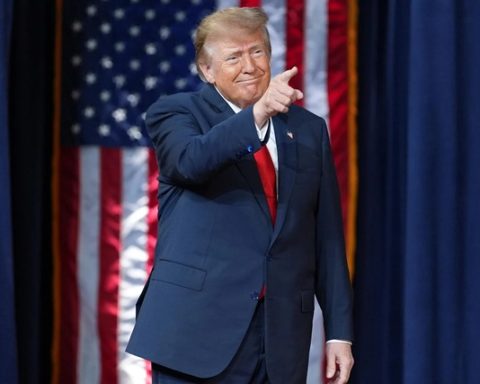
The heightened volatility comes after the temporary optimism surrounding U.S. President Donald Trump’s 90-day suspension of higher global tariffs wore off, leaving investors grappling with the unpredictable nature of U.S. trade policy. Analysts from ANZ bank warned that this “ongoing trade policy volatility” could significantly dampen global economic activity and investment in the short term, regardless of the eventual resolution.
The latest development has sparked renewed fears of a further deterioration in the U.S.-China trade relationship, which was already under significant strain. As the tariffs continue to rise, the pressure on businesses and economies worldwide has intensified, with concerns growing over the long-term impact of these trade disruptions.
The U.S. has already placed a 145% tariff on Chinese goods, which includes a 20% pre-existing levy, and the escalation has fueled fears of a broader economic fallout. Meanwhile, in a bid to shield its economy, China has been strengthening its economic ties with other key players in the Asia-Pacific region. In a recent move, finance and central bank officials from China, Japan, and South Korea held discussions to assess the impact of U.S. tariffs, underscoring the economic ripple effects felt across the region.
Amid these tensions, China’s President Xi Jinping is set to visit Vietnam, Malaysia, and Cambodia next week, signaling a possible effort to bolster ties with neighboring countries as relations with Washington become increasingly strained. However, these nations are finding themselves in a difficult position, trying to balance their economic interests with Beijing while avoiding aggravating the U.S.
In Vietnam, where U.S. tariffs on Chinese goods have significantly impacted the local economy, the government has been under pressure to act. The country recently proposed a dramatic reduction in tariffs on U.S. imports, but U.S. officials were reportedly unsatisfied, accusing Vietnam of allowing Chinese products to be rerouted through the country to avoid the tariffs. As a result, Vietnam is now preparing to tighten controls on sensitive exports to China in a bid to curb such practices.
Meanwhile, there is no winner in a tariff war, and going against the world will only result in self-isolation, Chinese President Xi Jinping said when meeting with Spanish Prime Minister Pedro Sanchez in Beijing on Friday. Stressing China’s path of development through self-reliance and perseverance over the past seven decades, Xi reaffirmed that the country would continue focusing on its own progress despite external pressures. Emphasizing the value of mutual respect and cooperation, he underscored the significance of China-EU economic ties, noting that the combined output of both economies accounts for more than one-third of global GDP. In his view, China and the EU must shoulder their shared international responsibilities and push back against unilateralism to protect economic globalization and a fair, rules-based global trade environment.
In response, Prime Minister Sanchez echoed these sentiments, highlighting the EU’s firm stance on open markets, multilateralism, and opposition to protectionist tariff measures. Acknowledging China as a key partner of the EU, he stressed Spain’s commitment to fostering stable EU-China relations. Sanchez pointed out that in the face of rising global uncertainties—from trade conflicts to climate change—Spain and the EU are prepared to deepen communication and coordination with China. This collaborative spirit, he emphasized, is essential not only for maintaining global trade stability but also for addressing broader challenges such as poverty and environmental threats, reinforcing the shared responsibility of leading economies in shaping a just and sustainable international order.