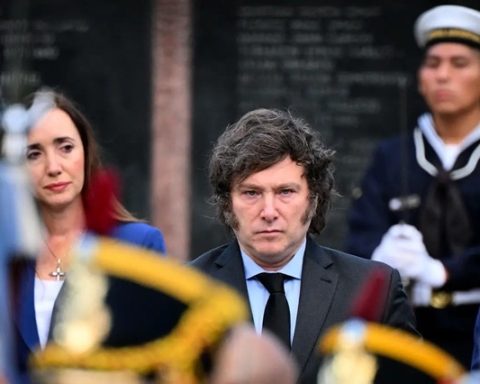
Argentina has agreed to significantly relax its strict currency controls as part of a landmark $20 billion deal with the International Monetary Fund (IMF), a bold move by President Javier Milei’s administration aimed at stabilizing the country’s beleaguered economy and restoring investor confidence.
The deal marks a major turning point in Milei’s libertarian economic agenda, as the government attempts to shift from crisis management toward long-term stabilization. According to the Argentine central bank, controls limiting the flow of US dollars out of the country will be lifted next week for individuals, though restrictions for companies will remain in place.
In a dramatic shift in monetary policy, the central bank will also partially float the peso, allowing it to trade between 1,000 and 1,400 pesos per US dollar — a move that replaces the controversial “crawling peg” strategy which had artificially strengthened the currency by limiting monthly devaluations to just 1 percent, even as inflation soared.
The IMF is expected to transfer an unprecedented $12 billion as early as Tuesday, according to Economy Minister Luis Caputo. These funds will be used to replenish the central bank’s depleted foreign reserves and ease pressure on volatile markets.
“It’s true that such a large first disbursement is unprecedented,” Caputo said in remarks carried by the Financial Times, “but it’s also unprecedented for a country to have fulfilled all of the fund’s fiscal demands in just one year.”
The $20 billion package — Argentina’s 23rd agreement with the IMF — includes additional support from multilateral lenders totaling $3.6 billion. The country, which has a long history of sovereign defaults, remains the IMF’s largest debtor, with more than $40 billion in outstanding obligations from previous failed programs in 2018 and 2022.
Though Milei has earned praise from international creditors for curbing hyperinflation, eliminating the fiscal deficit, and halting a deep recession, his inability to rebuild central bank reserves or loosen currency controls has left the economy exposed to renewed shocks. Analysts fear that without a credible foreign exchange strategy, Argentina risks being forced into an abrupt devaluation — a move that could reignite inflation and damage the president’s standing ahead of crucial midterm elections in October.
According to Financial Times analysis, recent turmoil in global markets — fueled in part by President Donald Trump’s aggressive new tariff policies — has exacerbated vulnerabilities in emerging markets like Argentina, depressing prices for key exports such as soya and oil, and contributing to a slide in Argentine asset values.
The peso’s black market rate has tumbled since early March, widening the gap with the official rate to 24 percent, despite the central bank burning through $2.5 billion in reserves in a failed effort to defend the currency.
“This shift in exchange rate policy may force the government to pause its anti-inflation campaign, which has been its main political narrative,” said Fabio Rodriguez, a director at Buenos Aires-based consultancy M&R Associates. “They will need to explain that to voters.”
Indeed, signs of inflationary persistence are already emerging. Argentina’s national statistics agency reported a monthly inflation rate of 3.7 percent in March — up from 2.4 percent in February — well above market expectations.
Amid the economic uncertainty, US Treasury Secretary Scott Bessent is scheduled to visit Buenos Aires on Monday in a show of political support from the Trump administration, a key player behind the scenes as the US remains the IMF’s largest shareholder. Bessent’s visit is seen as a signal of Washington’s commitment to Milei, whose ideology has drawn parallels with Trump’s own economic vision.
In a further boost, China renewed a $5 billion tranche of its $18 billion currency swap agreement with Argentina’s central bank on Thursday, providing critical liquidity at a moment when the US had reportedly pushed for the facility to be phased out.
Despite the risks, some investors see promise in the policy shift. “A deal that offers clarity on the exchange rate should unlock more private investment,” said Malcolm Dorson, head of emerging markets strategy at Global X ETFs. “Investors have been rightly concerned about the currency policy, so this opens the doors for corporates to start putting money into the country again, which would make Milei’s plan sustainable.”
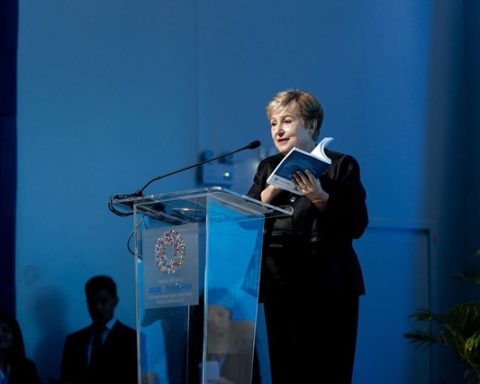
IMF Managing Director Kristalina Georgieva recently hailed Milei’s efforts, saying he had “earned” the disbursement by slashing public spending by 5 percent of GDP in just his first year in office — an austerity effort almost unheard of in the fund’s modern history.