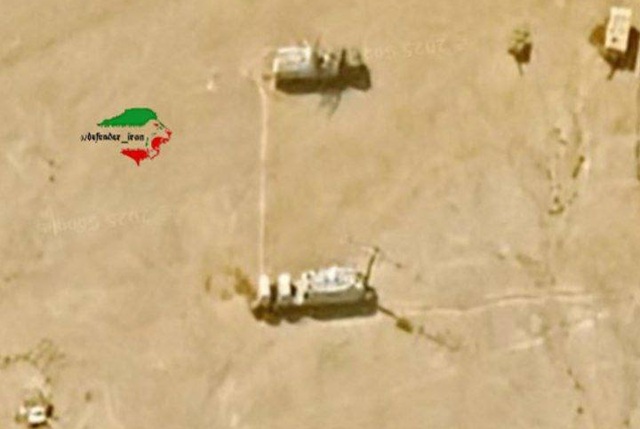
New aerial and satellite footage has confirmed the presence of Iranian military equipment in Sudan, specifically the deployment of the ‘Matla Al Fajr-1’ VHF radar systems. The revelation comes just one day after reports surfaced about Islamic Revolutionary Guard Corps (IRGC) underground bases in the region, indicating a deeper strategic footprint by Iran on the Red Sea coast.
According to the newly analyzed satellite imagery, the radar installations are located in Sudan’s coastal areas adjacent to the Red Sea, a region of growing geopolitical importance. The Matla Al Fajr-1 radar, designed for early warning and target acquisition, boasts a range of approximately 300 kilometers and a maximum detection altitude of 20 kilometers. It is reportedly capable of tracking up to 100 aerial targets simultaneously.
The presence of these advanced radar systems marks a significant escalation in Iran’s military involvement in East Africa and raises concerns about Tehran’s intentions in the region, particularly regarding maritime traffic and airspace surveillance along one of the world’s most critical shipping corridors.
In a potentially related development, Iran’s Supreme Leader Ayatollah Ali Khamenei made a rare public trip today to the holy city of Qom, visiting the shrine of Fatima Masoomah (ع) and the Jamkaran Mosque—both deeply symbolic religious sites. The visit comes on the same day as critical, yet undisclosed negotiations, prompting speculation about its underlying message.
Historically, Iranian clerics have traveled to Qom as a form of symbolic protest or disapproval, particularly when expressing dissent against political decisions. While the purpose of Ayatollah Khamenei’s visit remains officially unconfirmed, the timing has led analysts to believe the trip may carry significant political weight.
The confluence of military expansion abroad and symbolic gestures at home underscores the complexity of Iran’s current geopolitical posture, with implications that may stretch from Africa to the Persian Gulf and beyond.