


I sincerely hope that they (relations between India and Pakistan) will be friendly and cordial. We have a great deal to do…and think that we can be of use to each other (and to) the world
Muhammad Ali Jinnah
The Conflict
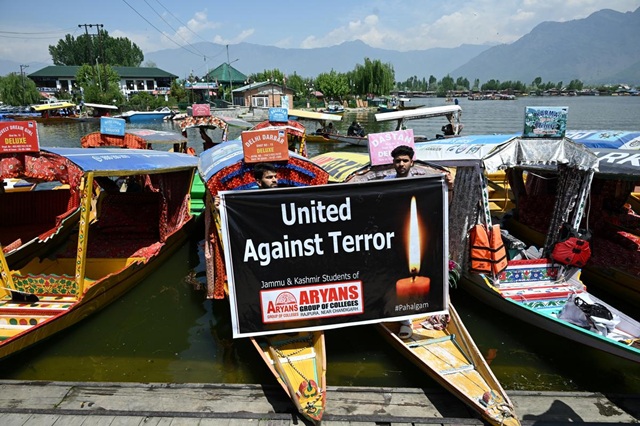
On April 25, 2025, a tragic attack occurred in Pahalgam, Jammu and Kashmir, where 26 innocent tourists were killed by assailants who demanded the victims disclose their religious identities, executing those who identified as Hindu. This horrifying act underscores the deep-seated hatred and intolerance that continues to plague the region. Jammu and Kashmir remains a point of contention between India and Pakistan, with both nations claiming full sovereignty but controlling only parts of the territory.
India accuses Pakistan of supporting Islamist separatists in Kashmir, while Pakistan denies these allegations, calling them unfounded and lacking credible evidence. Following the attack, Indian authorities have linked it to cross-border interference, claiming two of the attackers were Pakistani nationals, though they have not provided proof to back up these claims. Pakistan, in turn, rejects India’s accusations, urging a more responsible approach and criticizing India’s failure to provide security within its own borders. This ongoing dispute highlights the complexities and tensions between the two nations over the region’s future.
Political Consequences
The spiraling tension has catalyzed a series of unilateral and reciprocal measures, the implications of which extend beyond bilateral relations and into the domain of international legal order and regional stability: both countries have shuttered the Wagah-Attari land crossing—symbolic not only as a passage of people and goods but also as a barometer of diplomatic thaw. Concurrently, South Asian visa arrangements, which previously enabled more fluid people-to-people contact, have been suspended.
Each state has declared the other’s defence attaché as persona non grata, a serious diplomatic censure under the Vienna Convention on Diplomatic Relations, leading to a reduction in the strength and efficacy of both embassies. In a sweeping response, Pakistan has suspended all bilateral trade, including commercial exchanges involving third-party countries. This cessation not only impacts economic interdependence but erodes the already fragile scaffolding of cooperative instruments between the two nations..
The conflict has brought to bear the possibility of weaponizing by India of a long-standing treaty between India and Pakistan – the Water Treaty. In what may emerge as a moment of tectonic import in the geopolitics of South Asia, the recent signals emanating from New Delhi regarding the potential revision—or abrogation—of the Indus Waters Treaty of 1960 (IWT) portend consequences that go far beyond bilateral tension. These signals strike at the very heart of a treaty that, despite being born of fractious times and fomented hostilities, has endured for over six decades as a paragon of inter-State cooperation. The IWT, brokered under the auspices of the World Bank, meticulously apportioned the six rivers of the Indus Basin: the eastern tributaries—Ravi, Beas, and Sutlej—to India, and the western rivers—Indus, Jhelum, and Chenab—principally to Pakistan.
The answer lies downstream—quite literally—for Pakistan. The western rivers of the Indus Basin constitute the circulatory system of its agrarian economy. Approximately 76% of the country’s water resources stem from these rivers, irrigating an estimated 80% of its arable land and sustaining 90% of its food production. The stark statistics of annual precipitation—just 240 mm—underscore the nation’s dependence on these glacial flows. It is no exaggeration to state that over 240 million Pakistanis subsist on these waters.
India’s purported decision to halt cooperation under the Indus Waters Treaty of 1960, which is a landmark accord brokered by the World Bank and regarded as a pillar of hydro-diplomacy, marks a grave moment. Pakistan has responded with a stark warning: any attempt to disrupt or divert the natural flow of the Indus or its tributaries will be construed as an act of war, to be met with “full force”. This brings into question the sanctity of long-standing transboundary water-sharing agreements and raises the spectre of conflict over natural resources.
A BBC interview carried out on BBC World News with the Foreign Minister of Pakistan on 25 April saw him explicitly calling such a measure “an act of war” and the BBC commentator envisioned that that events may lead to Pakistan closing Pakistani airspace to national airlines of India.
Aeronautical Consequences
In the realm of international civil aviation, measures taken by one State against another must always be viewed through the dual lens of sovereign entitlement and international obligation. Should Pakistan choose to respond aeronautically to India’s alleged non-cooperation under the Indus Waters Treaty—especially in the wake of the recent tragic attack on Indian tourists—the first principle it would invoke is that of sovereign discretion under international law. Within the framework of the Convention on International Civil Aviation of 1944, commonly known as the Chicago Convention, Pakistan could conceivably curtail overflight rights granted to Indian aircraft, including commercial flights traversing its airspace en route to Europe or the Middle East. Such action would likely be undertaken under Article 9 of the Convention, which permits States to impose restrictions on overflight for reasons of national security, albeit with the caveat that such measures must not be arbitrary or discriminatory.
Furthermore, Pakistan could consider the suspension or even termination of its bilateral Air Services Agreement with India. While this may seem largely symbolic given the diminished state of bilateral air traffic, such a move would carry significant diplomatic weight and could precipitate retaliatory action by India under the principle of reciprocity, leading to a cessation of all civil aviation connectivity between the two countries. These steps, though legally permissible under international law, would be seen as deliberate disruptions of the aero political status quo, carrying ramifications that extend beyond mere air navigation and into the domain of regional security.
Diplomatically, Pakistan may seek to isolate India within regional and global aviation bodies. In the ICAO Council, as well as in the Asia-Pacific Planning and Implementation Regional Group (APANPIRG), Pakistan could oppose Indian proposals related to airspace optimization or regional route realignment. Though decisions in such forums are typically technical and consensus-driven, politicization is not unknown and would reflect a shift from bilateral confrontation to multilateral containment. Additionally, Pakistan may withdraw hospitality for Indian state or civil aircraft requiring unscheduled landings in its territory. Such denials would be executed under the provisions of Article 3(c) of the Chicago Convention and Article 25 regarding emergency landings, provided they do not imperil lives. Article 3 (c) says that no state aircraft of a contracting State must fly over the territory of another State or land thereon without authorization by special agreement or otherwise, and in accordance with the terms thereof. Article 25 says that Each contracting State undertakes to provide such measures of assistance to aircraft in distress in its territory as it may find practicable, and to permit, subject to control by its own authorities, the owners of the aircraft or authorities of the State in which the aircraft is registered to provide such measures of assistance as may be necessitated by the circumstances. Each contracting State, when undertaking search for missing aircraft, will collaborate in coordinated measures which may be recommended from time to time pursuant to the Convention.
In a broader context, Pakistan might extend its strategic calculus to include support for regional airspace reconfigurations that reduce Indian access to critical corridors, particularly over Central and West Asia. While such maneuvers require considerable diplomatic coordination and time, they represent a long-view response anchored in the logic of strategic encirclement, rather than immediate retribution. Within such a framework, Pakistan’s actions would be legally defensible and politically resonant.
Legally, these measures would have to remain calibrated within the parameters of acceptable state conduct under customary international law, avoiding any overt violation of peremptory norms or obligations erga omnes. The invocation of Article 84 of the Chicago Convention for dispute resolution, or recourse to the International Court of Justice under the broader matrix of the law of treaties, would remain open to India should it consider any of Pakistan’s aeronautical reprisals disproportionate or unjustified. Furthermore, the threshold of Article 51 of the United Nations Charter, concerning the right of self-defence, would not likely be met in such circumstances absent a clear military threat.
Teleologically, Pakistan’s resort to aeronautical countermeasures underscores the intersectoral nature of modern statecraft, wherein grievance in one domain—transboundary water rights—can find redress or expression in another—airspace governance. The epistemic framing of such measures reflects a jurisprudential reality wherein sovereignty, reciprocity, and treaty fidelity intersect, giving rise to a complex architecture of rights and responsibilities. In this architecture, the act of denying overflight or suspending bilateral air services is not merely a technical decision, but a symbolic articulation of dignity, protest, and geopolitical posture.
My Take
In the realm of international civil aviation, measures taken by one State against another must always be viewed through the dual lens of sovereign entitlement and international obligation. Should Pakistan choose to respond aeronautically to India’s alleged non-cooperation under the Indus Waters Treaty—especially in the wake of the recent tragic attack on Indian tourists—the first principle it would invoke is that of sovereign discretion under international law. Within the framework of the Chicago Convention, Pakistan could conceivably curtail overflight rights granted to Indian aircraft, including commercial flights traversing its airspace en route to Europe or the Middle East. Such action would likely be undertaken under Article 9 of the Convention, which permits States to impose restrictions on overflight for reasons of national security, albeit with the caveat that such measures must not be arbitrary or discriminatory.
Another subtle yet potent measure would be the degradation of cooperative mechanisms within their contiguous Flight Information Regions (FIRs). While not a breach per se of international standards under Annex 11 and Annex 12 of the Chicago Convention, a refusal to coordinate effectively with Indian air traffic control—particularly in cross-border transitions and search and rescue responsibilities—could result in operational hazards that indirectly pressure the Indian side to recalibrate its political position. Such passive resistance, while not overtly confrontational, would constitute a strategic use of procedural compliance as a tool of statecraft.
The aeronautical disputes between India and Pakistan, though seemingly episodic and reactive, are deeply rooted in the larger geopolitical tensions that have perennially defined the subcontinent.
In 1972, a significant aeronautical dispute arose between India and Pakistan when Pakistan denied overflight rights to Indian aircraft en route to Afghanistan and beyond. India, invoking the provisions of the Chicago Convention and the International Air Services Transit Agreement (IASTA), brought the matter before the Council of ICAO, asserting that Pakistan’s actions were arbitrary and in breach of its treaty obligations.
Pakistan contested the jurisdiction of the ICAO Council, prompting the case to be referred to the International Court of Justice (ICJ). In a landmark decision, the ICJ upheld the Council’s jurisdiction, affirming that ICAO was competent to hear the dispute. While the merits of the case were never fully adjudicated within ICAO, the ICJ’s ruling was a powerful reaffirmation of ICAO’s authority to resolve disputes arising from international air law instruments.
This episode underscored the primacy of legal order in civil aviation governance. It demonstrated that even amid deep political hostilities, States could—and indeed must—resort to institutional mechanisms grounded in the rule of law. The ICAO Council’s role, though procedural, was a testament to the enduring value of multilateral diplomacy through lawful means in the air transport domain.
These tensions have found expression not only through conventional military stand-offs but also within the regulated skies governed by the Chicago Convention of 1944. One of the most salient episodes in recent history occurred in the aftermath of the Pulwama terror attack in February 2019, when India conducted air strikes in Balakot, Pakistan. In response, Pakistan unilaterally closed its airspace to all Indian aircraft for several months. This closure not only disrupted civil aviation between the two States but also affected a significant portion of global east-west air traffic, which traditionally relies on South Asian overflight corridors. Such unilateral action, while within the sovereign discretion of a State under Article 9 of the Chicago Convention, tested the limits of reciprocity and fairness under international civil aviation norms.
The matter soon took on a dimension transcending bilateralism when it was brought before the Council of ICAO. India had alleged that Pakistan’s actions constituted a discriminatory and politically motivated abuse of civil aviation regulations. Pakistan, on the other hand, justified its airspace closure on grounds of national security and operational safety. The ICAO Council, mindful of its mandate under Article 84 of the Chicago Convention to resolve disputes between Contracting States, adopted a balanced approach. It declined to adjudicate the political origins of the dispute, asserting instead that the closure of airspace must adhere to the principle of non-discrimination and that any such restrictions must be notified in accordance with ICAO’s standards and recommended practices (SARPs), particularly those enshrined in Annexes 11 and 15 of the Convention.
The Council’s intervention, while not prescriptive in the manner of a judicial body, nevertheless served as a stabilizing mechanism. It underscored the necessity of procedural compliance, even amidst political crises, and reminded both States of their obligations to ensure continuity of international air navigation services in a manner that minimizes disruption. The epistemic relevance of the Council’s stance was in its quiet reaffirmation of the teleological foundation of the Chicago Convention—that aviation is to be a vehicle of peace and understanding among nations, not an extension of terrestrial hostilities.
Although the Council did not render a formal award or binding decision, its moral suasion and quiet diplomacy facilitated the eventual reopening of Pakistani airspace to Indian traffic in July 2019. This outcome illustrates how ICAO, despite lacking enforcement powers, acts as a normative compass, guiding States back to the path of compliance through deliberation, transparency, and the common pursuit of aeronautical order. In this sense, the resolution of the India-Pakistan dispute through ICAO was not a triumph of coercion but a vindication of structured dialogue within an international regime premised on cooperation, restraint, and lawful engagement.
What both India and Pakistan should appreciate is that neither can legitimately close its airspace only to the aircraft of a single country. Article 9 of the Chicago Convention emphasizes that when a State closes or restricts its airspace, it must do so in a manner that is non-discriminatory. The closure should apply equally to all aircraft, regardless of nationality, ensuring that no State imposes restrictions solely on the aircraft of certain countries. To quote Article 9 inter alia: “ Each contracting State may, for reasons of military necessity or public safety, restrict or prohibit uniformly the aircraft of other States from flying over certain areas of its territory, provided that no distinction in this respect is made between the aircraft of the State whose territory is involved, engaged in international scheduled airline services, and the aircraft of the other contracting States likewise engaged..”. This principle upholds the integrity of international air navigation, ensuring fairness and equal treatment for all civil aircraft. Any restrictions must be justified by security or safety concerns, but they cannot be applied selectively or arbitrarily.











